High-Quality Geotextile Materials Available for Purchase
Blog · 2026-08-10 · 0 views
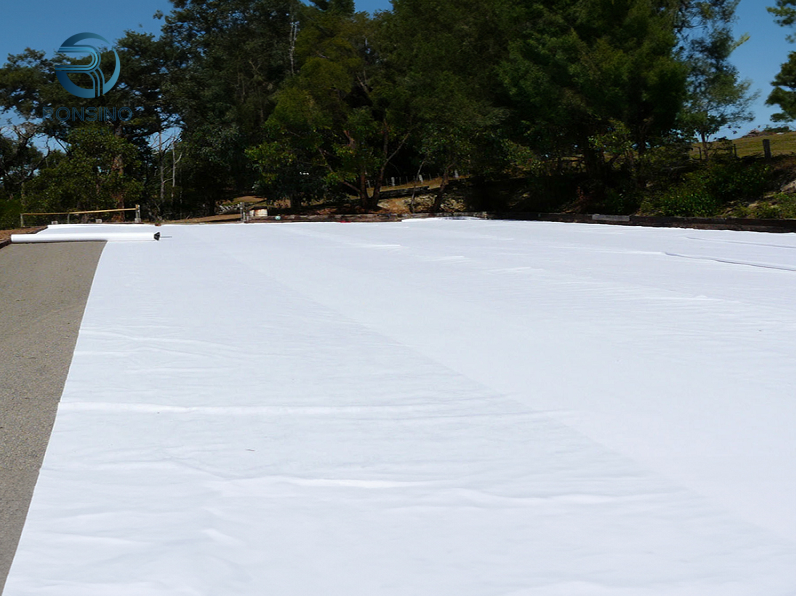
Commercially available geotextile is a water-permeable synthetic fiber material made of Polypropylene or polyester as the main raw material. The material has a wide range of applications in civil engineering and environmental management. Its functions include isolating soil layers, filtering particles, conducting water and drainage, enhancing structural strength, and ensuring the safety and stability of engineering projects.
Technical Parameters and Specifications
Based on quantifiable performance criteria that comply with ASTM or EN standards, purchasing choices must be established during the assessment of geotextile fabric available for sale.
Material: Polypropylene (PP) or Polyester (PET)
Type: Non-woven (needle-punched) / Woven
Mass per Unit Area: 100–800 g/m²
Tensile Strength (ASTM D4595): 8–80 kN/m
Elongation at Break: 25–100% (non-woven), 10–25% (woven)
CBR Puncture Resistance (ASTM D6241): 1.5–8.0 kN
Permittivity (ASTM D4491): 0.5–2.5 sec⁻¹
AOS (Apparent Opening Size): 0.07–0.30 mm
Roll Width: 2–6 m
Roll Length: 50–200 m
These influencing factors have a direct bearing on how well geotextile materials can meet usage requirements, as well as their total procurement and application costs, when such materials are designed to be deployed in large-scale infrastructure construction projects.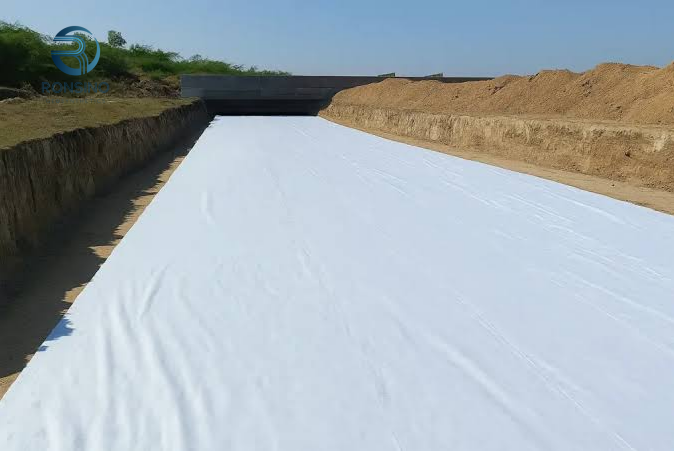
Structure and Material Composition
Fiber Base: Virgin PP or PET staple fibers
Bonding Method: Needle-punched mechanical entanglement (non-woven)
Weaving Structure: Slit film or monofilament yarns (woven)
Optional Treatment: UV stabilization additives
Edge Treatment: Heat-cut or reinforced selvage
The orientation of internal fiber arrangement as well as the interfacial bonding pattern collectively determine the tensile load-bearing performance, particulate filtration efficiency and long-term filtration stability of the material.
Manufacturing Process
1.Polymer Extrusion
Polypropylene or polyester chips are melted and extruded into continuous filaments.
2.Fiber Cutting and Web Formation
Fibers are cut to specified lengths and laid into uniform webs using carding systems.
3.Needle Punching or Weaving
The fabrication methodologies for nonwoven substrates rely on the mechanical entanglement of fibers through the needle-punching procedure; conversely, textile structures of the woven category are produced employing sophisticated loom-based equipment.
4.Heat Setting and Stabilization
Thermal treatment improves dimensional stability and mechanical strength.
5.Quality Inspection
Finished rolls undergo tensile, puncture, and permeability testing before packaging.
Manufacturing efficiency and raw material grade significantly affect pricing of geotextile fabric for sale.
Industry Comparison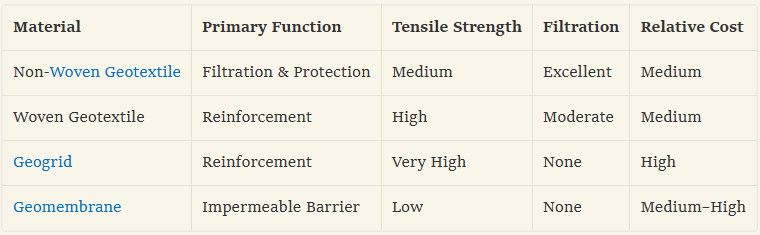
Application Scenarios
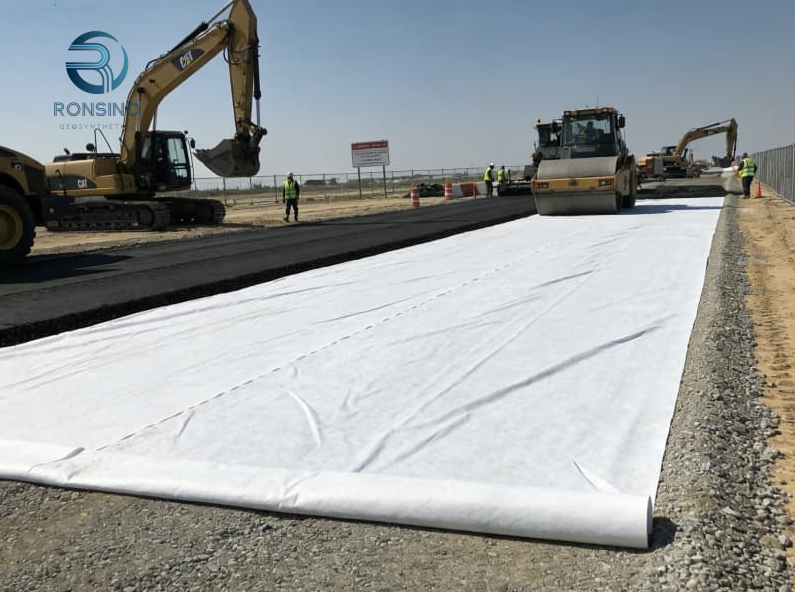
Road base separation and stabilization
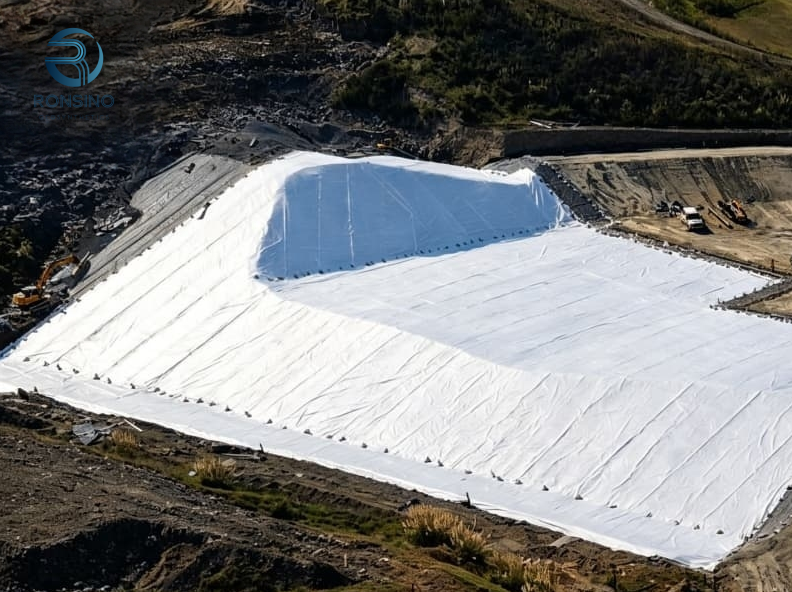
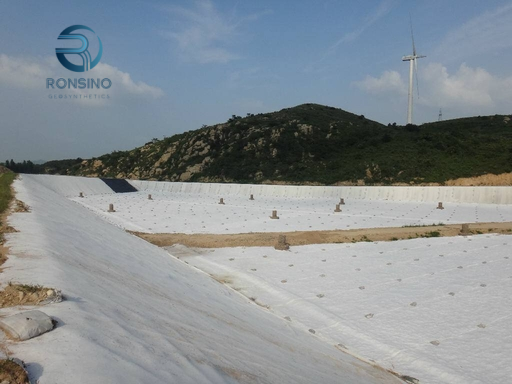
Landfill liner protection layers
Drainage systems and retaining walls
Erosion control in coastal projects
Railway ballast reinforcement
Potential customers seeking geotextile fabric for acquisition encompass engineering, procurement, and construction (EPC) firms, infrastructure project sponsors, municipal governing bodies, and bulk distribution networks.
Core Pain Points and Solutions
Subgrade Pumping Failure: Use appropriate AOS and permittivity for soil compatibility.
Puncture Damage from Aggregates: Specify higher CBR resistance grade.
Insufficient Tensile Strength: Select woven fabric for reinforcement applications.
UV Degradation During Storage: Request UV-stabilized material and covered warehousing.
Inconsistent Quality: Require third-party lab certification and batch traceability.
Risk Warnings and Mitigation
Do not substitute woven for non-woven without hydraulic evaluation.
Avoid prolonged exposure to direct sunlight before installation.
Ensure proper overlap (typically 300–500 mm depending on application).
Prevent contamination with clay or fine particles before placement.
Confirm compatibility with geomembrane where used as protection layer.
Procurement and Selection Guide
Define primary function: separation, filtration, or reinforcement.
Conduct soil particle size analysis.
Determine required tensile strength and puncture resistance.
Specify mass per unit area based on load condition.
Confirm compliance with ASTM or EN standards.
Request production capacity and delivery lead time.
Evaluate total delivered cost including freight.
Review manufacturer quality management system.
Following structured procurement steps ensures cost-effective sourcing of geotextile fabric for sale.
Engineering Case Study
Project: Highway Subgrade Stabilization
Area: 85,000 m²
Material: 300 g/m² needle-punched non-woven geotextile
Purpose: Separation between soft clay subgrade and crushed stone base
Result: Reduced rutting by 35% and extended pavement service life by estimated 8 years.
The use of properly specified geotextile fabric for sale minimized maintenance costs and improved load distribution.
FAQ
1. What is the difference between woven and non-woven?
Woven provides higher tensile strength; non-woven offers better filtration.
2. How do I select AOS?
Match AOS to soil particle size distribution to prevent clogging.
3. Is UV stabilization necessary?
Yes, if exposure exceeds 14 days before covering.
4. Can geotextile replace geogrid?
Only in low-load applications; not for high tensile reinforcement.
5. What overlap is required?
Typically 300–500 mm depending on design load.
6. What is typical lifespan?
More than 50 years when properly buried.
7. Does thickness determine strength?
Not directly; tensile testing results are more accurate indicators.
8. Can it be used under geomembrane?
Yes, commonly as a cushioning protection layer.
9. How is it delivered?
In rolled packaging with moisture protection film.
10. Is third-party testing required?
Recommended for public infrastructure and environmental projects.
Request Quotation or Technical Documents
The professional technical sales team provides you with customized quotations, technical documents, free samples and engineering consultation. At the same time, we provide bulk supply services to dealers and EPC contractors.
Authoritative Technical Background (E-E-A-T)
This manual is authored by structural and soil engineering specialists possessing more than a decade and a half of expertise within geosynthetic production and large-scale development initiatives. Every technical requirement adheres to globally acknowledged assessment protocols and real-world site implementations to facilitate dependable acquisition selections.