Geotextile for Soft Soil Reinforcement Beneath Liners
Blog · 2026-03-05 · 0 views
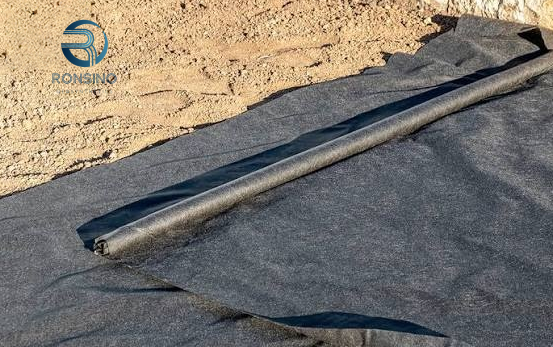
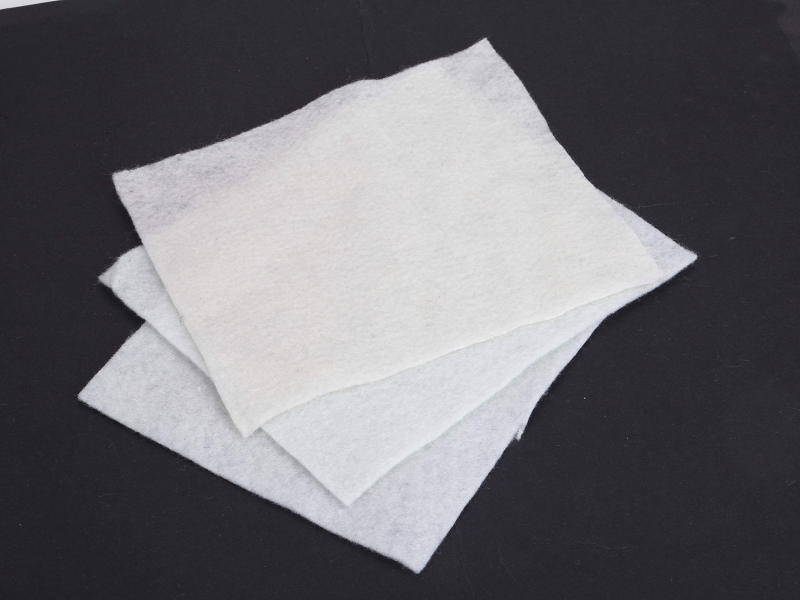
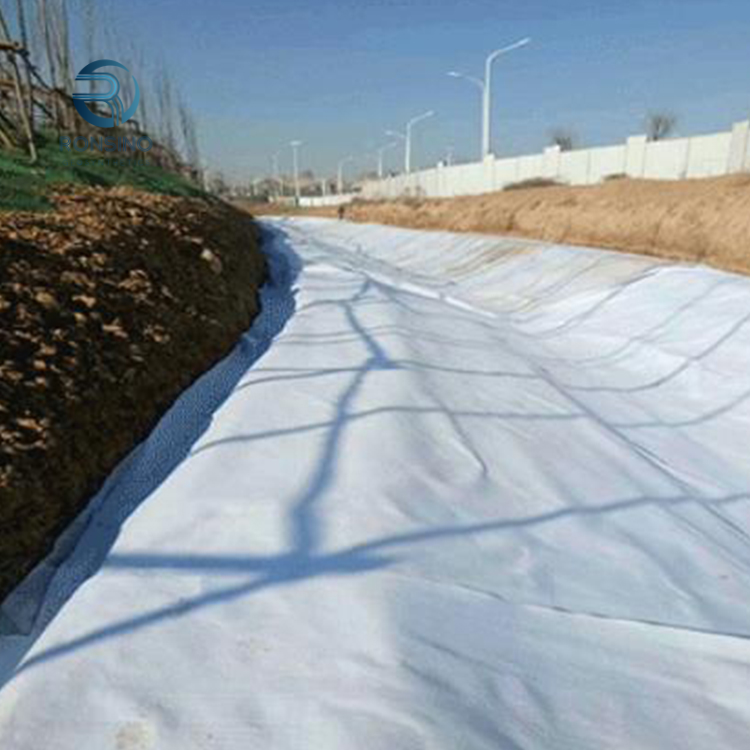
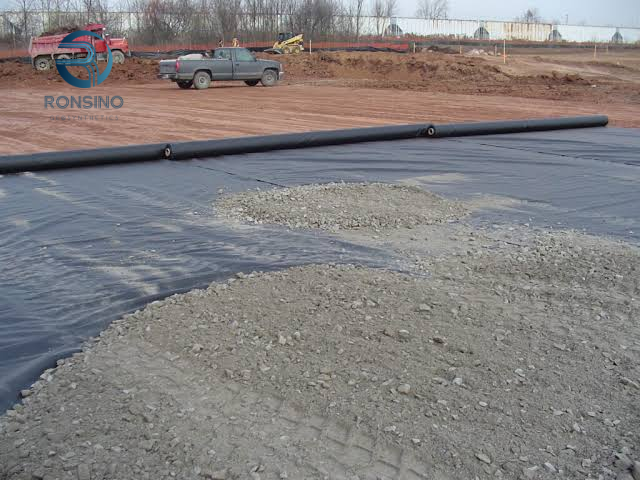
Geotextile for reinforcing soft soil under the liner is a high - strength, permeable geosynthetic layer between the weak subgrade and geomembrane liner systems. Its main functions are enhancing foundation bearing capacity, managing differential settlement, separating different soil layers or materials, and improving long - term structural stability in containment and hydraulic engineering. It's crucial for the overall performance and durability of these projects.
Technical Parameters & Specifications
When designating geotextile for soft - soil reinforcement beneath liner systems, ensure its mechanical strength, elongation degree, puncture resistance, and filtration characteristics match the project's load conditions and groundwater characteristics.
Parameter | Typical Range | Test Standard |
Mass per Unit Area | 300 – 800 g/m² | ASTM D5261 |
Tensile Strength (MD/CD) | 15 – 50 kN/m | ASTM D4595 |
Elongation at Break | 40% – 100% (Nonwoven) | ASTM D4595 |
CBR Puncture Strength | 2.0 – 6.0 kN | ASTM D6241 |
Permittivity | ≥ 1.0 s⁻¹ | ASTM D4491 |
Apparent Opening Size (AOS) | 0.075 – 0.30 mm | ASTM D4751 |
In the case of highly compressible clay or silt foundation types, a needle - punched nonwoven geotextile with a mass per unit area of no less than 400 grams per square meter is typically employed beneath the HDPE geomembrane liners.
Structure & Material Composition
Liner - Associated Layer Arrangement
Compressed Soft - Soil Roadbed
Stabilizing Layer (in case it is needed)
Geotextile for Strengthening Soft Soil beneath the Liner
Geomembrane Lining
Protective Soil or Drainage Stratum
Material Composition
Brand - new polypropylene (PP) fibers or polyester (PET)
A needle - punched non - woven fabric structure designed for cushioning purposes and reinforcement functions
Ultraviolet (UV) stabilizers (intended for short - term exposure situations)
The geotextile layer plays a role in spreading out the stress and averting direct contact between the liner and the unstable subgrade.
Manufacturing Process
Fiber Production: PP or PET extrusion into continuous filaments.
Web Formation: Random fiber orientation via carding or air-laying.
Needle Punching: Mechanical entanglement to create 3D reinforcement matrix.
Thermal Bonding (Optional): Surface stabilization for added strength.
Rolling & Inspection: Thickness, mass, tensile testing per batch.
Quality Certification: Verification against ASTM and EN standards.
Controlled needle density directly impacts tensile strength and puncture resistance performance.
Industry Comparison
Property | Nonwoven Geotextile | Woven Geotextile | Geogrid | Geocell |
Separation Function | Excellent | Good | Limited | Moderate |
Reinforcement | Moderate | High (Directional) | High | High |
Puncture Protection for Liner | Excellent | Moderate | Low | Low |
Filtration Capability | Excellent | Limited | None | None |
Suitability Under Liner | Recommended | Conditional | Not Preferred Alone | Used with Soil |
Non - woven geotextiles for soft soil reinforcement under liner systems offer cushioning and filtration benefits.
Application Scenarios
Landfill bases on soft clay.
Wastewater lagoons on silty sub - bases.
Mining tailings containment.
Aquaculture ponds on weak soil.
Industrial evaporation basins.
Main Users
EPC contractors, environmental engineers, infrastructure firms, and procurement officers.
Key Pain Points in Engineering and Their Solutions
- Differential Settlement: Strengthen geotextile tensile strength and use advanced soil - stabilization for better load distribution.
- Liner Puncture Risk: Choose ≥400 g/m² non - woven geotextile to reduce puncture risk.
- Mud Pumping and Soil Migration: Select appropriate AOS to prevent them.
- Low Bearing Capacity: Combine geotextile reinforcement with a drainage blanket system to increase ground bearing capacity.
- Excess Pore Water Pressure: Design an efficient drainage layer to relieve subgrade pressure.
Risk Warnings and Mitigation
- Low - specified tensile strength may compromise structure performance.
- Improper AOS selection affects project stability.
- Laying liner on untreated soft soil increases rupture risk.
- >30 - day UV exposure degrades unprotected geotextile.
- Poor installation overlap weakens structure continuity.
It's recommended to conduct comprehensive engineering verifications and lab tests for soil - geotextile compatibility.
Procurement & Selection:
- Do a geotechnical survey with CBR, shear strength and moisture content tests.
- Calculate loads from liner, cover soil and stored materials.
- For soft clay, pick geotextiles with ≥ 400 g/m² mass per unit area.
- Ensure tensile strength meets reinforcement needs.
- Confirm puncture - resistance exceeds subgrade stone pressure.
- Check filtration against soil particle size.
- Review manufacturers' QA/QC docs and test certs.
- Plan 300 - 500 mm installation overlap.
A structured design helps geotextiles reinforce soft soils in liner use.
Engineering Case:
- Project: Municipal Wastewater Lagoon
- Location: Soft clay subgrade (CBR 2%)
- Area: 18,000 m²
- System: 500 g/m² nonwoven geotextile & 1.5 - mm HDPE liner
- Challenge: High settlement risk during filling
- Solution: Reinforced separation layer & drainage blanket
- Outcome: After 24 months, settlement < 36 mm
FAQ
- Is woven geotextile suitable under liners? Only for directional tensile reinforcement.
- Suggested minimum weight? At least 400 g/m² for soft - clay sub - grades.
- Can geotextile replace soil stabilization? No, it's an addition.
- How to determine puncture resistance? Through CBR puncture strength tests.
- Can geotextile improve bearing capacity? Yes, by stress distribution and confinement.
- Is good filtration crucial? Absolutely, especially in saturated soft - soil.
- Overlap distance during installation? 300 - 500 mm, depending on site.
- Should seams be sewn? Advisable for high - load applications.
- Safe sunlight exposure time? < 30 days without UV - stabilization.
- Is third - party testing necessary? Yes, especially for large - scale environmental projects.
Request A Quote Or Technical Papers: Submit soil investigation, load info, and design blueprints for soft - soil reinforcement under liner projects. We'll provide technical data, computations, and quotes upon request.
Author & Technical Authority
This document is prepared by a geosynthetics engineer with over 12 years of experience in landfill, mining, and hydraulic containment design. All parameters are aligned with ASTM standards and practical engineering applications to support professional procurement decisions.