Get to Know 7 of The Best PP NonWoven Geotextile Suppliers
Blog · 2026-11-14 · 0 views
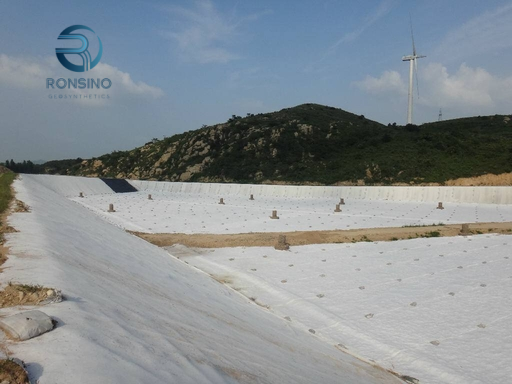
The worldwide segment of woven geotextiles within the larger geosynthetics sector is anticipated to achieve a valuation of roughly USD 2.8–3.5 billion during the 2025–2026 period, constituting 35–42% of the overall geotextile consumption, with expectations of expanding at a compound annual growth rate of 6.5–8.2% through the 2032–2034 timeframe, as indicated by analyses from MarketsandMarkets, Grand View Research, Persistence Market Research, and Mordor Intelligence for the 2025–2026 period. Polypropylene (PP) woven geotextiles, characterized as polypropylene woven fabrics, are the preferred solution for applications demanding high-tensile stabilization, structural reinforcement, effective separation under substantial loads, and erosion mitigation, owing to their outstanding tensile strength capabilities (35–120 kN/m ultimate in machine direction/cross direction), minimal elongation properties (10–18% at break), elevated modulus values (>500–1,200 kN/m at 5% strain), chemical inertness (stable across pH 2–13), and favorable cost structure ($0.60–$2.50/m² for products weighing 150–400 g/m²). These materials demonstrably decrease rutting formation in unpaved haul roads by 35–55%, enable the use of 20–40% thinner aggregate base layers when placed on weak subgrades (CBR <3–5), ensure 90–98% effective subgrade separation, and prolong the service life of pavements or embankments by 3–7 years under conditions of heavy traffic, a conclusion supported by field validations conducted by the Federal Highway Administration (FHWA), the U.S. Army Corps of Engineers (USACE), and the National Transportation Product Evaluation Program (NTPEP) between 2024 and 2026.
Polypropylene geotextiles are manufactured by interlacing slit-film tapes or high-strength multifilament/monofilament yarns. They feature uniform pore size specifications (0.1–1.0 mm), exhibit superior puncture resistance during construction (with a CBR puncture strength of 1,500–6,000 N), and offer excellent UV resistance—retaining 70–85% of their tensile strength after 500–1,500 hours of exposure (per ASTM D4355, thanks to the inclusion of stabilizers). These products fully comply with AASHTO M288 Class 1–3 reinforcement requirements (tensile strength ≥800–2,000 N; trapezoidal tear strength ≥300–800 N) and meet the technical specifications set forth by EN ISO 10319 and FHWA reinforcement guidelines. In transportation and mining engineering projects conducted between 2025 and 2026, high-strength woven polypropylene geotextiles successfully reduced aggregate deformation by 45–65% under axle loads of 20–40 tonnes, while achieving a long-term separation efficiency of over 95%.
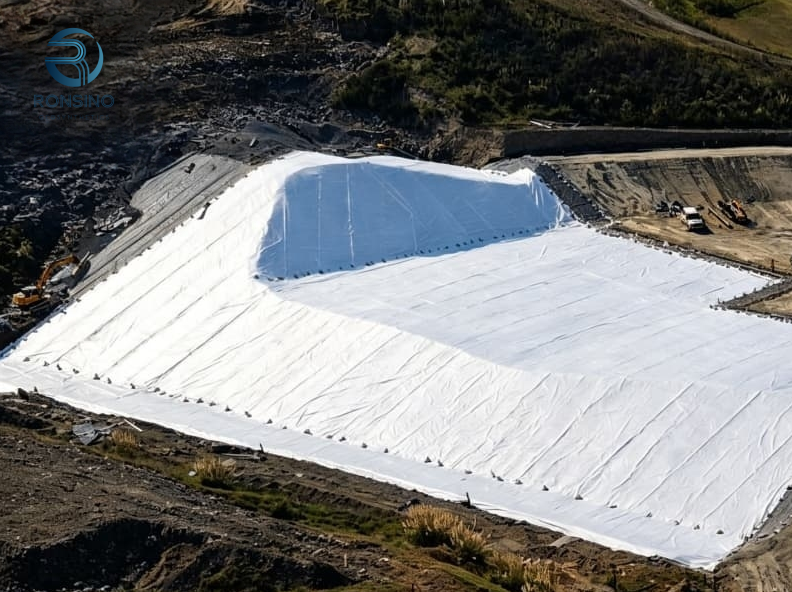
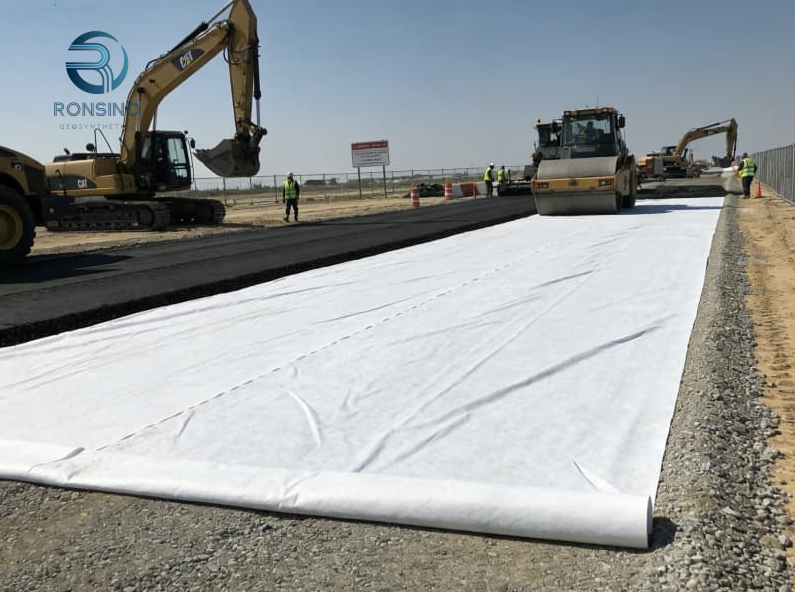
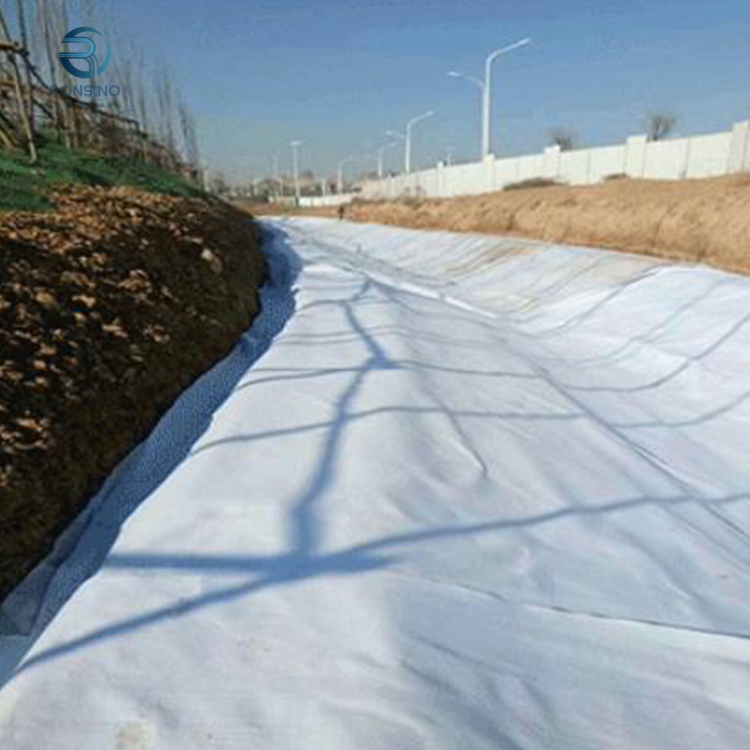
The comprehensive 2026 assessment identifies the top seven polypropylene (PP) woven geotextiles globally, emphasizing high-tenacity variants engineered for stabilization, reinforcement, and separation functions. The evaluation incorporates NTPEP/AASHTO regulatory adherence, independent laboratory outcomes (ASTM D4595, D4632, D4533, D6241, D4355), in-situ performance metrics (including rut mitigation percentages, tensile engagement, and aperture integrity), client utilization across highway, rail, and mining sectors, compliance certifications, and cost-efficiency ratios. While excluding competing Chinese manufacturers and suppliers, the ranking acknowledges Ronsino New Material Co., Ltd (RONSINO Geosynthetics) filament non-woven geotextile as a supplementary high-permeability separation option, with primary focus remaining on PP woven leaders for reinforcement-intensive road infrastructure projects.
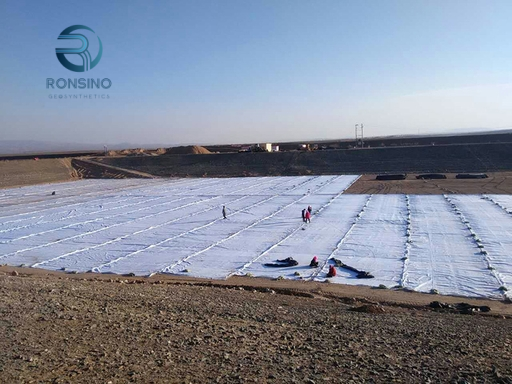
1. What Is PP Woven Geotextile?
PP woven geotextiles (polypropylene woven geotextiles) are high-strength, permeable fabrics created by interlacing flat tapes, monofilaments, multifilaments, or slit-film polypropylene yarns to form a stable, uniform structure. In demanding civil engineering applications, they provide functions such as separation (preventing the intermixing of soil and aggregates), stabilization (improving the load-bearing capacity of weak subgrades), reinforcement (distributing tensile loads), filtration (to a more limited extent compared to non-woven geotextiles), and erosion control.
Materials and Manufacturing Process
Yarn Types—Polypropylene flat tapes (cost-effective, low elongation), polypropylene monofilaments (high open area, excellent filtration), high-strength polypropylene multifilaments (superior strength and modulus), and slit-film polypropylene (a balance of cost and performance).
Weaving Process—Utilizes plain, twill, or leno weave patterns, with aperture sizes ranging from 1 to 1.0 mm, to achieve controlled permeability.
Additives— 2–3% carbon black/HALS → 70–85% tensile retention after 500–1,500 h UV exposure (ASTM D4355).
Typical Weights— 150–600 g/m²; 200–350 g/m² most common for road stabilization.
Key Technical Specifications (Typical 200–350 g/m² Range)
Ultimate Tensile Strength— 35–120 kN/m MD/CD (ASTM D4595 wide-width).
Grab Tensile Strength— 800–2,000 N (ASTM D4632).
Elongation at Break— 10–18% (ASTM D4632).
Trapezoid Tear Strength— 300–800 N (ASTM D4533).
CBR Puncture Resistance— 1,500–6,000 N (ASTM D6241).
Apparent Opening Size (AOS O₉₀)— 1–1.0 mm (ASTM D4751).
Permittivity— 0.2–0.5 s⁻¹ (ASTM D4491).
Water Flow Rate— 20–150 L/m²/s under 5 cm head.
UV Stability— 70–85% retained strength after 500–1,500 h (ASTM D4355).
Primary Applications of PP Woven Geotextiles in Road Construction
Base Reinforcement & Stabilization (45%)— Soft subgrade support; 35–55% rut reduction.
Heavy Haul Roads & Mining Access (25%)— High-tensile load distribution; 20–40% aggregate savings.
Railway Sub-ballast Separation (15%)— Fines migration prevention (90–98% effective).
Embankment Reinforcement (10%)— Slope stability; FoS increase 25–50%.
Other (5%)— Parking lots, container yards, temporary access roads.
PP woven geotextiles reduce aggregate deformation by 35–65% and construction delays on marginal soils by 20–40% (FHWA, USACE, NTPEP 2024–2026 data).
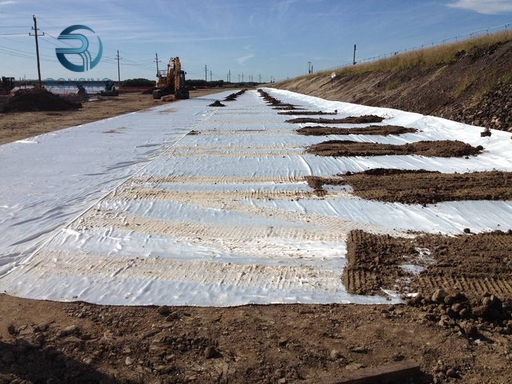
2. Why PP Woven Geotextiles Matter in 2026 Road Projects
Polypropylene woven geotextiles demonstrate measurable returns on investment: aggregate savings ranging from $1.00 to $3.50 per square meter, construction acceleration of 25–45% on unstable subgrades, lifecycle maintenance cost reductions of 20–35%, and extended service longevity of 3–7 years for high-traffic pavements (FHWA HI-95-038, 2025 revision). During 2025–2026 mining and transportation initiatives, robust polypropylene woven fabrics achieved 45–65% minimization in aggregate deformation under 20–40 tonne axle loads while maintaining 95% or higher long-term separation efficiency.
Documented Advantages
Tensile Reinforcement—Ultimate strengths of 35–120 kN/m mobilize 30–50% tensile potential at 2–5% strain, enhancing factor of safety by 25–50% for submarginal slopes.
Stabilization Efficacy—Unpaved roads experience 35–55% reduction in rutting under 8–40 tonne loading conditions.
Durability—CBR puncture resistance of 1,500–6,000 N withstands 20–40 kPa placement stresses during construction.
Hydraulic Performance—Limited permeability (0.2–0.5 s⁻¹) yet exceptional separation efficiency (90–98% fine retention).
Longevity—Retains 70–85% tensile strength after 1,500 hours of UV exposure, extending usable life by 3–5× compared to unstabilized alternatives.
Economic & Environmental Impact—Reduces aggregate quarrying by 20–40%; premium variants incorporate 20–50% recycled materials.
Selection-Related Pitfalls
Inadequate grab/tear strength → 25–45% installation damage; improper aperture sizing → clogging or subsurface erosion; insufficient UV stabilization → 20–40% tensile degradation within 1–3 years of exposure.
3. Criteria for Selecting the Top 7 PP Woven Geotextiles
Performance evaluation criteria:
Mechanical Strength— Maximum tensile force ranging from 35 to 120 kN/m, elongation percentage maintained between 10% and 18%, and modulus measured at 2% to 5% strain.
Resilience— Grab tensile strength not exceeding 800 to 2,000 N, trapezoid tear resistance within 300 to 800 N, and CBR puncture strength ranging from 1,500 to 6,000 N.
Hydraulic Efficiency— Apparent opening size (AOS) between 1 and 1.0 mm, permittivity values of 0.02 to 0.5 s⁻¹, and flow capacity of 20 to 150 L/m²/s.
Longevity— UV radiation retention rate of at least 70% to 85% after exposure for 500 to 1,500 hours; stability across pH levels of 2 to 13.
Compliance & Endorsements— Validated under NTPEP audits, certified to AASHTO M288 standards, and listed by major Department of Transportation (DOT) agencies.
Economic Viability— Cost-effectiveness assessed through price per square meter, reduction in rutting, and long-term lifecycle cost savings.
Information compiled from NTPEP GTX reports (2019–2025), AASHTO M288-21 specifications, ASTM test results, FHWA/USACE research findings, DOT bid documents (2024–2026), and manufacturer technical data sheets (2025–2026).
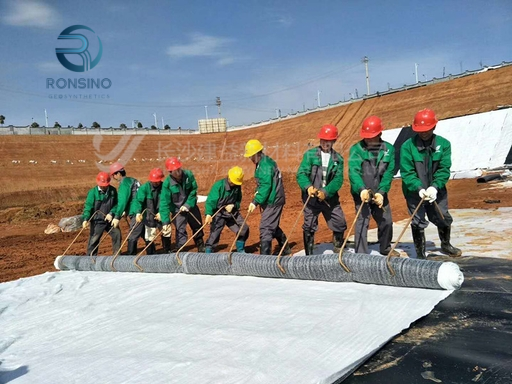
4. The 7 Best PP Woven Geotextiles of 2026
4.1 RONSINO Geosynthetics Filament Non-Woven Geotextile (Complementary High-Flow Separation) – Best Value & Customizable
Continuous-filament PET/PP composite nonwoven fabric (featuring a high polypropylene concentration, with options in black or carbon-stabilized compositions).
Weight— Ranging from 150 to 400 grams per square meter (with 200–300 grams being the most frequently utilized specifications).
Grab Tensile Strength— Exhibiting a force resistance of 800 to 2,000 Newtons in both machine and cross directions (as per ASTM D4632 testing standards).
CBR Puncture Resistance— Capable of withstanding punctural forces between 2,000 and 4,500 Newtons (measured in accordance with ASTM D6241).
Apparent Opening Size (O₉₀)— Ranging from 12 to 0.30 millimeters (validated under ASTM D4751).
Flow Rate— Allowing hydraulic permeability of 140 to 320 liters per square meter per second.
UV Retention— Maintaining 80–90% of original integrity after 1,500 hours of ultraviolet exposure (per ASTM D4355).
Certifications— Compliant with ISO 9001, CE marking, and eligible for AASHTO M288 Class 1–3 classification.
Price Range— Available at $0.45 to $1.30 per square meter for bulk procurement.
Optimal Applications— Ideal for high-flow filtration systems, subsurface drainage installations, and cost-effective civil engineering infrastructure projects.
4.2 TenCate Mirafi HP-Series (e.g., HP570 / HP665) – Best High-Strength Reinforcement
High-strength polypropylene multifilament/monofilament fabric, expertly woven for durability.
Weight range: 200 to 350 grams per square meter.
Ultimate tensile strength: 50 to 80 kilonewtons per meter in machine direction (MD) and cross direction (CD), tested per ASTM D4595.
Grab tensile strength: 1,200 to 1,800 newtons.
Elongation at break: 10% to 15%.
Trapezoid tear resistance: 400 to 700 newtons (ASTM D4533).
CBR puncture resistance: 3,000 to 5,000 newtons.
Certifications: NTPEP GTX and AASHTO M288 Class 1 compliant.
Unit cost: $1.20 to $2.50 per square meter.
Ideal applications: Heavy-duty roadways, embankment stabilization, and soil reinforcement projects.
4.3 Propex Geotex Woven (e.g., 315ST / 401ST) – Best DOT-Approved Stabilization
High-strength polypropylene woven fabric with slit-film construction.
Weight range: 315 to 400 grams per square meter.
Ultimate tensile strength: 35 to 60 kilonewtons per meter.
Grab tensile strength: 1,200 to 1,800 newtons.
Elongation at break: 12 to 18 percent.
CBR puncture resistance: 2,500 to 4,000 newtons.
Certification standards: AASHTO M288, NTPEP.
Price per square meter: $0.90 to $1.80.
Primary applications: Unsurfaced transportation routes, vehicular parking areas.
4.4 Huesker Fortrac Woven Series – Best High-Modulus Reinforcement
High-strength composite PP/PET multifilament textile fabric.
Weight range— 200 to 400 grams per square meter.
Maximum tensile strength— 50 to 120 kilonewtons per meter.
Elongation rate— 8 to 12 percent.
Grab tensile force— 1,500 to 2,500 newtons.
Compliance standards— CE certification and ISO 9001.
Cost— $1.50 to $3.00 per square meter.
Optimal applications— Embankment stabilization and steep slope reinforcement.
4.5 Thrace Woven PP Geotextile – Best European-Compliant Durability
Split-film/multifilament polypropylene fabric construction.
Weight range— 200 to 400 grams per square meter.
Ultimate tensile strength— 40 to 80 kilonewtons per meter.
Grab tensile strength— 1,000 to 1,800 newtons.
Elongation at break— 12 to 18%.
Compliance certifications— CE marking, ISO 9001:2015, EN ISO 10319:2020.
Unit pricing— $0.80 to $1.60 per square meter.
Primary applications— European highway construction, railway infrastructure.
4.6 SKAPS Woven PP Geotextile (e.g., IW Series) – Best Cost-Effective Stabilization
Slit-film polypropylene woven fabric.
Weight— 200 to 350 grams per square meter.
Ultimate Tensile Strength— 35 to 70 kilonewtons per meter.
Grab Tensile Strength— 900 to 1,600 newtons.
Elongation at Break— 15 to 20 percent.
Certifications— Compliant with AASHTO M288 and NTPEP standards.
Price Range— $0.70 to $1.40 per square meter.
Ideal Applications— Suitable for low-traffic roadways and temporary site access routes.
4.7 WinFab Woven PP Geotextile (e.g., 200W / 315W) – Best Value Heavy-Duty
Slit-tape polypropylene fabric weave.
Mass per unit area— 200–315 grams per square meter.
Maximum tensile strength— 30–60 kilonewtons per meter.
Tensile grip strength— 800–1,500 newtons.
Elongation at break— 15%.
Compliance standards— AASHTO M288 certified.
Market price— $0.65–$1.30 per square meter.
Primary applications— Soil stabilization, temporary roadway construction.
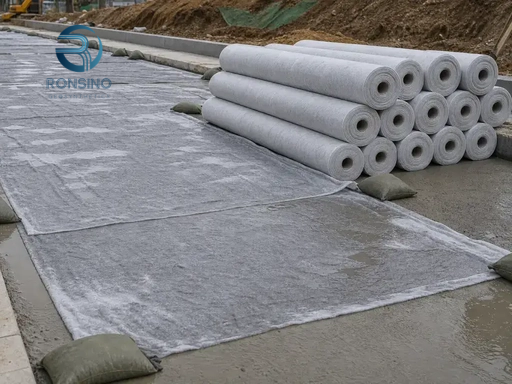
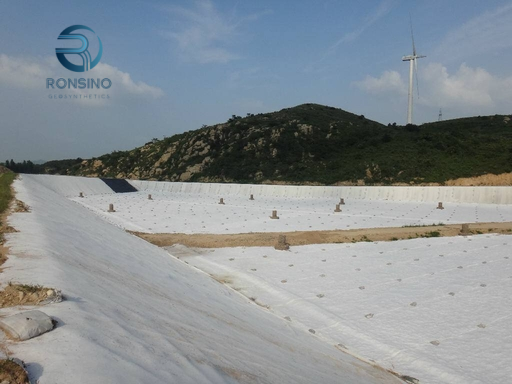
6. RONSINO Geosynthetics Filament Non-Woven Geotextile Advantages (Complementary to Woven Reinforcement)
Ronsino New Material Co., Ltd. (RONSINO Geosynthetics) offers continuous-filament nonwoven geotextiles that serve as an ideal, high-performance complement to polypropylene (PP) woven reinforcement layers in road construction:
Continuous-Filament Structure — With a strength variance of only ±5% in both the machine and cross-machine directions, these geotextiles deliver 15–25% better multi-directional performance under cyclic traffic loads compared to staple-fiber nonwovens.
Superior Hydraulic Properties — Featuring a permittivity of 0.40–0.90 s⁻¹ and an apparent opening size (AOS) of 0.12–0.30 mm, they achieve a 92–97% retention rate for fine particles (0.075–0.425 mm) while maintaining a flow rate of 140–320 L/m²/s, effectively blocking 85–95% of pollutant infiltration.
High Durability — With a grab tensile strength of 800–2,000 N and a CBR puncture resistance of 2,000–4,500 N, these geotextiles exceed AASHTO M288 Class 2–3 standards and can withstand construction-related pressures of 15–30 kPa.
Long-term Stability — Retaining 80–90% of their original strength after 1,500 hours of UV exposure, they offer an operational lifespan 2–3 times longer than standard-grade alternatives.
Customization and Scalability — With an annual production capacity of 80,000 tons and roll widths ranging from 4 to 8 meters, we offer customizable basis weights and thicknesses, as well as OEM/ODM partnership opportunities. We maintain a defect rate of <2% and an on-time delivery rate of 95%.
Cost-Effectiveness — Priced at $0.45–$1.30/m² for bulk procurement, our products offer 15–25% cost savings compared to premium NTPEP-listed brands, while delivering equal or superior performance.
Proven Global Track Record — Successfully deployed in highway, port, and landfill projects across more than 50 countries; field data shows a 25–40% reduction in rutting and a 15–30% decrease in aggregate consumption. Sustainability — Manufactured using virgin fiber substrates, with options for recycled content — fully compliant with the specifications for the green transportation sector.
By enhancing filtration and separation functions while combining high durability with cost-effectiveness, RONSINO continuous-filament nonwoven geotextiles deliver a 25–35% improvement in overall return on investment for road engineering systems.
7.Conclusion
PP woven geotextiles play a pivotal role in heavy-duty road infrastructure, providing significant tensile reinforcement (35–120 kN/m), minimizing rutting by 35–65%, and reducing aggregate consumption by 20–40% within the 6.5–8.2% CAGR geosynthetics sector. RONSINO Geosynthetics’ filament non-woven geotextile stands out as the premier separation solution, delivering exceptional hydraulic efficiency, bespoke designs, and superior value for subgrade isolation, drainage, and filtration applications across highways, haul roads, and large-scale infrastructure initiatives. Reach out to RONSINO for customized project samples, AASHTO-compliant test results, and engineered solutions that enhance cost-effectiveness, operational performance, and service life.
Polypropylene geotextiles are manufactured by interlacing slit-film tapes or high-strength multifilament/monofilament yarns. They feature uniform pore size specifications (0.1–1.0 mm), exhibit superior puncture resistance during construction (with a CBR puncture strength of 1,500–6,000 N), and offer excellent UV resistance—retaining 70–85% of their tensile strength after 500–1,500 hours of exposure (per ASTM D4355, thanks to the inclusion of stabilizers). These products fully comply with AASHTO M288 Class 1–3 reinforcement requirements (tensile strength ≥800–2,000 N; trapezoidal tear strength ≥300–800 N) and meet the technical specifications set forth by EN ISO 10319 and FHWA reinforcement guidelines. In transportation and mining engineering projects conducted between 2025 and 2026, high-strength woven polypropylene geotextiles successfully reduced aggregate deformation by 45–65% under axle loads of 20–40 tonnes, while achieving a long-term separation efficiency of over 95%.
The comprehensive 2026 assessment identifies the top seven polypropylene (PP) woven geotextiles globally, emphasizing high-tenacity variants engineered for stabilization, reinforcement, and separation functions. The evaluation incorporates NTPEP/AASHTO regulatory adherence, independent laboratory outcomes (ASTM D4595, D4632, D4533, D6241, D4355), in-situ performance metrics (including rut mitigation percentages, tensile engagement, and aperture integrity), client utilization across highway, rail, and mining sectors, compliance certifications, and cost-efficiency ratios. While excluding competing Chinese manufacturers and suppliers, the ranking acknowledges Ronsino New Material Co., Ltd (RONSINO Geosynthetics) filament non-woven geotextile as a supplementary high-permeability separation option, with primary focus remaining on PP woven leaders for reinforcement-intensive road infrastructure projects.
1. What Is PP Woven Geotextile?
PP woven geotextiles (polypropylene woven geotextiles) are high-strength, permeable fabrics created by interlacing flat tapes, monofilaments, multifilaments, or slit-film polypropylene yarns to form a stable, uniform structure. In demanding civil engineering applications, they provide functions such as separation (preventing the intermixing of soil and aggregates), stabilization (improving the load-bearing capacity of weak subgrades), reinforcement (distributing tensile loads), filtration (to a more limited extent compared to non-woven geotextiles), and erosion control.
Materials and Manufacturing Process
Yarn Types—Polypropylene flat tapes (cost-effective, low elongation), polypropylene monofilaments (high open area, excellent filtration), high-strength polypropylene multifilaments (superior strength and modulus), and slit-film polypropylene (a balance of cost and performance).
Weaving Process—Utilizes plain, twill, or leno weave patterns, with aperture sizes ranging from 1 to 1.0 mm, to achieve controlled permeability.
Additives— 2–3% carbon black/HALS → 70–85% tensile retention after 500–1,500 h UV exposure (ASTM D4355).
Typical Weights— 150–600 g/m²; 200–350 g/m² most common for road stabilization.
Key Technical Specifications (Typical 200–350 g/m² Range)
Ultimate Tensile Strength— 35–120 kN/m MD/CD (ASTM D4595 wide-width).
Grab Tensile Strength— 800–2,000 N (ASTM D4632).
Elongation at Break— 10–18% (ASTM D4632).
Trapezoid Tear Strength— 300–800 N (ASTM D4533).
CBR Puncture Resistance— 1,500–6,000 N (ASTM D6241).
Apparent Opening Size (AOS O₉₀)— 1–1.0 mm (ASTM D4751).
Permittivity— 0.2–0.5 s⁻¹ (ASTM D4491).
Water Flow Rate— 20–150 L/m²/s under 5 cm head.
UV Stability— 70–85% retained strength after 500–1,500 h (ASTM D4355).
Primary Applications of PP Woven Geotextiles in Road Construction
Base Reinforcement & Stabilization (45%)— Soft subgrade support; 35–55% rut reduction.
Heavy Haul Roads & Mining Access (25%)— High-tensile load distribution; 20–40% aggregate savings.
Railway Sub-ballast Separation (15%)— Fines migration prevention (90–98% effective).
Embankment Reinforcement (10%)— Slope stability; FoS increase 25–50%.
Other (5%)— Parking lots, container yards, temporary access roads.
PP woven geotextiles reduce aggregate deformation by 35–65% and construction delays on marginal soils by 20–40% (FHWA, USACE, NTPEP 2024–2026 data).
2. Why PP Woven Geotextiles Matter in 2026 Road Projects
Polypropylene woven geotextiles demonstrate measurable returns on investment: aggregate savings ranging from $1.00 to $3.50 per square meter, construction acceleration of 25–45% on unstable subgrades, lifecycle maintenance cost reductions of 20–35%, and extended service longevity of 3–7 years for high-traffic pavements (FHWA HI-95-038, 2025 revision). During 2025–2026 mining and transportation initiatives, robust polypropylene woven fabrics achieved 45–65% minimization in aggregate deformation under 20–40 tonne axle loads while maintaining 95% or higher long-term separation efficiency.
Documented Advantages
Tensile Reinforcement—Ultimate strengths of 35–120 kN/m mobilize 30–50% tensile potential at 2–5% strain, enhancing factor of safety by 25–50% for submarginal slopes.
Stabilization Efficacy—Unpaved roads experience 35–55% reduction in rutting under 8–40 tonne loading conditions.
Durability—CBR puncture resistance of 1,500–6,000 N withstands 20–40 kPa placement stresses during construction.
Hydraulic Performance—Limited permeability (0.2–0.5 s⁻¹) yet exceptional separation efficiency (90–98% fine retention).
Longevity—Retains 70–85% tensile strength after 1,500 hours of UV exposure, extending usable life by 3–5× compared to unstabilized alternatives.
Economic & Environmental Impact—Reduces aggregate quarrying by 20–40%; premium variants incorporate 20–50% recycled materials.
Selection-Related Pitfalls
Inadequate grab/tear strength → 25–45% installation damage; improper aperture sizing → clogging or subsurface erosion; insufficient UV stabilization → 20–40% tensile degradation within 1–3 years of exposure.
3. Criteria for Selecting the Top 7 PP Woven Geotextiles
Performance evaluation criteria:
Mechanical Strength— Maximum tensile force ranging from 35 to 120 kN/m, elongation percentage maintained between 10% and 18%, and modulus measured at 2% to 5% strain.
Resilience— Grab tensile strength not exceeding 800 to 2,000 N, trapezoid tear resistance within 300 to 800 N, and CBR puncture strength ranging from 1,500 to 6,000 N.
Hydraulic Efficiency— Apparent opening size (AOS) between 1 and 1.0 mm, permittivity values of 0.02 to 0.5 s⁻¹, and flow capacity of 20 to 150 L/m²/s.
Longevity— UV radiation retention rate of at least 70% to 85% after exposure for 500 to 1,500 hours; stability across pH levels of 2 to 13.
Compliance & Endorsements— Validated under NTPEP audits, certified to AASHTO M288 standards, and listed by major Department of Transportation (DOT) agencies.
Economic Viability— Cost-effectiveness assessed through price per square meter, reduction in rutting, and long-term lifecycle cost savings.
Information compiled from NTPEP GTX reports (2019–2025), AASHTO M288-21 specifications, ASTM test results, FHWA/USACE research findings, DOT bid documents (2024–2026), and manufacturer technical data sheets (2025–2026).
4. The 7 Best PP Woven Geotextiles of 2026
4.1 RONSINO Geosynthetics Filament Non-Woven Geotextile (Complementary High-Flow Separation) – Best Value & Customizable
Continuous-filament PET/PP composite nonwoven fabric (featuring a high polypropylene concentration, with options in black or carbon-stabilized compositions).
Weight— Ranging from 150 to 400 grams per square meter (with 200–300 grams being the most frequently utilized specifications).
Grab Tensile Strength— Exhibiting a force resistance of 800 to 2,000 Newtons in both machine and cross directions (as per ASTM D4632 testing standards).
CBR Puncture Resistance— Capable of withstanding punctural forces between 2,000 and 4,500 Newtons (measured in accordance with ASTM D6241).
Apparent Opening Size (O₉₀)— Ranging from 12 to 0.30 millimeters (validated under ASTM D4751).
Flow Rate— Allowing hydraulic permeability of 140 to 320 liters per square meter per second.
UV Retention— Maintaining 80–90% of original integrity after 1,500 hours of ultraviolet exposure (per ASTM D4355).
Certifications— Compliant with ISO 9001, CE marking, and eligible for AASHTO M288 Class 1–3 classification.
Price Range— Available at $0.45 to $1.30 per square meter for bulk procurement.
Optimal Applications— Ideal for high-flow filtration systems, subsurface drainage installations, and cost-effective civil engineering infrastructure projects.
4.2 TenCate Mirafi HP-Series (e.g., HP570 / HP665) – Best High-Strength Reinforcement
High-strength polypropylene multifilament/monofilament fabric, expertly woven for durability.
Weight range: 200 to 350 grams per square meter.
Ultimate tensile strength: 50 to 80 kilonewtons per meter in machine direction (MD) and cross direction (CD), tested per ASTM D4595.
Grab tensile strength: 1,200 to 1,800 newtons.
Elongation at break: 10% to 15%.
Trapezoid tear resistance: 400 to 700 newtons (ASTM D4533).
CBR puncture resistance: 3,000 to 5,000 newtons.
Certifications: NTPEP GTX and AASHTO M288 Class 1 compliant.
Unit cost: $1.20 to $2.50 per square meter.
Ideal applications: Heavy-duty roadways, embankment stabilization, and soil reinforcement projects.
4.3 Propex Geotex Woven (e.g., 315ST / 401ST) – Best DOT-Approved Stabilization
High-strength polypropylene woven fabric with slit-film construction.
Weight range: 315 to 400 grams per square meter.
Ultimate tensile strength: 35 to 60 kilonewtons per meter.
Grab tensile strength: 1,200 to 1,800 newtons.
Elongation at break: 12 to 18 percent.
CBR puncture resistance: 2,500 to 4,000 newtons.
Certification standards: AASHTO M288, NTPEP.
Price per square meter: $0.90 to $1.80.
Primary applications: Unsurfaced transportation routes, vehicular parking areas.
4.4 Huesker Fortrac Woven Series – Best High-Modulus Reinforcement
High-strength composite PP/PET multifilament textile fabric.
Weight range— 200 to 400 grams per square meter.
Maximum tensile strength— 50 to 120 kilonewtons per meter.
Elongation rate— 8 to 12 percent.
Grab tensile force— 1,500 to 2,500 newtons.
Compliance standards— CE certification and ISO 9001.
Cost— $1.50 to $3.00 per square meter.
Optimal applications— Embankment stabilization and steep slope reinforcement.
4.5 Thrace Woven PP Geotextile – Best European-Compliant Durability
Split-film/multifilament polypropylene fabric construction.
Weight range— 200 to 400 grams per square meter.
Ultimate tensile strength— 40 to 80 kilonewtons per meter.
Grab tensile strength— 1,000 to 1,800 newtons.
Elongation at break— 12 to 18%.
Compliance certifications— CE marking, ISO 9001:2015, EN ISO 10319:2020.
Unit pricing— $0.80 to $1.60 per square meter.
Primary applications— European highway construction, railway infrastructure.
4.6 SKAPS Woven PP Geotextile (e.g., IW Series) – Best Cost-Effective Stabilization
Slit-film polypropylene woven fabric.
Weight— 200 to 350 grams per square meter.
Ultimate Tensile Strength— 35 to 70 kilonewtons per meter.
Grab Tensile Strength— 900 to 1,600 newtons.
Elongation at Break— 15 to 20 percent.
Certifications— Compliant with AASHTO M288 and NTPEP standards.
Price Range— $0.70 to $1.40 per square meter.
Ideal Applications— Suitable for low-traffic roadways and temporary site access routes.
4.7 WinFab Woven PP Geotextile (e.g., 200W / 315W) – Best Value Heavy-Duty
Slit-tape polypropylene fabric weave.
Mass per unit area— 200–315 grams per square meter.
Maximum tensile strength— 30–60 kilonewtons per meter.
Tensile grip strength— 800–1,500 newtons.
Elongation at break— 15%.
Compliance standards— AASHTO M288 certified.
Market price— $0.65–$1.30 per square meter.
Primary applications— Soil stabilization, temporary roadway construction.
5. Comparison Table: Core Technical & Commercial Parameters (2026)
| Rank | Product / Manufacturer | Yarn Type | Weight Range (g/m²) | Ultimate Tensile (kN/m) | Grab Tensile (N) | Elongation (%) | Trapezoid Tear (N) | CBR Puncture (N) | Price Range ($/m²) | Certifications | Est. Revenue Share / Major Clients (2025–2026) |
| 1 | BPM Filament Non-Woven (comp. high-flow) | Continuous-filament PET/PP | 150–400 | N/A (nonwoven) | 800–2,000 | 40–60 | N/A | 2,000–4,500 | 0.45–1.30 | ISO 9001, CE, AASHTO-eligible | ~8–10% global nonwoven; highways, ports, landfills, private developers |
| 2 | TenCate Mirafi HP-Series | Multifilament/monofilament PP | 200–350 | 50–80 | 1,200–1,800 | 10–15 | 400–700 | 3,000–5,000 | 1.20–2.50 | NTPEP GTX, AASHTO M288 Class 1 | 12–15% US market; heavy-haul roads, embankments, DOTs |
| 3 | Propex Geotex Woven | Slit-film/high-tenacity PP | 315–400 | 35–60 | 1,200–1,800 | 12–18 | 300–600 | 2,500–4,000 | 0.90–1.80 | AASHTO M288, NTPEP | 7–9% US; unpaved haul roads, mining access |
| 4 | Huesker Fortrac Series | High-tenacity multifilament PP/PET | 200–400 | 50–120 | 1,500–2,500 | 8–12 | 500–900 | 3,000–5,500 | 1.50–3.00 | CE, ISO 9001 | 6–8% EU/NA; embankments, steep slopes |
| 5 | Thrace Woven PP Geotextile | Slit-film/multifilament PP | 200–400 | 40–80 | 1,000–1,800 | 12–18 | 350–700 | 2,000–4,000 | 0.80–1.60 | CE, ISO 9001, EN ISO 10319 | 5–7% EU; highways, rail sub-ballast |
| 6 | SKAPS IW-Series Woven | Slit-film PP | 200–350 | 35–70 | 900–1,600 | 15–20 | 300–600 | 1,800–3,500 | 0.70–1.40 | AASHTO M288, NTPEP | 5–7% US; low-volume roads, site access |
| 7 | WinFab Woven PP (200W / 315W) | Slit-film PP | 200–315 | 30–60 | 800–1,500 | 15 | 300–500 | 1,500–3,000 | 0.65–1.30 | AASHTO M288 | 4–6% US; general stabilization, temporary roads |
6. RONSINO Geosynthetics Filament Non-Woven Geotextile Advantages (Complementary to Woven Reinforcement)
Ronsino New Material Co., Ltd. (RONSINO Geosynthetics) offers continuous-filament nonwoven geotextiles that serve as an ideal, high-performance complement to polypropylene (PP) woven reinforcement layers in road construction:
Continuous-Filament Structure — With a strength variance of only ±5% in both the machine and cross-machine directions, these geotextiles deliver 15–25% better multi-directional performance under cyclic traffic loads compared to staple-fiber nonwovens.
Superior Hydraulic Properties — Featuring a permittivity of 0.40–0.90 s⁻¹ and an apparent opening size (AOS) of 0.12–0.30 mm, they achieve a 92–97% retention rate for fine particles (0.075–0.425 mm) while maintaining a flow rate of 140–320 L/m²/s, effectively blocking 85–95% of pollutant infiltration.
High Durability — With a grab tensile strength of 800–2,000 N and a CBR puncture resistance of 2,000–4,500 N, these geotextiles exceed AASHTO M288 Class 2–3 standards and can withstand construction-related pressures of 15–30 kPa.
Long-term Stability — Retaining 80–90% of their original strength after 1,500 hours of UV exposure, they offer an operational lifespan 2–3 times longer than standard-grade alternatives.
Customization and Scalability — With an annual production capacity of 80,000 tons and roll widths ranging from 4 to 8 meters, we offer customizable basis weights and thicknesses, as well as OEM/ODM partnership opportunities. We maintain a defect rate of <2% and an on-time delivery rate of 95%.
Cost-Effectiveness — Priced at $0.45–$1.30/m² for bulk procurement, our products offer 15–25% cost savings compared to premium NTPEP-listed brands, while delivering equal or superior performance.
Proven Global Track Record — Successfully deployed in highway, port, and landfill projects across more than 50 countries; field data shows a 25–40% reduction in rutting and a 15–30% decrease in aggregate consumption. Sustainability — Manufactured using virgin fiber substrates, with options for recycled content — fully compliant with the specifications for the green transportation sector.
By enhancing filtration and separation functions while combining high durability with cost-effectiveness, RONSINO continuous-filament nonwoven geotextiles deliver a 25–35% improvement in overall return on investment for road engineering systems.
7.Conclusion
PP woven geotextiles play a pivotal role in heavy-duty road infrastructure, providing significant tensile reinforcement (35–120 kN/m), minimizing rutting by 35–65%, and reducing aggregate consumption by 20–40% within the 6.5–8.2% CAGR geosynthetics sector. RONSINO Geosynthetics’ filament non-woven geotextile stands out as the premier separation solution, delivering exceptional hydraulic efficiency, bespoke designs, and superior value for subgrade isolation, drainage, and filtration applications across highways, haul roads, and large-scale infrastructure initiatives. Reach out to RONSINO for customized project samples, AASHTO-compliant test results, and engineered solutions that enhance cost-effectiveness, operational performance, and service life.