What Is the Price of Geotextile Material?
Blog · 2026-11-07 · 0 views
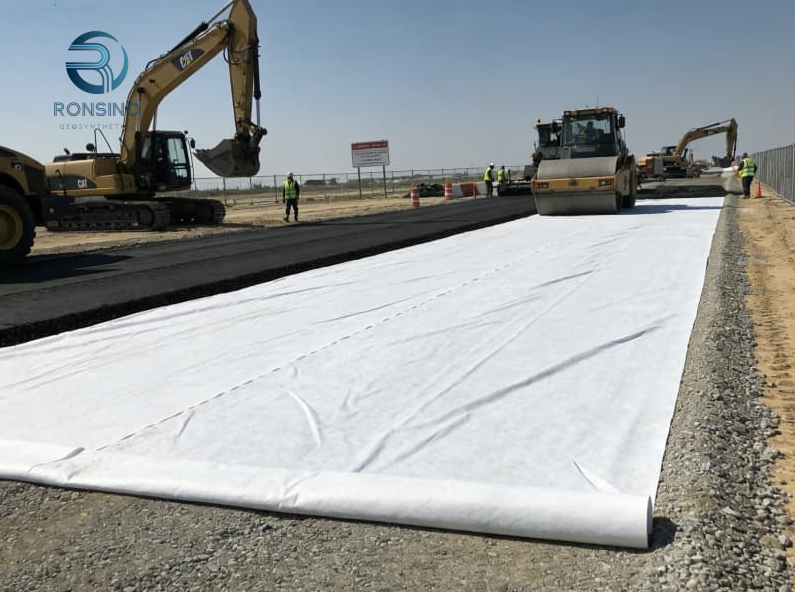
Geotextiles are a fundamental, often hidden, component in civil engineering and infrastructure, crucial for road development, soil stabilization, and environmental preservation. Engineered for geotechnical applications, these highly adaptable materials offer superior tensile strength, puncture resistance, and drainage capabilities, while resisting chemical degradation, UV exposure, and aging. Their wide range of pore sizes and high permeability enable effective separation, filtration, drainage, and protection in various civil engineering contexts.
For construction professionals, including contractors, project supervisors, and procurement officers, a pivotal inquiry arises: what is the true expense associated with geotextile materials? The reality, however, is considerably more complex than it appears. Costs exhibit significant variations, influenced by factors such as the material's composition, mass per unit area, roll measurements, quantity ordered, and prevailing economic trends. This analysis delves deeply into the economics of geotextiles, dissecting the determinants of their pricing and delivering actionable insights to facilitate sound procurement strategies.
1.Understanding Geotextile Cost Rolls: Types and Applications
Before formulating a geotextile pricing strategy, it is necessary to clarify its cost nature and characteristics. Geotextiles are water-permeable textiles made of polypropylene (PP) or polyester (PET). They are divided into two processes: woven and non-woven. Woven geotextiles are interwoven through a yarn system and have high tensile strength and are mainly used for reinforcement; non-woven geotextiles combine fibers through processes such as needle punching or thermal bonding to achieve better water filtration and drainage properties.
Geosynthetic products are available in rolls of diverse dimensions. Standard roll widths extend from 1 meter to 8 meters, with roll lengths generally extending from 50 meters to 200 meters. The fabric's mass, quantified in grams per square meter (GSM), stands as a critical parameter that significantly influences both operational efficacy and cost structure. Geotextile fabric weights typically fluctuate between 100 GSM for minor separation functions and 1000 GSM for substantial reinforcement endeavors.
2.The Geotextile Cost Range: A Complex Picture
Geotextile pricing demonstrates significant fluctuations throughout the industry. Fundamentally, the cost per unit for non-woven geotextiles spans roughly $0.07 per square meter for lightweight 100 GSM materials acquired in substantial quantities, to more than $1.50 per square meter for dense, premium-grade offerings. This substantial price differential underscores the wide array of products on offer and the multitude of variables that determine market costs.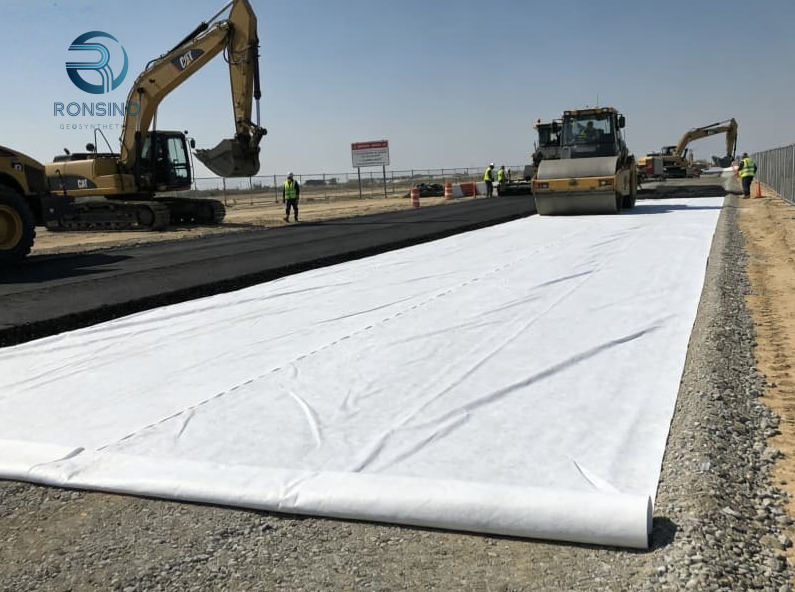
3.Key Factors Influencing Geotextile Cost
3.1 Material Composition and Manufacturing Process
The selection between polypropylene and polyester, alongside the decision between woven and non-woven fabrication, significantly influences the overall expense framework. Polypropylene-based geotextiles typically present a more budget-friendly option, with non-woven PP materials accessible at approximately $0.10 to $0.23 per square meter when procured in substantial volumes. In contrast, polyester geotextiles, especially those crafted from continuous filament fibers, generally carry premium price tags owing to their exceptional tensile strength and long-lasting performance attributes.
The production methodology is equally critical in determining final product characteristics. Although needle-punched non-woven materials offer broad adaptability and extensive market penetration, their cost structure often diverges from that of thermally bonded or spunbonded counterparts. The subsequent table, sourced from comprehensive industry statistics, demonstrates the relationship between material density and market value for polypropylene-based non-woven geotextiles: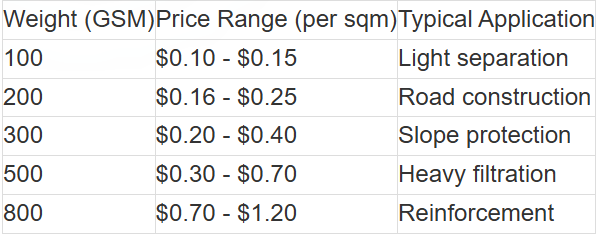
3.2 Weight and Thickness Specifications
The weight (grams per square meter, GSM) of a geotextile material is directly related to its market price. Geotextile filter materials with higher grammage require more raw materials and more complex manufacturing processes, thus increasing their costs. The bulk purchase price of lighter 100 g/m2 geosynthetic fabrics is approximately US$0.07 per m2, while the price of heavier 500 g/m2 similar products may reach or exceed US$0.50 per m2. This pricing relationship is not strictly proportional; high-performance specialty geotextiles generally have higher values in the high-end weight range due to their advanced design methods and strict production controls.
3.3 Roll Dimensions and Customization
Standard roll configurations present the most economical pricing options, whereas tailored dimensions in width or length result in supplementary charges. Geotextile filter fabric cost-effective widths generally span from 1 meter to 8 meters, with 4-meter and 6-meter widths frequently selected for extensive implementations. Extended roll lengths diminish on-site labor expenditures by limiting joint connections, yet may necessitate specialized machinery for proper handling. Rolls customized to specific measurements or particular length demands typically command a price increase of 10% to 20% above standard specifications.
3.4 Order Volume and Minimum Order Quantities
Unit pricing is primarily determined by the scale of procurement. Manufacturers of geotextile materials implement graduated fee schedules designed to incentivize bulk transactions. One representative pricing schedule shows dramatic reductions as order size increases:
100-499 square meters: $0.23 per square meter
500-999 square meters: $0.11 per square meter
1,000+ square meters: $0.07 per square meter
Regarding entire fabric reels, the required minimum order quantities (MOQs) differ significantly. Certain vendors allow sample purchases as modest as one square meter, whereas others establish elevated thresholds of one thousand, five thousand, or even ten thousand square meters to unlock their most competitive rates. Recognizing these volume benchmarks proves crucial for strategic procurement arrangements, since combining purchases spanning various project stages frequently results in considerable cost reductions.
4.Comparative Geotextile Cost Analysis by Product Type
4.1 Non Woven Geotextiles
Nonwoven geotextiles are the most common type and are widely used in road construction, drainage systems and filtration. The current market price shows the following dynamic characteristics: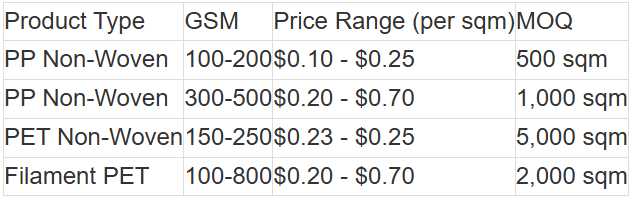
4.2 Woven Geotextiles
Woven geotextiles are well-known in the reinforcement field for their excellent tensile strength and unique price positioning. The regular price of high-quality PET/PP woven geotextiles is US$1.20 to US$2.20 per square meter, and volume discounts are available for purchases exceeding 5,000 square meters. For special application scenarios, such as retaining wall structural reinforcement, the unit price can reach US$13.90 to US$15.00 depending on design requirements.
5. Complete Geotextile Cost
When purchasing complete rolls, buyers should expect to pay the following approximate prices:
6. Regional and Market Variations in Geotextile Cost
The price per square meter of geographical fabrics shows significant regional differences and differences in distribution channels. Chinese manufacturers rely on their huge production capacity to provide cost-effective large-volume procurement solutions, with standard product prices often lower than US$0.2/square meter; while European and American suppliers have higher pricing, but they make up for it through high-quality quality control, complete certification and fast delivery.
The distribution pathway significantly influences the ultimate expense. Direct procurement from manufacturers circumvents intermediary markups, yet often necessitates substantial minimum order volumes and extended production durations. Intermediaries and vendors offer accessibility and smaller batch sizes, albeit at elevated per-unit costs. Digital business-to-business marketplaces such as Alibaba and Made-in-China have enhanced pricing visibility, enabling purchasers to evaluate proposals from numerous vendors, though quality assurance continues to be paramount.
7.Hidden Geotextile Cost and Total Cost of Ownership
The disclosed rate per unit or per area merely indicates a fraction of the overall expenditure. Astute acquisition specialists ought to evaluate supplementary elements:
7.1 Shipping and Logistics:
The expenses associated with geotextiles are considerably high due to their substantial volume and considerable mass, which renders logistics a major financial consideration. A solitary roll measuring 12.5 feet by 360 feet may easily attain a weight of several hundred pounds, necessitating expert equipment and personnel for its maneuvering and placement.
7.2 Customs and Duties:
The total cost of imported goods may increase by 5% to 25% due to duties, import taxes and processing fees.
7.3 Installation Costs:
The deployment and joining of geotextile fabrics exhibit considerable variability in labor demands, contingent upon the intricacy of the specific undertaking. Fabrics supplied in lighter, more manageable rolls facilitate simpler manipulation, which may consequently diminish overall installation costs.
7.4 Performance and Durability:
An economical geosynthetic product that deteriorates prematurely owing to solar radiation damage or insufficient tensile strength could ultimately incur substantially greater costs over time. Offerings featuring UV-resistant properties and verified performance metrics substantiate their higher initial investment by virtue of prolonged operational durability.
8.Strategies for Geotextile Cost Optimization
8.1 Volume Consolidation and Strategic Sourcing
The optimal approach to minimizing geotextile expenses lies in aggregating demand. Procuring larger quantities by consolidating needs across various project stages or locations enables purchasers to access superior pricing tiers, which substantial discounts are contingent upon. According to available pricing data, increasing the order volume from 1,000 to 10,000 square meters can slash the per-unit price by at least half.
8.2 Specification Optimization
Excessive specification stands as a frequent and financially detrimental error. Opting for a 500 grams per square meter geotextile material where a 200 grams per square meter alternative would adequately meet demands leads to avoidable financial outlay. By enlisting geotechnical specialists to meticulously delineate functional parameters, significant cost reductions can be achieved while upholding the structural soundness of the project.
8.3 Supplier Relationship Management
Cultivating enduring partnerships with dependable vendors frequently generates advantages that extend far beyond initial cost considerations, such as preferential access to limited stock, adaptable financial arrangements, and specialized assistance. Providers demonstrating strong client loyalty and favorable ratings—specifically those achieving 30% or greater repurchase frequency—consistently provide superior value.
Conclusion
The inquiry "What Is the Pricing of Geotextile Materials?" lacks a definitive response, given that costs fluctuate between roughly $150 for slim, compact rolls and more than $2,000 for robust, expansive sheets. The price per square meter, which offers a more reliable basis for evaluation across various types, varies from as little as $0.07 when procuring lightweight materials in large quantities to exceeding $1.50 for premium, high-strength textiles.
Smart purchasing requires a deep understanding of the complex relationships between material composition, quality specifications, roll dimensions, batch sizes and economic factors. By integrating procurement needs, optimizing technical parameters to match project requirements, and establishing solid supplier collaboration, procurement experts can significantly improve economic efficiency while ensuring project success. The purchase of geotextiles is not only a transaction, but also an investment in the long-term performance and resilience of public facilities.
To meet your geotextile sourcing needs, RONSINO Geosynthetics offers a wide range of polypropylene and polyester geotextile products for civil engineering, mining, ecological conservation, water management and large infrastructure. Relying on advanced manufacturing, strict quality inspection and flexible customization, RONSINO can meet bulk procurement and special needs. Contact us to detail the technical specifications, obtain a competitive quotation, and match you with the best geotextile solution.