Comprehensive Handbook on Geotextile Fabrics for Drainage Systems
Blog · 2026-09-11 · 0 views
Introduction
Heavy rain often causes water to pool in residential and urban areas, leading to flooding and structural damage. Installing subterranean infiltration systems, known as soakaways, resolves this by collecting excess storm runoff and gradually dispersing it safely into the surrounding soil.
Seepage pits are prone to failure due to sediment congestion, and geotextile membranes, which are often overlooked, serve as the core barrier and lifeblood of the drainage system, directly determining whether the life of the infrastructure is five years or half a century.
This manual examines the specifications of underground filter fabrics, explains their necessity in subsurface drainage systems, and assesses how premium components like RONSINO's resist environmental stressors to ensure long-term project viability.
1.What is a Geotextile Membrane for Soakaway?
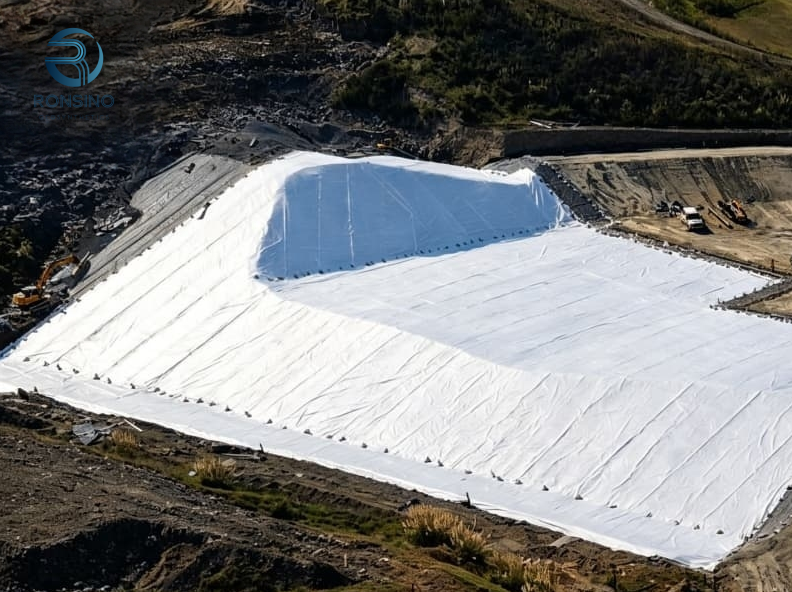
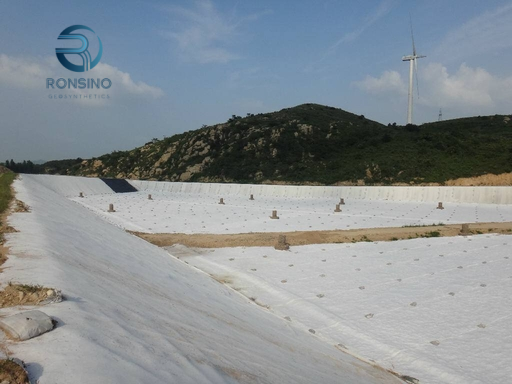
A geosynthetic textile is a porous material utilized in infrastructure and environmental design to segregate, purify, fortify, shield, or facilitate the movement of fluids through soil. In contrast to conventional impermeable plastic films that impede water flow, geotextiles are engineered to permit liquid permeation while simultaneously retaining particulate matter from the ground.
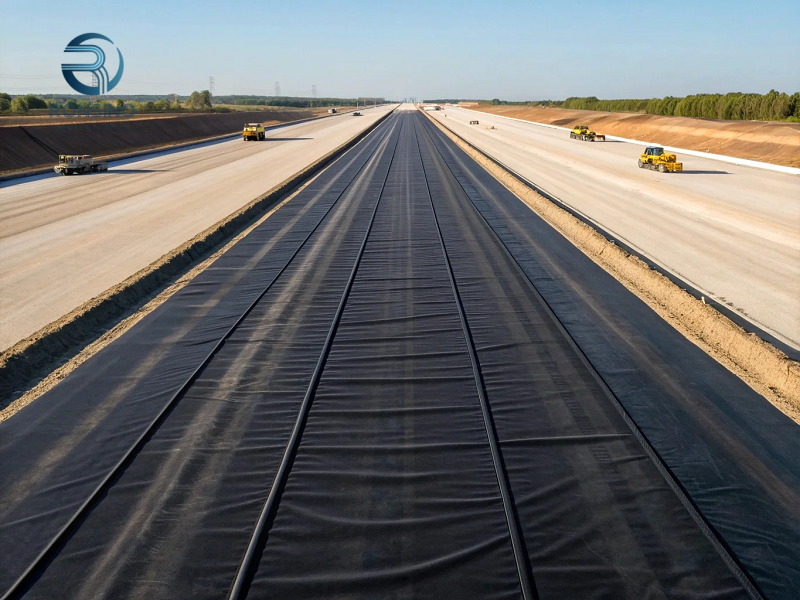
In the field of percolation tank installation, non-woven geotextiles are commonly used in the industry. The material interweaves fibers through a heat-melting or mechanical needling process to create a soft, felt-like structure. Its porous three-dimensional matrix can effectively intercept fine particles, usually with a specification of 100 g/m2 or higher. The higher the weight, the stronger the puncture resistance, which is crucial for resisting sharp debris such as coarse gravel during the backfill process.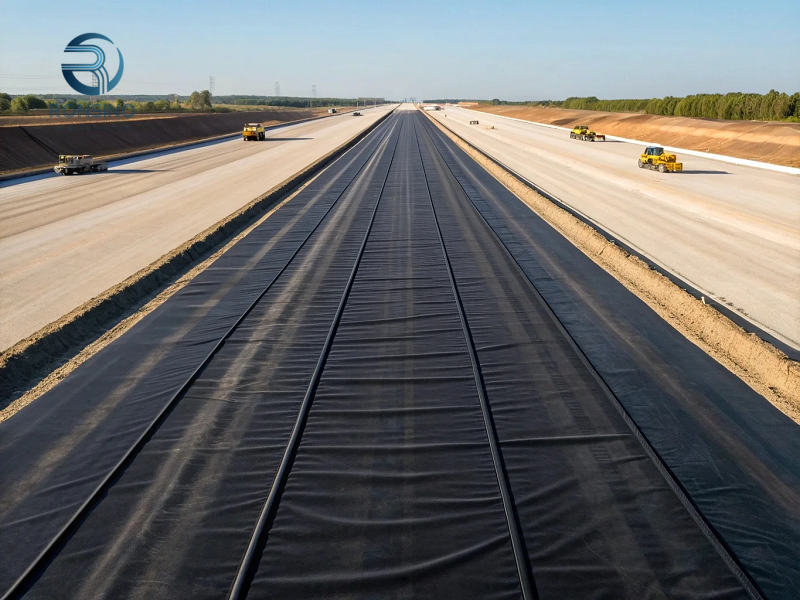
2.Geotextile Membrane for Soakaway: The Main Function-Filtration and Separation
The primary role of a geotextile fabric within an infiltration basin is to act as a dual-purpose physical divider and straining medium for the earth. An infiltration basin operates by creating an underground storage cavity—typically filled with aggregate or modular plastic modules—that temporarily collects runoff water, which then slowly percolates into the adjacent ground.
Without the implementation of a geo fabric, fine soil particles from the surrounding area will inevitably infiltrate the soakaway system, leading to progressive silt accumulation, reduced storage capacity, and eventual operational failure. In the most severe case, the soakaway becomes entirely obstructed, causing a drastic decline in its drainage effectiveness.
Geotextile constitutes a porous, nonwoven fabric membrane enveloping the soakaway assembly as a safeguarding filtration medium. Its primary function is to facilitate unimpeded water passage, particularly during intense precipitation events, while simultaneously preventing the migration of fine soil particles. This mechanism ensures the internal cavities of the system remain unobstructed, maintaining their designed capacity for fluid conveyance and enabling efficient hydraulic discharge into the adjacent ground strata.
2.1 Filtration Role
The non woven geotextile fabric functions as a filter, which lets water pass through while blocking the fine soil particles that would otherwise cause the drainage structure to become blocked.
2.2 Soil Retention and Soakaway Protection
This stabilizes the surrounding ground, thereby averting both the displacement of earth and the subsidence into the permeable chamber, which in turn contributes to extending the operational longevity of the infiltration system and maintaining its discharge capacity for an extended duration.
3.The Main Role of Geotextile Membrane for Soakaway Projects
In a modern soakaway system—particularly those using plastic crates (like Polystorm crates) or gravel-filled trenches—the membrane serves three specific functions.
3.1 Wrapping the Structure:
The non woven geotextile membrane is laid into the excavated hole before the crates are placed. It is then folded over the top of the crates and sealed with tape. This creates a complete "cocoon.".
3.2 Preventing Silting:
Precipitation percolating through the subsoil entraps microscopic solids. The geotextile barrier impedes sediment migration at the interface. Gradually, a permeable biofilm may develop externally on the matrix, while the central conduit sustains unimpeded hydraulic conductivity.
3.3 Maintaining Flow Rates:
Through inhibiting the displacement of earth, the unwoven sheet sustains the emptiness inside the containers at an approximate 95% porosity, a benchmark widely recognized in the sector as optimal for effective water preservation.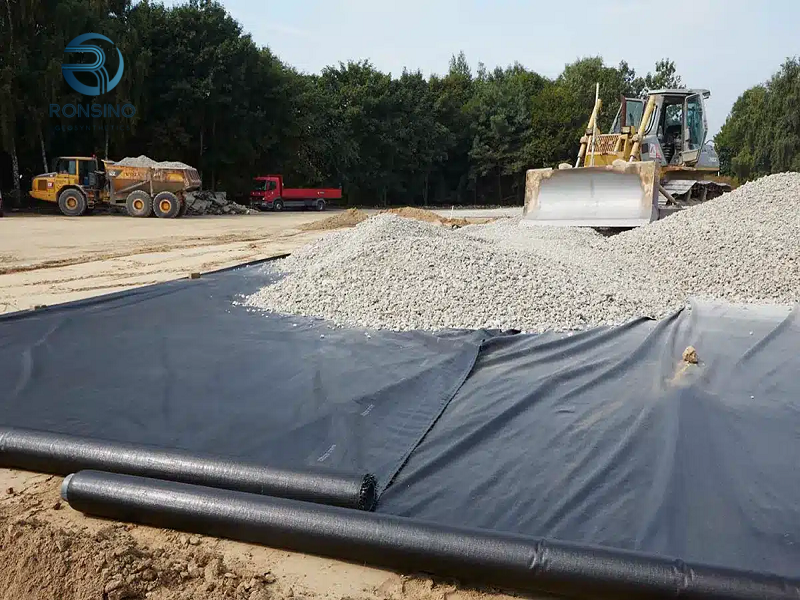
4. Geotextile Membrane for Soakaway: Results and Long-Term Effects
Integrating a premium non-woven geotextile fabric significantly improves the performance and resilience of a soakaway drainage infrastructure. Without the protective barrier of a geotextile, a soakaway system is vulnerable to clogging from fine sediments within 2 to 5 years, potentially leading to reduced drainage efficiency or system collapse. Conversely, when a geotextile functions as both a separator and filter, the system’s operational lifespan can extend to 60 years or beyond, contingent upon proper engineering specifications and environmental factors.
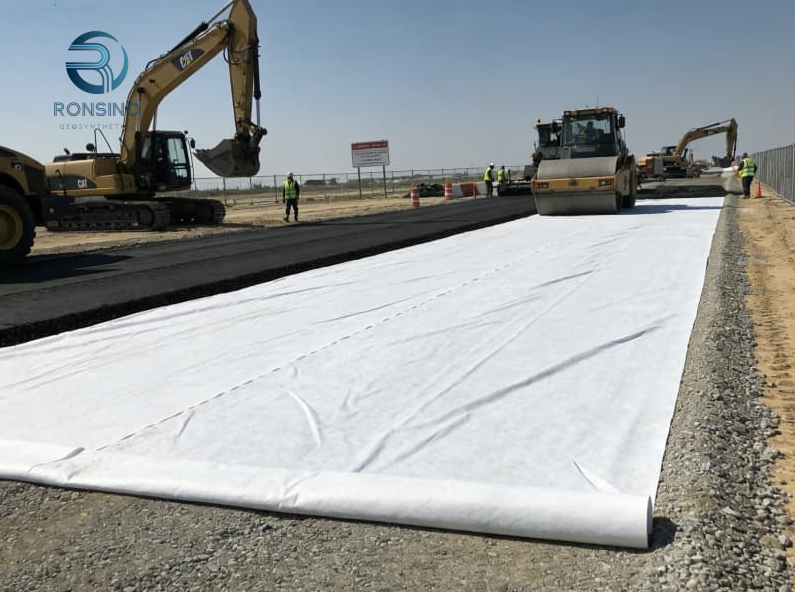
Conversely, premium geotextile material serves as a pivotal innovation for enhancing the structural integrity of any undertaking. Widely recognized by industry professionals, it functions as a barrier that effectively isolates aggregate from the underlying terrain, particularly in scenarios involving high-load applications like roadways and vehicular zones. This segregation minimizes material intermingling, ensuring the foundational stratum remains undisturbed while the entire assembly maintains long-term durability and simultaneously promotes efficient hydrological flow.
4.1 Soil Filtration Function
Water-permeable geotextile material facilitates the passage of liquid while effectively retaining solid soil components, thereby preventing the obstruction of the drainage stratum.
4.2 Load Distribution and Separation
The geosynthetic fabric serves a dual purpose by initially distributing the gravel's load across a more extensive surface and subsequently inhibiting the intermixing of the gravel with the unstable subgrade soil. This approach guarantees that the structural integrity remains unaffected as time progresses.
5.Installation Guide of Geotextile Membrane for Soakaway Systems
The successful implementation of geotextile membrane within soakaway systems hinges on meticulous installation practices to ensure optimal performance. Even a superior-grade material may underperform if applied incorrectly, particularly when fulfilling filtration and drainage functions.
The initial procedure typically begins by verifying that the designated excavation zone is both pristine and secure, free from any hazardous elements that could potentially compromise the integrity of the material. Subsequently, the unwoven geotextile material must be meticulously laid across the base and lateral surfaces of the infiltration chamber, ensuring complete and unbroken coverage over every segment to prevent any exposure or contact with the underlying substrate.
As you position the drainage crates or spread the gravel, the geotextile fabric is carefully extended across the entire assembly to provide full coverage. All areas where the material overlaps must be securely fastened to prevent any soil infiltration. This method ensures that water can permeate the structure without obstruction while maintaining a complete barrier against soil particles.
Proper installation of the substrate is essential not only for optimizing water conveyance efficiency but also for significantly extending the operational lifespan of the infiltration drainage system.
5.1 Site Preparation and Ground Conditions
Site preparation begins with the critical earth excavation phase. The surface of the foundation trench must be smooth and dense, and sharp rocks, tree roots and other debris that may damage the geotextile layer must be thoroughly removed. Carefully prepared foundations ensure that loads are evenly distributed, minimizing the risk of long-term settlement and significantly reducing the chance of punctures or tears in the membrane during subsequent construction.
5.2 Membrane Placement and Overlapping Technique
During the installation of the membrane, the nonwoven filter fabric must be laid out with sufficient slack to prevent excessive tensile stress. Depending on the specific project requirements, the minimum overlap between adjacent sheets should range from 300 to 500 millimeters. Adequate overlapping coverage guarantees uninterrupted filtration performance and inhibits the migration of soil particles through any gaps at the seams.
5.3 Backfilling and Encapsulation Method
Upon completing the placement of drainage crates or gravel, the adjacent geotextile must be meticulously folded to establish a fully encapsulated barrier. Backfilling operations require careful execution with suitable granular substrates to ensure the fabric remains undamaged and securely positioned. This approach effectively shields the soakaway from silt infiltration while maintaining optimal hydraulic performance even under substantial earth pressure.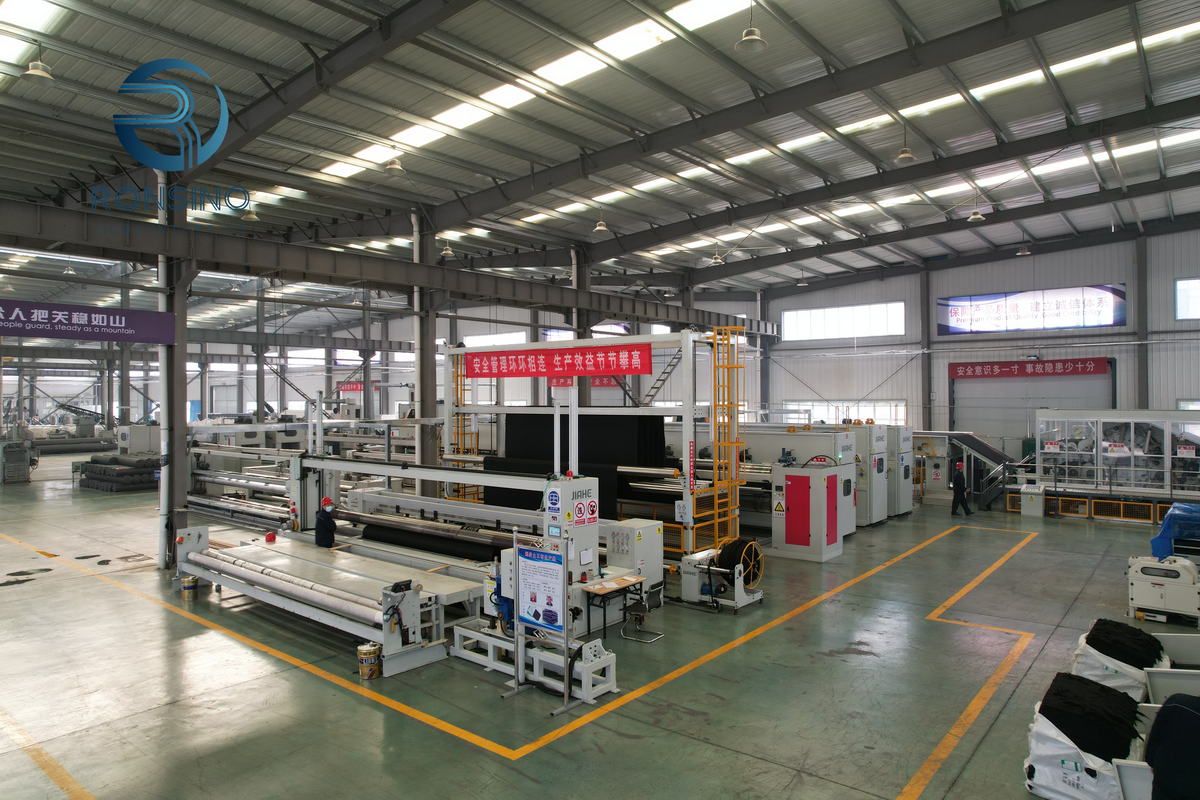
6. Summary and RONSINO Geosynthetics Products
Identifying the optimal material represents the concluding phase in the process. Although conventional home improvement retailers provide standard textiles, substantial or demanding undertakings necessitate industrial-level uniformity. This critical gap is precisely addressed by RONSINO Geosynthetics.
The RONSINO New Material Co., Ltd.(RONSINO Geosynthetics) is an industry leader in providing complete geosynthetic solutions. While they are globally recognized for their HDPE Geomembranes (used for lining ponds and landfills to prevent contamination), their product range fully complements soakaway and drainage projects.
6.1 How RONSINO Geosynthetics Products Fit Into the Drainage Ecosystem?
6.1.1 RONSINO Geosynthetics Non Woven Geotextile
RONSINO Geosynthetics specializes in the production of robust, needle-punched non-woven geotextiles, exclusively crafted from 100% polypropylene or polyester filaments. In the context of soakaway installations, these materials serve as the foundational waterproof barrier. The fabrics are meticulously engineered to deliver superior puncture resistance, measured by CBR burst strength, and exceptional permeability, characterized by vertical flow rates, thereby guaranteeing sustained filtration performance over extended periods.
6.1.2 RONSINO Geosynthetics Composite Geotextiles
In the realm of infrastructure development involving channel linings or water conveyance systems, RONSINO Geosynthetics frequently manufactures composite solutions that merge the permeable properties of a nonwoven matrix with the robust tensile characteristics of a woven structure. Such engineered materials are especially advantageous for vegetated waterways, where the geosynthetic barrier must exhibit exceptional durability to withstand the intrusive penetration of root systems while simultaneously bearing substantial particulate matter accumulation without structural compromise.
6.1.3 Integration with Impermeable Liners
Differentiating between a soakaway, designed for water discharge, and a retention pond, intended for water storage, is essential. On challenging sites, a RONSINO Geosynthetics HDPE Smooth Geomembrane may be employed to line a detention basin, effectively blocking pollutant leakage, whereas a RONSINO Non-Woven Geotextile can be applied to the inlet structure to facilitate the filtration of incoming water.
Conclusion
Regardless of whether you are setting up a basic French drain within a residential yard or implementing an extensive stormwater management solution for a residential community, the fundamental concept does not change: proper drainage is unattainable without adequate filtration.
Geotextiles serve as a protective barrier for the drainage system, preventing sediment from intruding into its internal structure (modular box or aggregate layer), thus ensuring its ability to efficiently manage stormwater. For typical residential applications, nonwoven geotextiles with an area weight of 100 to 150 g/m2 perform best. Where higher engineering standards are required, such as high tensile strength, long-lasting UV stability and stringent quality assurance, RONSINO Geosynthetics offers robust geotextile and geomembrane solutions designed to ensure the long-term functionality and ecological sustainability of drainage infrastructure and extend its service life.