Geomembrane and Geotextile for Landfill Project in Nigeria
case · 2026-01-23 · 0 views
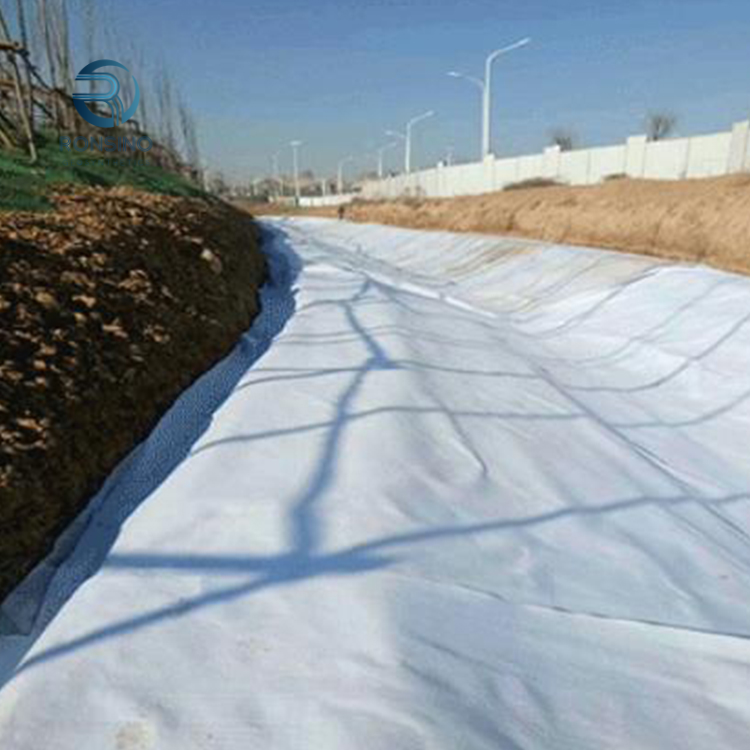
Geomembrane and Geotextile are widely used in civil - engineering (e.g., waste management, road construction). High - Density Polyethylene (HDPE) geomembranes are ideal anti - seepage liners.Geotextiles, either woven or non - woven, have functions like filtration, drainage, etc. Non - woven geotextiles protect HDPE geomembrane liners in landfills.
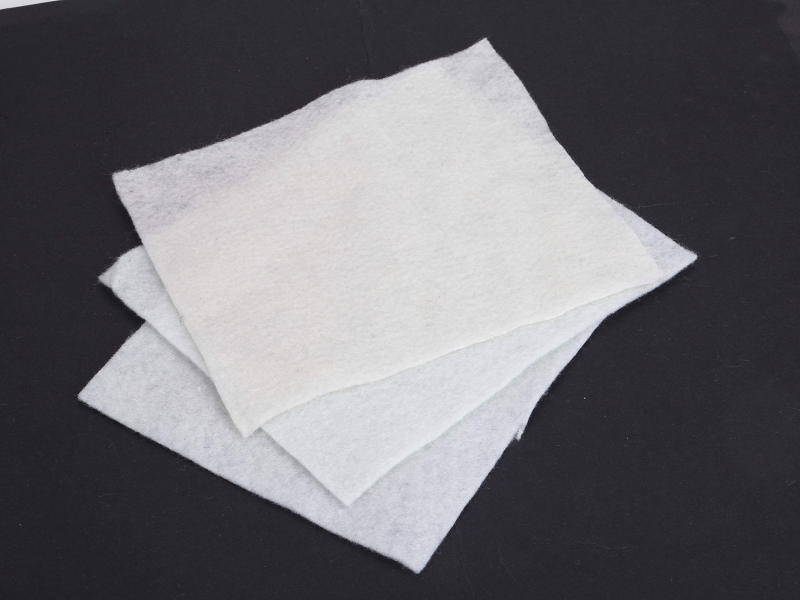
Filament polyester geotextile, an innovative geotechnical material of interlocked polyester long fibers with a 3D structure, features high tensile strength, puncture resistance, good drainage, and strong resistance to acids, alkalis, and aging for long - term durability.
Application Range of Filament Geotextiles
Enhance gravel slope and reinforced soil mass stability to prevent soil erosion and freeze - related damage.
Set up an isolation layer between artificial fill, rockfill or material fields and the foundation to separate frozen soil layers, perform back - filtration and provide reinforcement.
Install a filter layer around the drainage underdrain.
Establish vertical or horizontal drainage systems in the earth dam and bury them in the soil to relieve pore water pressure.
Apply these measures in roads (including temporary roads), railways, embankments and airports to strengthen weak foundations.
Issue
Nigeria faces an escalating solid - waste management problem. A recent survey shows a significant rise in local garbage volume in recent years.The causes are complex. High population density fuels consumerism in food packaging and single - use disposables, and improper packaging handling harms the environment.Without prompt waste - handling action, highly populated areas will face worse challenges like health risks and environmental degradation.Due to population growth, rising purchasing power and urban expansion, Nigeria has two main waste - control issues: increasing waste quantity and changing trash composition due to market demands, consumer preferences and technological progress.
Solution
The waste - disposal initiative focuses on a unified waste area with sanitary landfill. This cost - effective and sanitation - friendly method uses layered landfilling, alternating garbage and loess. The loess layers contain and reduce the garbage's negative impacts, minimizing leachate leakage and odor better than non - layered methods, effectively curbing environmental pollution.
A Nigerian customer sought a cost - efficient, eco - friendly and good - looking landfill. Geosynthetics can promote vegetation growth and redevelop landfills. We recommended high - density polyethylene (HDPE) geomembranes and polyester geotextiles to the customer and showed successful project cases for them to assess our capabilities.
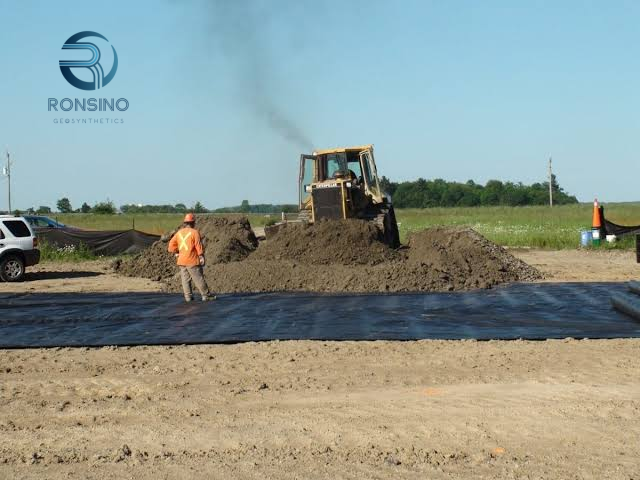
RONSINO engineers proposed 500 - g/m² filament polyester geotextile and 1.5 - mm - thick HDPE geomembrane for soil reinforcement and tensile strength enhancement.We gave free samples to a Nigerian client. Test results confirmed our products met standards.After project talks and payment, we produced 50,000 m² of the materials.The HDPE geomembrane prevents leaks, and the polyester geotextile protects it, filters water, separates waste from soil and groundwater, and is eco - friendly.These lightweight, cheap products are easy to transport and install, reduce labor costs, and are vital for cost - effective landfill projects.
The Advantages of Filament Polyester Geotextile in Landfill
Polyester filament geotextile is made by shaping and solidifying polyester filaments into a 3D framework. It's a novel material for geotechnical and civil engineering. It offers high strength, efficient drainage, proper elongation, and excellent chemical resistance.With diverse pore sizes and high permeability, it's lightweight, durable, easy to install, and corrosion - resistant.
Integrating HDPE geomembrane with polyester filament geotextile provides excellent airtightness for landfills. The HDPE inner layer is a reliable barrier, ensuring water and air impermeability. It keeps out flies, inhibits bacteria spread, contains garbage odors, and shields against external water infiltration to prevent groundwater pollution.
High - density polyethylene (HDPE) geomembranes and polyester filament geotextiles are excellent landfill sealing membranes with a long lifespan. Buried in landfill sealing systems, they can remain intact for over 50 years, preventing harmful substance leakage.They're durable even when continuously exposed to sunlight, wind, rain and temperature fluctuations, withstanding such harsh conditions for over ten years before significant degradation or loss of sealing functionality.
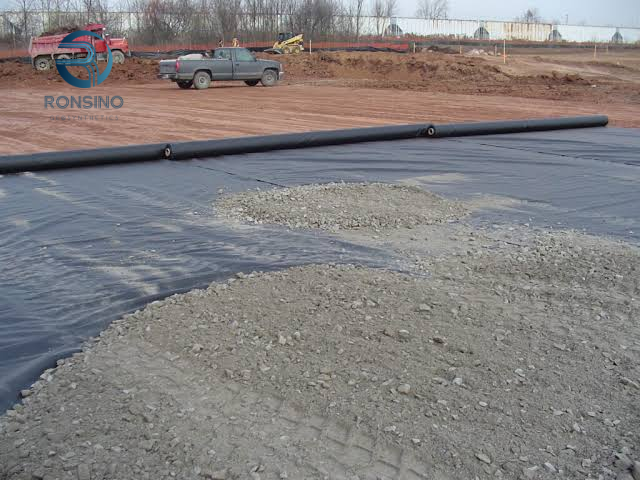
Do not lay geotextiles directly on existing ones. Unroll only within the sewing scope at a time. Place weights on exposed edges to prevent wind - lifting and avoid laying in strong winds.
On slopes, strictly control unrolling to protect underlying layers. Use a hook knife to carefully cut geotextiles to avoid damage.
Select proper laying techniques to prevent folding or wrinkling and fix issues promptly.
Protect laid geotextiles from construction machinery. Regularly inspect for foreign objects, wear and defective seams and repair immediately.
Specification of Geomembrane and Geotextile for Landfill Project in Nigeria
Construction site – Santiago, Nigeria
Products used – 500g/㎡ filament polyester geotextile ,1.5mm HDPE geomembrane
Application project – Landfill Project
About RONSINO
RONSINO manufactures and wholesales many types of effective and states of the art geotextile, geomembrane, and other geosynthetics to over 100 countries.
RONSINO is not only manufacturing best quality geosynthetic products but also providing professional design and installation service. OEM, ODM, custom development and fabrication are also available. If you have any questions or inquiries, please fill and submit the following form, we will reply as soon as possible.