PP Geotextile Fabric for Subgrade Construction in Philippines
case · 2025-12-30 · 0 views
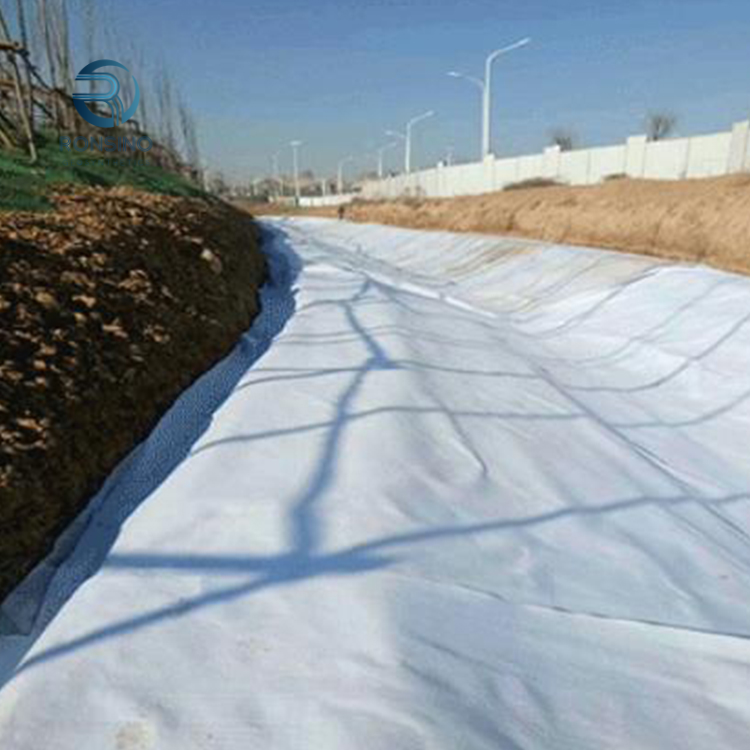
PP Geotextile Fabric is made from polyester, polypropylene or polyamide staple fibers via homogenization, flow - guiding, net - laying, needling and compound - needling.It features high density, a fluffy interior, firmness, durability, corrosion and anti - aging resistance, and chemical stability in acid and alkali. It also has good water - related performance, high tensile strength and strong deformation resistance.Thanks to these properties, it's widely used in engineering, e.g., reinforcing flexible roadbeds, preventing pavement turnover, protecting slopes from erosion and serving as a canal protective layer for stability.
Short fiber needled punched geotextile, a non - woven industrial fabric, uses 6 - 12 deniers, 54 - 64 mm long polyester crimped staple fibers as raw materials.Manufactured by non - woven equipment, the process includes opening, combing, cluttering, netting and needling.It has extensive applications, such as railway roadbed reinforcement, highway pavement maintenance, ground support in sports halls, dam protection, material isolation in hydraulic construction, tunnel lining and protection, shoreline stabilization in coastal reclamation, and soil and water conservation in environmental projects.
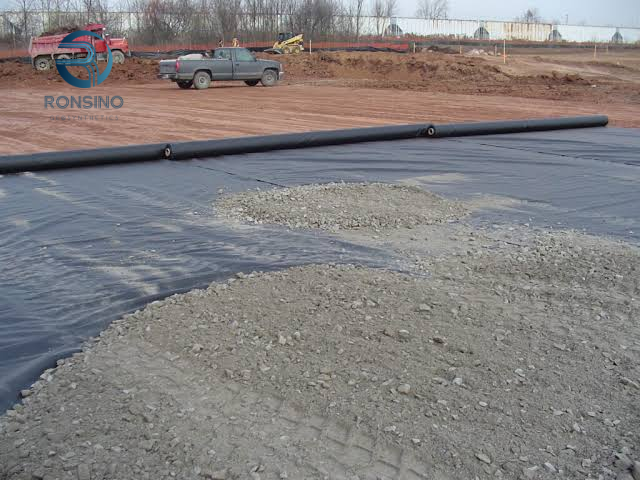
The Philippines has launched a coastal highway project. The 14.8 - meter - high, 10 - lane section runs through marshland. Construction faces marsh - related challenges, requiring flexible work - hour arrangements for subgrade reinforcement and bearing - capacity consideration.Post - construction, roadbed drainage and surface cracking need solving. The Philippines follows American construction standards and is conducting on - site tests with local - adapted technologies for roadbed functionality.The project prefers short - fiber needle - punched geotextile as subgrade material due to its excellent water - absorbing, permeable, high - tensile and deformation - resistant properties.
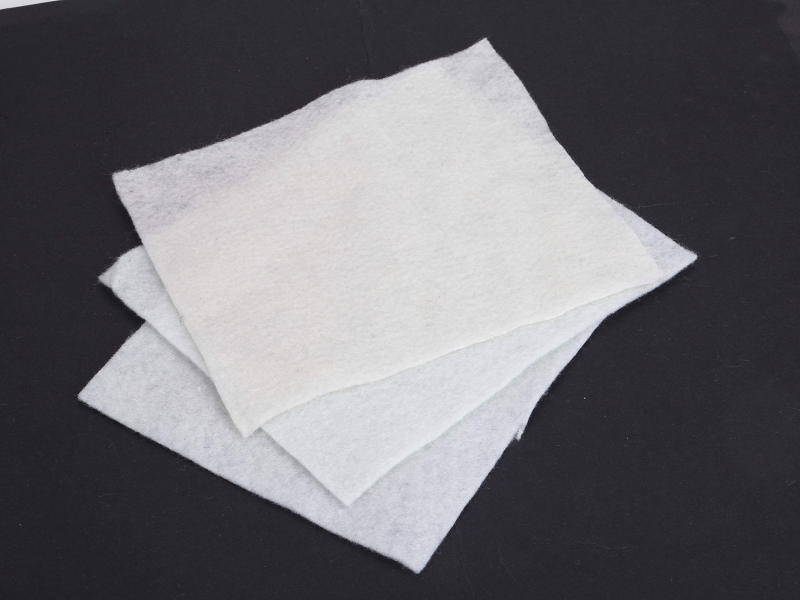
A highway construction company in the Philippines contacted our RONSINO salesperson via our website. They introduced their highway project with a video and provided relevant samples and tech specs. Our salesperson presented 200 - gram PP short - fiber punched geotextile samples. The client asked for samples and third - party inspection report details, and we met all their requirements.
Once the customer received the sample, they retested it. The results showed all indicators met the project's requirements. Eventually, the customer chose 200 - gram staple - fiber non - woven geotextile. After a month of negotiation, they bought 100,000 square meters. Short - fiber PP Geotextile Fabric has the following distinct characteristics.
High - level strength: Utilizing plastic fibers, it retains full strength and elongation in dry and wet conditions.
Outstanding corrosion - resistance: Withstands long - term corrosion in soil and water of different pH values.
Superb water permeability: Fiber gaps give it excellent water seepage capabilities.
Good microbial resistance: Resistant to damage from microorganisms and moths.
Convenient construction: Light and flexible, easy to transport, lay and construct.
Comprehensive specifications: Width up to 9 meters (widest in China), mass per unit area 100 - 1000 g/m².
PP Geotextile Fabric Functions and Effects
Construction materials with distinct physical characteristics (e.g., particle size, distribution, etc.) like soil - sand mixtures or soil - concrete combinations were needle - punched with polyester staple fiber geotextile. They serve as an isolation layer to prevent runoff and blending of different materials, maintaining each material's integrity. This preserves the materials' overall structure and functionality and enhances the structural system's load - bearing capacity.
Filtration (reverse filtration). When water moves from fine - to coarse - grained soil, use the air - and water - permeable properties of polyester staple fiber needle - punched geotextiles. This retains substances like soil particles, fine sand, and small stones, maintaining the stability of water conservancy and soil engineering projects.
Drainage function: The short - fiber needle - punched geotextile has excellent water conductivity. Placed in the soil, it creates an effective drainage channel in the soil mass, allowing excess liquid and gas in the soil structure to be smoothly discharged, maintaining a more stable internal soil environment.
Strengthening. Short - fiber needle - punched geotextiles can effectively improve soil's tensile strength and anti - deformation capacity, significantly enhance building structure stability, maintain high - quality soil condition, and ensure better overall construction performance.
Protective Function. When the water flow scours the soil, the concentrated stress can be efficiently spread, transferred, or broken down. This action serves to avoid the soil from being damaged by external forces and safeguards the integrity of the soil.
Prevent punctures. Combined with a geomembrane, the composite waterproof and impermeable material effectively prevents punctures.
It has high tensile strength, excellent permeability and air - permeability. It can resist high temperatures, freezing, aging, corrosion and is moth - proof. Short fiber needle - punched geotextiles, a type of geosynthetics, are widely used in various fields.
Wide application scope. Polypropylene staple fiber geotextile fabric is widely used in reinforcing railway sub - bases and maintaining highway pavements. It's also applied in sports arenas, dam protection, hydraulic engineering isolation, tunnels, coastal beaches, land reclamation, environmental protection and other related projects.
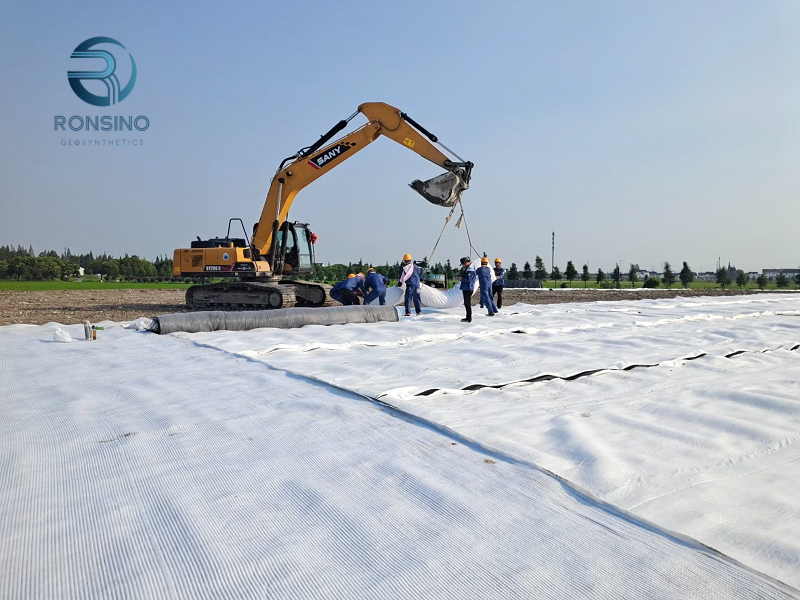
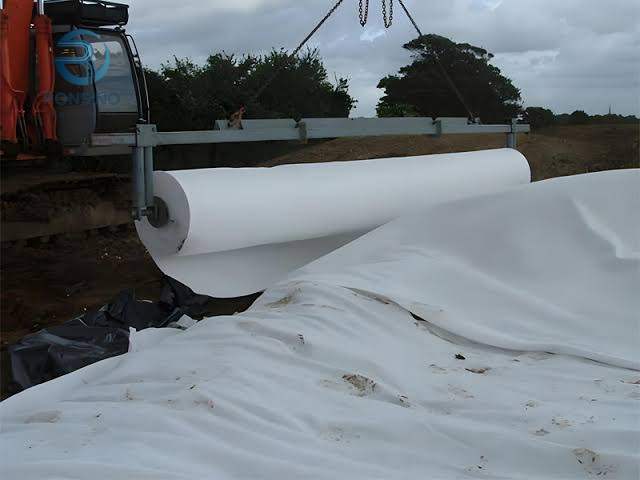
Laying method of staple fiber PP Geotextile Fabric.
The surface of staple fiber needle - punched geotextiles ought to be sleek, and there should be an appropriate allowance for deformation.
Filament or staple geotextiles are usually installed by lapping, suturing, or welding. Suturing and welding need a width over 0.1 m, lapping over 0.2 m. For long - term exposed geotextiles, welding or suturing is recommended for better durability and performance.
Geotextile stitching. Every form of stitching has to be continuous. For instance, spot - stitching is prohibited. Prior to overlapping, geotextiles should have an overlap of at least 150 millimeters. The minimum distance from the stitch to the selvage (the exposed border of the material) should be no less than 25 millimeters.
Geotextile seams have one - row wired lock chain stitching. Stitching thread should be resin - based, with min. tensile strength > 60N, and its chemical and UV resistance should match or exceed the geotextile's. Re - stitch skipped stitches. After installation, prevent soil, fine particles or foreign substances from entering the geotextile layer. Geotextile fabric can be overlapped in three ways (natural overlapping, stitching or welding) based on terrain and function.
During construction, the geotextile above the geomembrane uses natural overlapping. For the upper - layer geotextile, seaming or hot - air welding can be used. Filament geotextiles are recommended to use hot - air welding: a hot - air gun heats the joint to melt it, then external force bonds them.Hot - air bonding is not suitable in wet conditions (e.g., rain or snow). Instead, suture connection can be used, with a special sewing machine for double - stitch connections and anti - chemical, UV - resistant suture lines for durability.The minimum suturing width is 10 cm, while for natural overlapping and hot - air welding, it's 20 cm.
During sewing, use a geotextile suture of equivalent quality with enhanced resistance to chemical damage and UV radiation.Lay geotextiles only after on - site supervision engineer approval, then lay the geomembrane.
After Party A and the supervisor approve the geomembrane, lay geotextiles on it as described.
In the anchorage groove area, bury both upper and lower geotextile layers with the geomembrane.
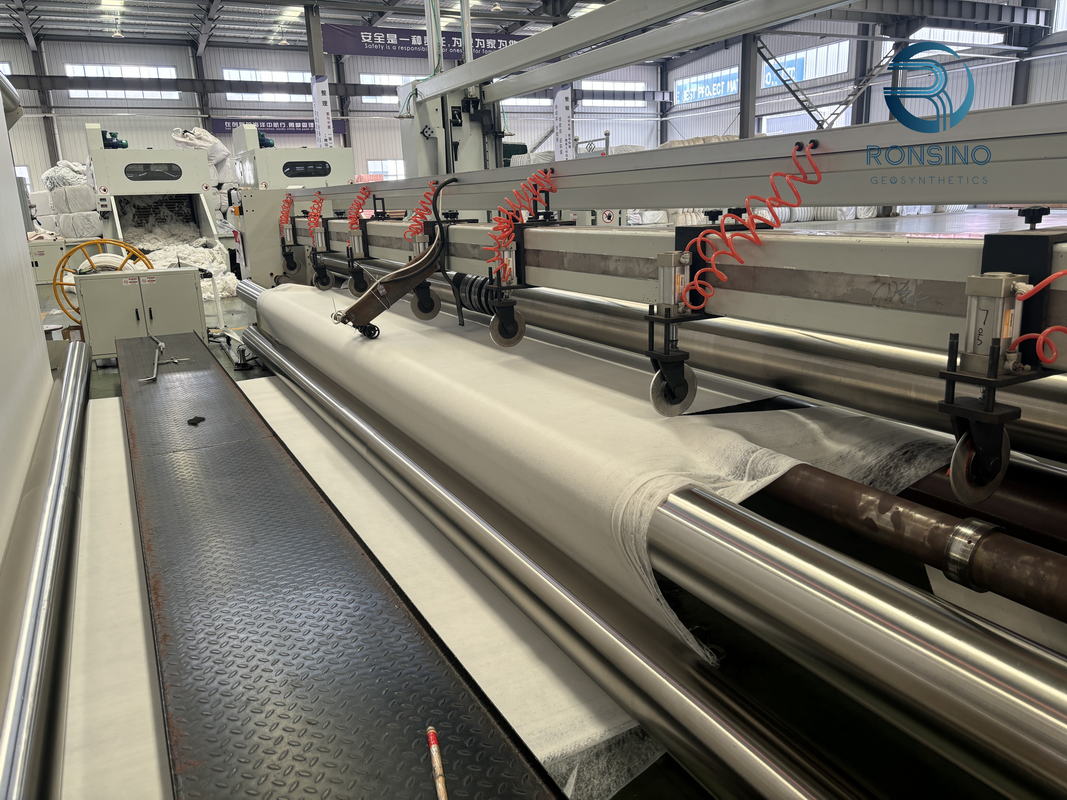
Specifications of Short Fiber PP Geotextile Fabric for Road in Philippines
Location – Philippines
Needle Punched Geotextile Quantity – 100,000 square meters
Geotextile Weight – 250gsm
Size – width 6m, Length 100m
Color – Black
Application – Subgrade Construction
About RONSINO
RONSINO produces and wholesales diverse high - performance geotextiles, geomembranes and geosynthetics, supplying to over 36 countries globally. Its geosynthetics are widely used in waste containment, water projects, aquaculture, large - scale industrial and energy projects, and mining. Its clients are global, with major customers from Australia, France, UK, New Zealand, Brazil, Pakistan, Thailand, Vietnam, UAE, Saudi Arabia, Kenya, etc.
RONSINO is not only manufacturing best quality geosynthetic products but also providing professional design and installation service. OEM, ODM, custom development and fabrication are also available. If you have any questions or inquiries, please fill and submit the following form, we will reply as soon as possible.