What is PET Geotextile?
Blog · 2025-11-19 · 0 views
Features
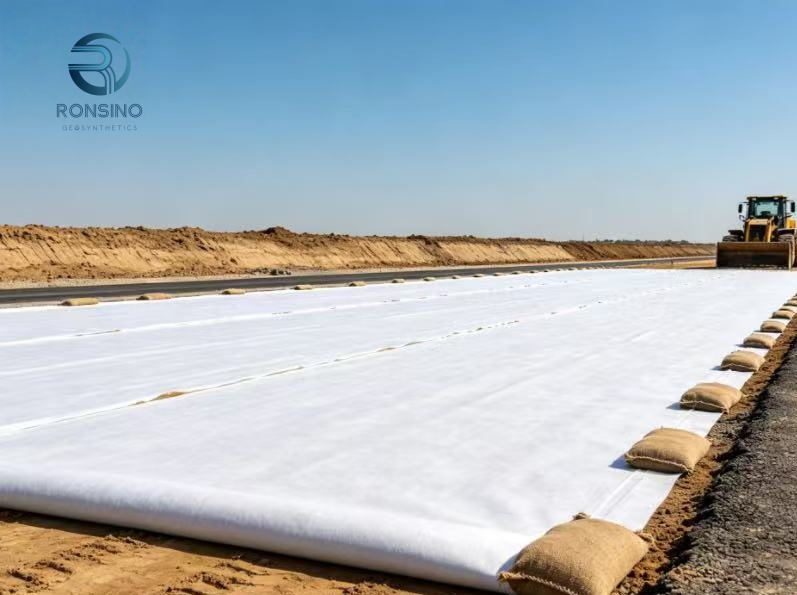
The choice of PET Geotextile as impermeable substances for tailings dams is mainly due to their excellent durability. They can withstand long - term water submersion and oxidative corrosion. With high strength and high modulus, they can effectively resist the osmotic pressure and erosive damage of tailings. Moreover, they have remarkable filtration and drainage capabilities, helping the tailings dam expel water quickly and reducing the leakage probability.
What is PET Geotextile?
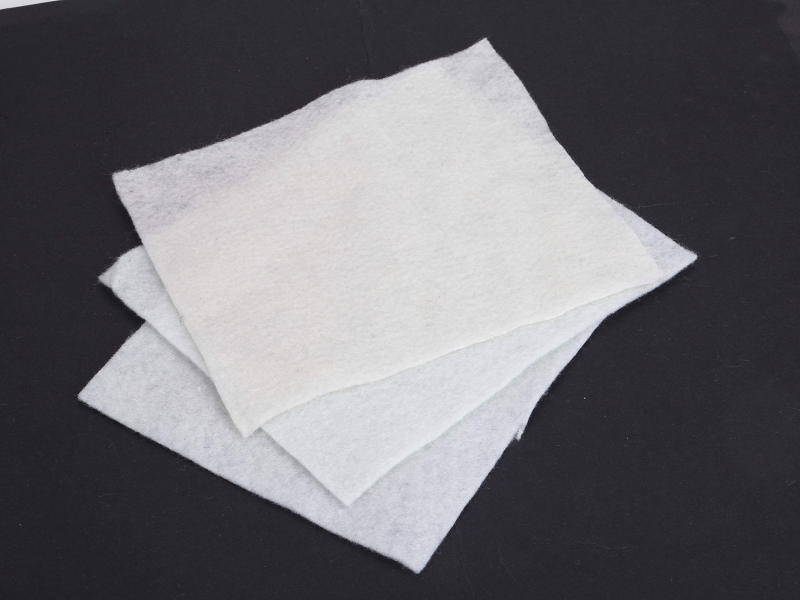
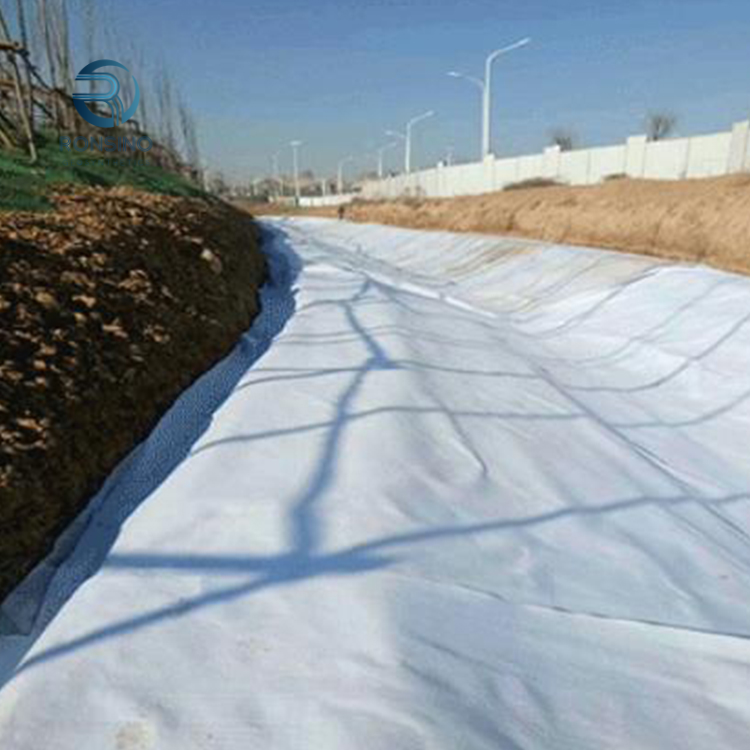
PET Geotextile, a geosynthetic, has high strength, high modulus and excellent durability. It mainly separates soil layers, reinforces soil structure and protects soil. In tailings management, continuous - filament geotextile fabrics are often used in tailings dam anti - seepage to prevent material leakage and protect the environment.
Why Choose PET Geotextile for Tailings Project?
Good durability:
Filament geotextile material boasts excellent durability. It is capable of enduring long - term submersion in water and resisting oxidation and corrosion. This allows it to be utilized over an extended period in harsh environmental conditions. As a result, it is well - suited for the treatment of tailings.
Excellent permeability resistance:
Filament geotextile material possesses excellent anti - permeability properties. It is capable of efficiently withstanding the osmotic pressure exerted by tailings as well as the erosive damage caused by them. As a result, it can significantly decrease the likelihood of leakage occurrences.
High tensile strength:
Geotextile filaments are made into a fabric with remarkable tensile strength, which can easily bear substantial loads. Thus, it's an ideal material for effectively reinforcing and safeguarding tailings dams.
Convenient construction:
The filament geotextile material can be tailored in accordance with the particular design and utilization needs of the tailings dam. It facilitates construction processes, enables rapid installation, and enhances work productivity.
Case Study Of PET Geotextile for Tailings Project
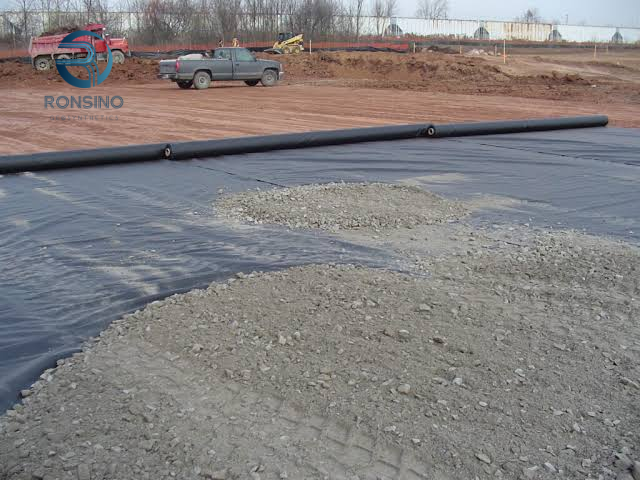
The Canadian government project representative successfully won the bid for the tailings management project through the RONSINO online platform. The project requires the technical specifications, physical samples and third-party reports of non-woven geotextiles, with particular emphasis on performance under alkaline conditions. RONSINO sales specialist recommends 500g/m2 filament geotextile, which meets the customer's engineering parameters. The customer entrusts an independent laboratory to conduct strict testing and confirms that the materials meet the standards, and finally finalizes the order quantity, price, delivery and payment terms, and reaches a formal cooperation.
The product is mainly used in the following characteristics:
It can perform long - lasting isolation, preventing intermixing of soil layers with distinct compositions and characteristics. It also meets the frost - resistance and load - bearing requirements for construction projects.
It boasts excellent filtration capabilities and anti - corrosion properties. Water has the ability to permeate in every direction without causing a build - up of pressure. Meanwhile, it can effectively prevent the loss of soil, which is beneficial for maintaining stability and enhancing corrosion resistance.
It features dependable drainage capabilities. Owing to the loose and porous nature of its structure, it is capable of efficiently managing the water discharge on the surface of geotechnical engineering projects.
It boasts excellent protection capabilities. Owing to its remarkable puncture - resistance, high extensibility, and notable fluffiness, it is capable of effectively safeguarding the waterproof layer against possible mechanical harm.
When it comes to reinforcement performance, the soft and fluffy texture along with high - level strength work in tandem. This combination not only enhances the overall stability of the project but also significantly boosts its structural integrity and robustness.
Function of filament geotextile fabric
Isolation
In other words, geotextiles separate building materials of different physical characteristics (e.g., particle size). For example, they separate soil from sand, etc. This prevents material loss or blending, maintaining their structural integrity in construction. Consequently, it enhances the structure's load - bearing capacity and durability.
Filtration
When water moves from the fine - grained soil stratum into the coarse - grained soil stratum, the excellent permeability and water - passing ability of the needled geotextile are utilized to enable water to pass through. Moreover, it effectively blocks soil particles, fine sand, small stones, and other substances. This is done to ensure the stability of hydraulic and soil engineering projects.
Drainage
Geotextile is an excellent water - conducting material. It has the ability to create a drainage passage within the soil structure. This drainage passage plays a crucial role in eliminating surplus liquid and gas from the soil structure.
Reinforcement
Geotextile is employed to augment the tensile strength and deformation - resistance capacity of soil. By doing so, it can strengthen the stability of building structures and also elevate the overall quality of the soil.
Protection
The highly concentrated stress has the potential to be efficiently dispersed, shifted, or broken down. This process serves a crucial purpose of safeguarding the soil from getting damaged due to external forces.
Closure
Geotextiles collaborate with various other materials, such as asphalt and plastic film. When combined in the soil layer, they create an effective impervious barrier. This application is primarily utilized for highway resurfacing projects and road repair work, among other similar endeavors.
Construction and laying of filament geotextile fabric
Storage, transportation and treatment of geotextiles
Before installation and deployment, protect geotextile rolls from damage. Pile them on a level, non - waterlogged area. Stack height should not exceed four rolls for easy viewing of each roll's identification label.
Geotextile laying method
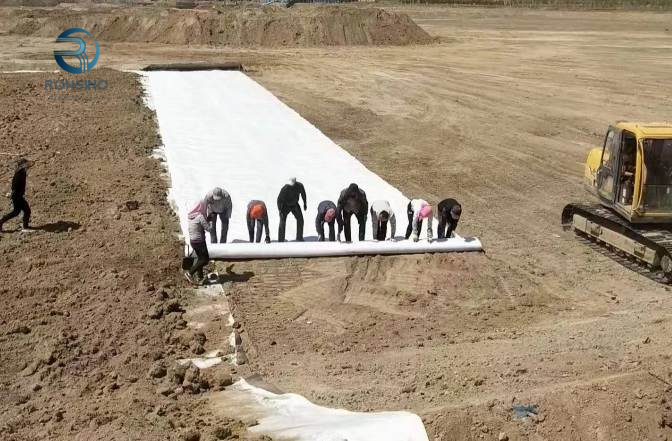
Manual rolling operation is carried out. The surface of the cloth ought to be made smooth, and a margin for deformation needs to be reserved. The installation of the filament generally adopts several approaches, including bonding, stitching and welding.
Stitching of geotextile
Stitching must be uninterrupted; intermittent or spot - type stitching is forbidden. Adjacent geotextile sections should overlap at least 150 mm before overlapping, and stitches near woven edges should be at least 25 mm from the edges.
After installation, prevent soil particles, fine matter or foreign elements from intruding into geotextile layers. The joining method depends on local terrain and project usage, with three common techniques: natural lapping, sewing with proper thread, and welding with specialized equipment.
About RONSINO
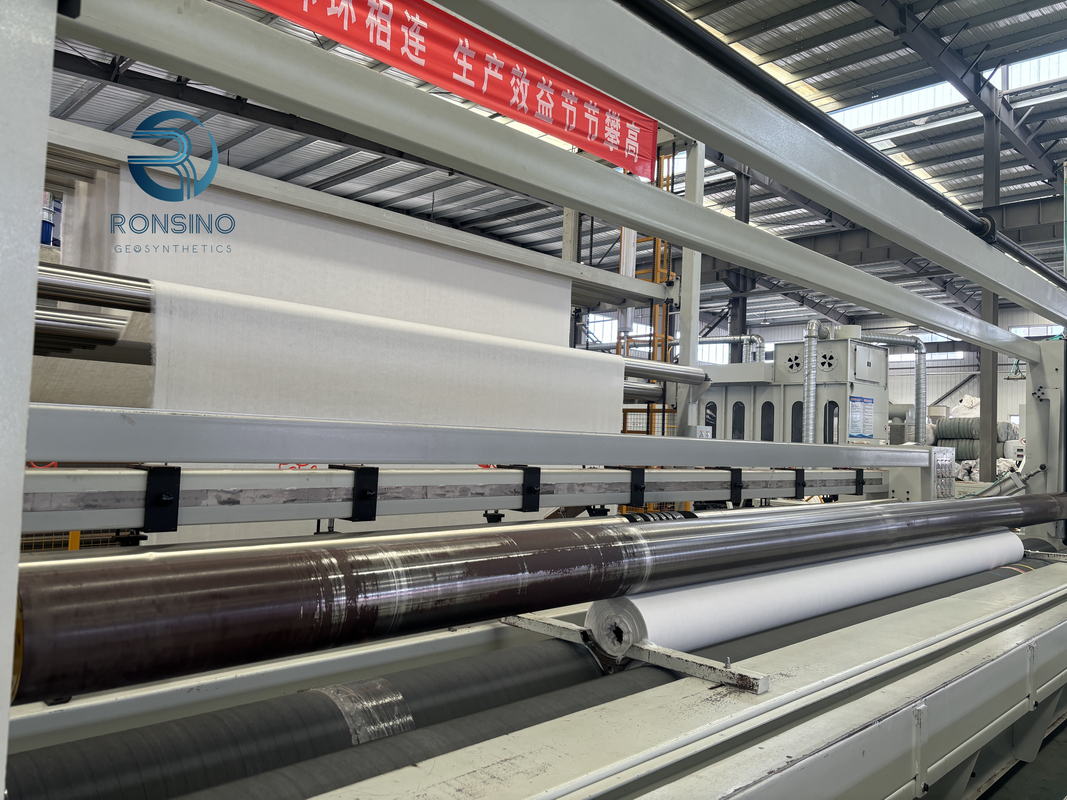
RONSINO produces and wholesales high - performance geosynthetics like geotextiles and geomembranes, supplying over 36 countries.Its products are widely used in waste management, water storage, aquaculture, large - scale industries, energy projects and mining.RONSINO's clients are global. In Europe, clients include Australia, France etc.; in North America, Mexico; in South America, Ecuador and Brazil; in Asia, Pakistan, Bangladesh etc.; in the Middle East, UAE, Saudi Arabia and Qatar; in Africa, Kenya uses the materials for sustainable development.
RONSINO is not only manufacturing best quality geosynthetic products but also providing professional design and installation service. OEM, ODM, custom development and fabrication are also available. If you have any questions or inquiries, please fill and submit the following form, we will reply as soon as possible.