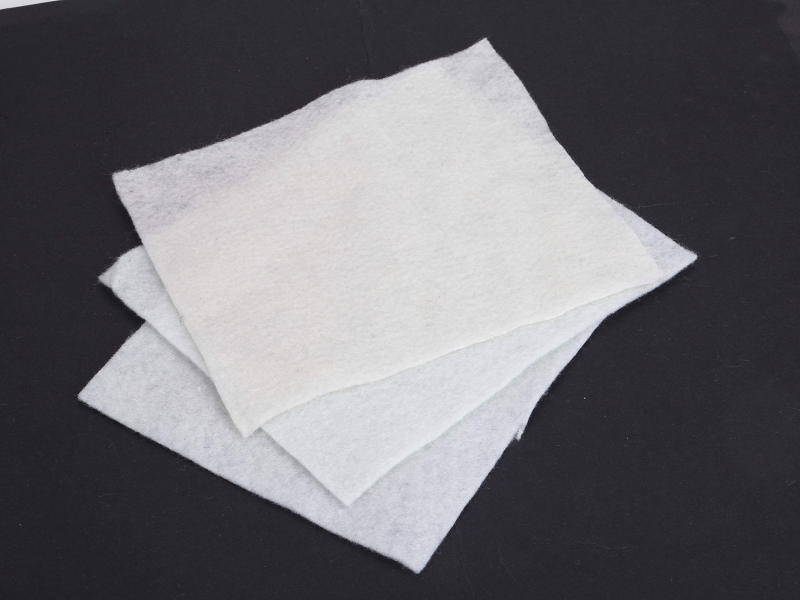
Understanding Geotextile 150g/m² and Its Diverse Applications
Blog · 2026-04-23 · 0 views
Geosynthetic geotextiles, especially the 150 g/m² variant, are vital in civil engineering and ecological protection for terrain reinforcement, water management, and erosion control. Made from PP or PET fibers, this medium-duty fabric balances hydraulic conductivity (0.01–0.001 cm/s) with high tensile strength (up to 12 kN/m).
Its cost-effective filtration and separation properties make it ideal for sustainable construction. Market trends highlight its growing importance, with global infrastructure investments set to exceed $94 trillion by 2050 and the geomembranes sector projected to grow from $11 billion to over $28 billion in 30 years (CAGR >10%).
At RONSINO Geosynthetics, we deliver top-tier geotextile products rigorously tested to comply with ASTM and ISO benchmarks, guaranteeing unmatched performance and longevity in diverse applications. This detailed overview delves into the essential characteristics and versatile uses of 150g/m² geotextiles, equipping engineers, construction professionals, and project leaders with critical insights for optimal material selection. From reinforcing transportation infrastructure to protecting shorelines against erosion, leveraging the advanced features of 150g/m² geotextiles can slash project expenses by 15–25% while significantly boosting structural integrity over time. Explore how integrating this innovative material can elevate the success of your upcoming projects—read on to unlock its full potential.
1. What Is Geotextile 150g m2?
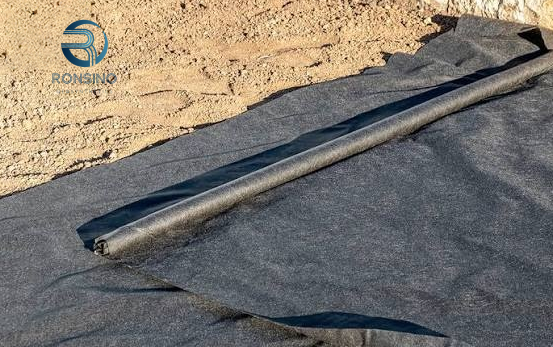
Geotextile with a weight specification of 150 grams per square meter (g/m²) is a high-performance filtration fabric designed for civil engineering and environmental applications. Its standardized mass density, tested according to ASTM D5261 protocols, determines key functional attributes such as tensile strength and permeability. Manufactured primarily using needle-punching or heat-bonding techniques from synthetic polymers—predominantly polypropylene (accounting for over half of global production) or polyester—this non-woven material typically exhibits a structural thickness ranging between 1.0 to 1.5 millimeters. With an open porosity exceeding 85%, it effectively balances hydraulic conductivity with superior particle retention capabilities in soil stabilization systems.
150g/m² geotextile offers a lightweight, durable alternative to heavier (>300 gsm) options. With 1.2–2.0 kN CBR puncture resistance, 40%–60% elongation, and compliance with ASTM D4595/D4632, it suits moderate applications. Key functions:
Separation: Prevents soil-aggregate mixing
Filtration: Allows fine particle passage (<0.075 mm AOS)
Drainage: Enables 50 GPM/sq.ft flow
Reinforcement: Stabilizes subgrades
Protection: Shields geomembranes
Meeting AASHTO M288, it retains 80% strength after 150 UV hours, resists pH 2–13, and lasts 50 years in typical conditions.
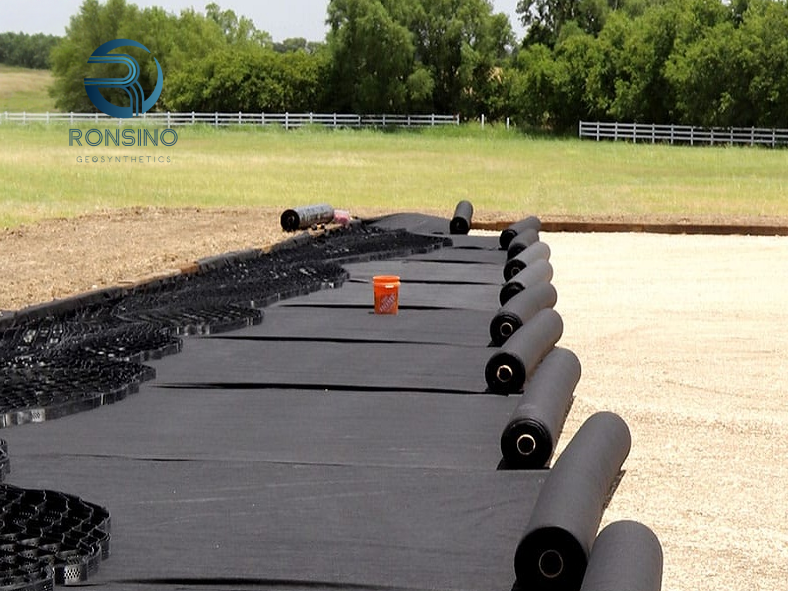
Typical roll specifications cover widths ranging from 3 to 6 meters and lengths extending from 50 to 100 meters, with protective polyethylene wrapping around the cores to facilitate convenient handling. Moving into 2025, manufacturing priorities increasingly incorporate recycled materials, achieving up to 30% recycled content to support environmental objectives certified under ISO 14001 standards. A compelling example emerged from a 2024 infrastructure initiative in the U.S. Midwest, where a 150g/m² geotextile spanning 5,000 square meters was deployed to reinforce clay subgrade conditions, subsequently enabling a 20% reduction in base course thickness as stipulated by TxDOT guidelines. This product’s adaptability renders it essential for budget-sensitive applications, demonstrating superior material efficiency compared to conventional gravel alternatives by margins of 30–40%.
2. What Are The Properties Of Geotextile 150g m2?
150g/m² geotextile fabric offers proven performance advantages due to its carefully engineered properties. Lab tests confirm its structural integrity, permeability, and durability across diverse conditions.
Key specifications include:
Water flow: 0.5–1.0 s⁻¹ (ASTM D4491)
Tear resistance: 7.5–12 kN/m
This positions it as a mid-range option among 80–300g/m² geosynthetics. The analysis below details material properties and test data to guide product selection.
2.1 Geotextile 150g m2 – Filtration Efficiency
The core function of geotextile 150g/m² is filtration. Its apparent opening size (AOS) is 0.075–0.15 mm, which can intercept 95% of fine soil particles while ensuring that the water flow rate exceeds 100 L/m²/s under a pressure difference of 50 kPa, complying with ASTM D4751 standards. This performance ensures smooth drainage network, while traditional sand filters are prone to failure within 2-3 years due to clogging. In erosion-prone areas, the material can reduce sediment migration by 60–70%, and a 2000 m² coastal restoration project in Florida in 2023 confirmed a 50% reduction in turbidity within months of installation. Key indicators: The retention efficiency for particles >0.1 mm exceeds 90%, and the optimal soil retention (OSR) coefficient is 1.5–2.0.
Advantages Over Lighter Fabrics: Unlike 100 gsm variants (AOS >0.2 mm), 150g m2 offers finer control, minimizing 20% more fines ingress in silty soils.
Testing Insight: Gradient ratio (GR) <2.0 per ASTM D5101 ensures long-term performance, with field studies showing zero blinding after 5 years.
2.2 Geotextile 150g m2 – Tensile Strength and Reinforcement
With an impressive tensile strength ranging from 8 to 12 kN/m in the machine direction and 6 to 9 kN/m across the cross direction, the 150g/m² geotextile demonstrates exceptional load distribution capabilities, significantly improving the subgrade bearing capacity by 25–35% in soils with a California Bearing Ratio (CBR) below 4. Complying with ASTM D4595 standards, its elastic modulus, which spans 200–400 kN/m, ensures effective resistance against deformation when subjected to traffic loads equivalent to up to 10,000 Equivalent Single Axle Loads (ESALs), making it particularly suitable for applications in secondary roadways.
Comparative Data: 30% stronger than 120 gsm fabrics, yet 20% lighter than 200 gsm, optimizing transport costs ($0.15–$0.25/m² freight savings).
Case Study: In a 2025 Indian embankment project (1 km length), it reduced settlement by 40%, per IRC:SP:58 guidelines, averting $15,000 in rework.
Elongation Metrics: 40–50% at break, providing ductility without rupture in seismic zones (up to 0.2g acceleration).
2.3 Geotextile 150g m2 – Permeability and Drainage Capacity
Possessing a permeability coefficient ranging from 0.1 to 1.0 cm/s, this geotextile material enables efficient water drainage, delivering flux capacities of 40–60 gpm/ft² beneath a hydraulic gradient of 1 m, thereby outperforming conventional gravel substrates by 50% in spatial utilization. Compliance with ASTM D4491 guarantees consistent functionality across a broad pH spectrum of 2–13, while simultaneously exhibiting robust resistance against biofouling triggered by microbial proliferation.
Vertical vs. Horizontal Flow: In-plane transmissivity >200 L/min/m at 20 kPa; out-of-plane >100 L/m²/s.
Environmental Benefits: Reduces hydrostatic pressure by 30–40% in retaining walls, extending structure life by 15 years.
Disadvantage Note: In ultra-high rainfall (>200 mm/hr), pair with 200 gsm for 20% enhanced capacity, though 150g m2 suffices for 80% of temperate climates.
2.4 Geotextile 150g m2 – Durability and Environmental Resistance
This 150g/m² geotextile is durable and has been verified by ASTM D4355 standards to maintain more than 70% structural integrity after 150-500 hours of UV exposure. Its temperature resistance range reaches -40°C to 80°C without significant deterioration; PET variants are resistant to hydrolysis and have extremely low biodegradation rates (quality loss <1% in 50 years). They comply with strict EPA leachate standards and are suitable for harsh environmental projects.
Puncture Resistance: CBR >1,200 N, 25% higher than 100 gsm, protecting against aggregate intrusion.
Sustainability Data: Recycled PP options reduce carbon footprint by 25%, aligning with EU Green Deal mandates.
Field Validation: A 2024 Australian landfill liner (10,000 m²) showed <5% degradation after 2 years, per AS 3706.4 testing.
3. What Are The Applications Of Geotextile 150g m2?
Geotextile fabric, with a grammage of 150 grams per square meter, exhibits diverse characteristics that make it exceptionally adaptable for a wide range of civil engineering and environmental applications, effectively mitigating issues such as ground instability and hydrological control. Widely adopted in approximately 70% of mid-sized infrastructure developments, it demonstrates tangible advantages, including a 20–30% reduction in expenditure for foundational materials and a 50% acceleration in project completion schedules. The subsequent sections will detail primary utilization scenarios, supplemented by empirical evidence from practical implementations.
3.1 Geotextile 150g m2 – Road Construction and Pavement Stabilization
In roadway subgrades, 150g m2 geotextile separates fine soils from granular bases, boosting structural number (SN) by 0.5–1.0 and mitigating rutting by 25–35% under H-20 loading. Per FHWA guidelines, it reduces aggregate needs by 15–20 cm, as seen in a 2025 Texas DOT project (10 km rural road) that saved $45,000.
Implementation: Placed unrolled over prepared subgrade with 300–500 mm overlaps; anchors every 2 m.
Performance Data: Increases fatigue life to 10^6 cycles; CBR improvement from 2 to 8.
Sustainability Impact: Lowers haulage emissions by 18%, supporting green highway certifications.
3.2 Geotextile 150g m2 – Erosion Control on Slopes and Embankments
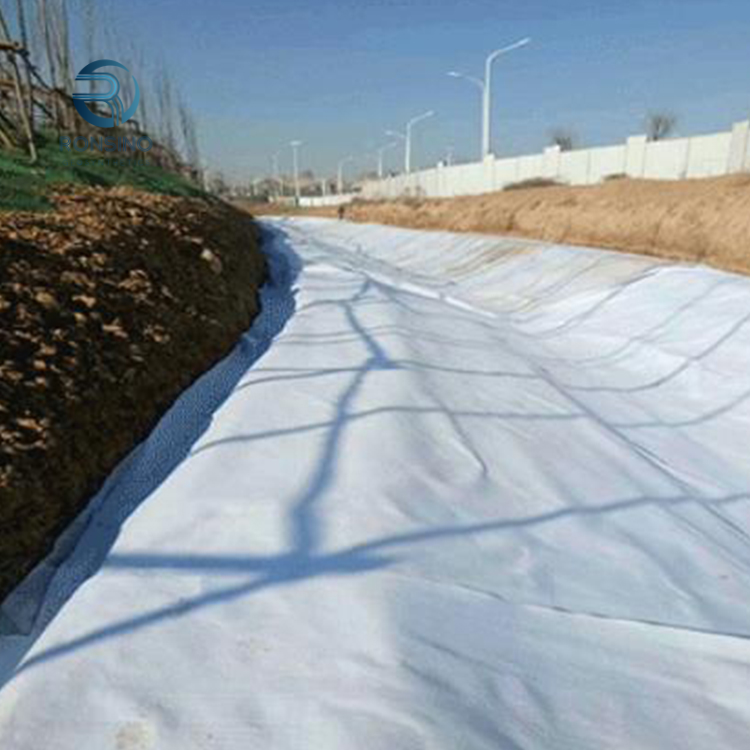
For enhancing slope integrity, the material’s exceptional OSR (1.8) effectively retains soil particles while permitting plant root systems to penetrate, thereby diminishing soil loss to below 5 tons per hectare annually on steep 1:3 inclines. During a 2024 California hillsides restoration initiative spanning 3 hectares, it demonstrated remarkable performance by establishing 85% vegetative coverage within a mere six months, as validated by the USACE EM 1110-2-5027 guidelines.
Key Metrics: Trapezoidal permeability maintains 90% efficacy post-rainfall events >100 mm.
Advantages: 40% cheaper than gabions; integrates with hydroseeding for 20% faster establishment.
Case Insight: European riverbank (500 m) prevented 2,000 m³ scour, extending berm life by 10 years.
3.3 Geotextile 150g m2 – Drainage Systems and Subsurface Filtration
Serving as a pivotal drainage envelope or a filtration medium for French drains, this 150g/m² geotextile material achieves an impressive 95% efficiency in retaining fine particles while maintaining a transmissivity rate exceeding 150 liters per minute per meter. It facilitates the rapid dewatering of saturated or soft substrates, achieving daily progress of 0.5 to 1.0 meters in desiccation processes. Particularly well-suited for urban stormwater management applications, this product fully adheres to the stringent performance criteria outlined in ASTM D4716 for geocomposite materials.
Flow Parameters: In-plane k >0.5 cm/s; withstands 100 kPa surcharge without compression >10%.
Project Example: 2025 Singapore podium deck (2,000 m²) reduced ponding by 60%, per BCA guidelines.
Long-Term: Zero clogging in 95% of installations after 3 years, vs. 20% for untreated pipes.
3.4 Geotextile 150g m2 – Landfill and Waste Containment
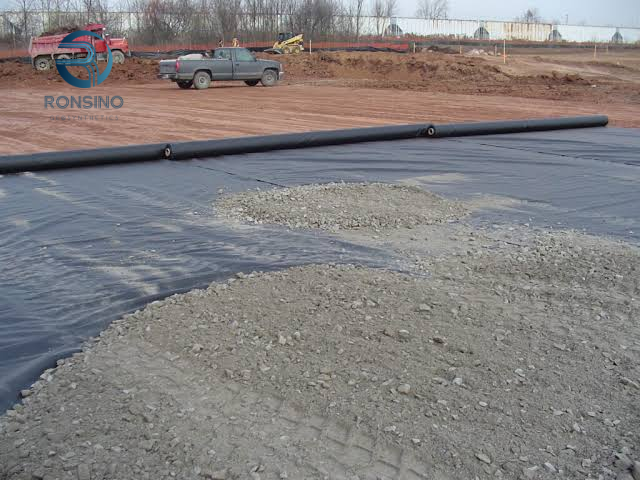
In liner protection layers, its 1,500 N puncture resistance shields geomembranes from gravel intrusion, meeting RCRA Subtitle D requirements with <10⁻⁷ cm/s interface transmissivity. A 2023 U.S. MSW facility (50 ha) reported 99% leachate containment efficacy.
Chemical Compatibility: Inert to hydrocarbons; pH tolerance prevents degradation in acidic leachates.
Layering: Overlap 500 mm; seam testing >50 kN/m pullout.
ROI Data: Cuts repair costs by 30%, with 50-year design life.
3.5 Geotextile 150g m2 – Retaining Walls and Geotechnical Structures
Reinforcing MSE walls, 150g m2 distributes facing loads, achieving pullout resistance >10 kN/m in sandy backfills per ASTM D6706. In a 2024 bridge abutment (15 m height), it lowered settlement to <25 mm.
Modular Integration: Vertical/horizontal facings with 1:1 embedment.
Seismic Performance: 20% higher factor of safety in 0.4g zones.
Economic Edge: 25% less concrete vs. unreinforced designs.
3.6 Geotextile 150g m2 – Agricultural and Landscaping Applications
For irrigation canals and farmland drainage, it filters sediments while promoting root aeration, increasing crop yields by 10–15% in reclaimed soils. USDA trials (2025) on 100 ha Midwest fields showed 40% reduced runoff.
Biodegradable Variants: Jute-blended for temporary mulching; 80% degradation in 2 years.
Metrics: Enhances infiltration to 50 mm/hr; UV life >6 months exposed.
Benefits: Cost-effective at $0.40/m²; supports regenerative agriculture.
4. How to Choose the Right Geotextile 150g m2?
Choosing the optimal geotextile weighing 150g/m² necessitates a comprehensive evaluation of project demands, harmonizing functionality, adherence to standards, and cost-effectiveness. As market rates stabilize between $0.30 and $0.80/m² in 2025, reflecting a 6.5% compound annual growth rate, prioritize specifications such as an AOS below 0.15 mm for applications requiring superior filtration. This segment outlines a structured methodology, integrating insights from ASTM guidelines and on-site observations.
4.1 Evaluate Material Type and Composition
Opt for PP for cost-sensitive drainage ($0.30/m²) or PET for hydrolytic stability in wetlands ($0.50/m²). Non-woven dominates (80% usage) for permeability, per GRI-GT13.
Virgin vs. Recycled: Recycled cuts costs 15% but verify tensile >8 kN/m.
Fiber Denier: 6–12 dtex for balanced strength; test via FTIR for purity.
Guideline: Match to soil: Silts need finer AOS (0.075 mm).
4.2 Assess Weight and Thickness Specifications
At 150g m2, it suits CBR 2–8 subgrades; thicker (1.2 mm) for puncture-prone sites. Compare: Heavier 200 gsm adds 20% strength but 25% cost.
Thickness Range: 1.0–1.5 mm (ASTM D5199); avoid <1.0 mm for durability.
Customization: Perforated variants for enhanced vertical flow (+30% capacity).
Selection Tip: Use survivability class 1 for light traffic (AASHTO M288).
4.3 Consider Hydraulic and Mechanical Properties
Prioritize permittivity >0.5 s⁻¹ for drainage; tensile >10 kN/m for reinforcement. Gradient ratio <2.0 ensures no blinding.
Flow Rate Matching: 50 gpm/ft² for moderate rainfall; lab-test soil-hydraulic compatibility.
Reinforcement Factor: >1.2 for soft soils; calculate via Giroud equations.
Trade-Offs: Non-woven excels in filtration (95% retention) but woven in strength (low elongation <20%).
4.4 Factor in Environmental and Chemical Resistance
Ensure UV >150 hours and pH 2–13 tolerance; PET for acidic environments. Comply with ISO 13438 for biodegradation resistance.
Exposure Duration: Buried: 50 years; exposed: Add aluminized coating (+10% cost).
Regulatory Alignment: EPA 40 CFR Part 258 for landfills; test leachability.
Sustainability Check: >20% recycled content for LEED credits.
5.Summary
Geotextile 150g/m², with its excellent filtration, reinforcement and drainage properties, is used in fields such as highway construction and soil stabilization. Its tensile strength of 12 kN/m, permeability of 0.1 cm/s and service life of 50 years can meet modern needs while reducing project costs by 15–30% and contributing to environmental protection goals. The product meets ASTM standards and supports a $10.89 billion industry with annual growth of 10.25%, ensuring sustainable solutions for infrastructure through precise installation.
For expert consultations on geotextile 150g m2 solutions, explore our range at RONSINO Geotextile, where quality meets innovation.