Ultimate Guide to Geotextile Fabric
Blog · 2026-05-18 · 0 views
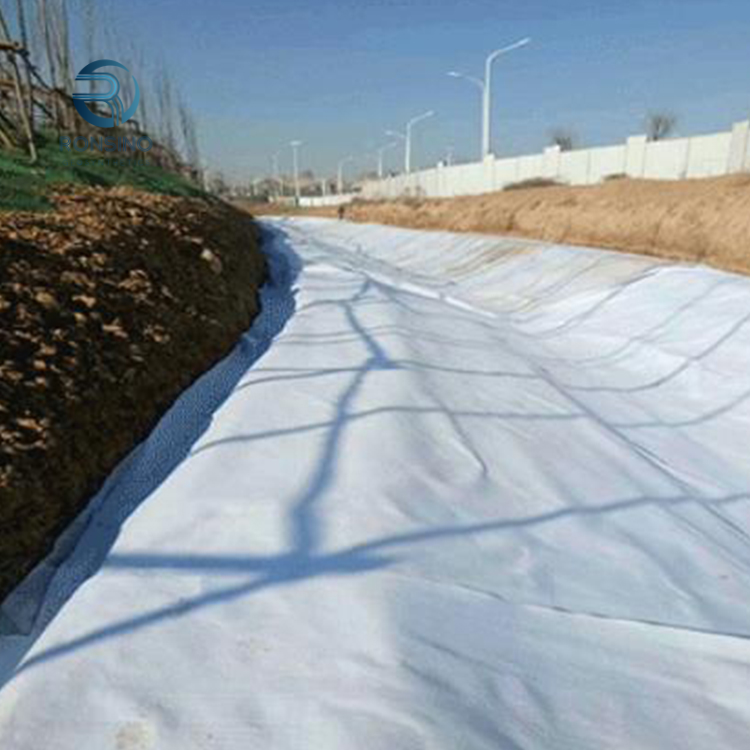
1.Although the terrain beneath us appears firm and unyielding at first glance within the realm of building infrastructure and civil engineering it frequently acts as a volatile erratic factor compromising structural integrity; loose shifting earth can precipitate disastrous outcomes ranging from roadways that settle unevenly to hillsides that give way entirely; historically professionals combated these obstacles through sheer physical exertion by excavating further depositing vast quantities of stone or erecting massive fortifications yet an understated technological evolution has emerged centering on man-made polymers known as geosynthetics; specifically geotextile fabrics have established themselves as essential implements for ground improvement effectively converting subpar substrates into durable trustworthy bases by leveraging mechanical functions such as isolation support strain distribution and drainage control
2. Defining Geotextiles and Their Core Functions
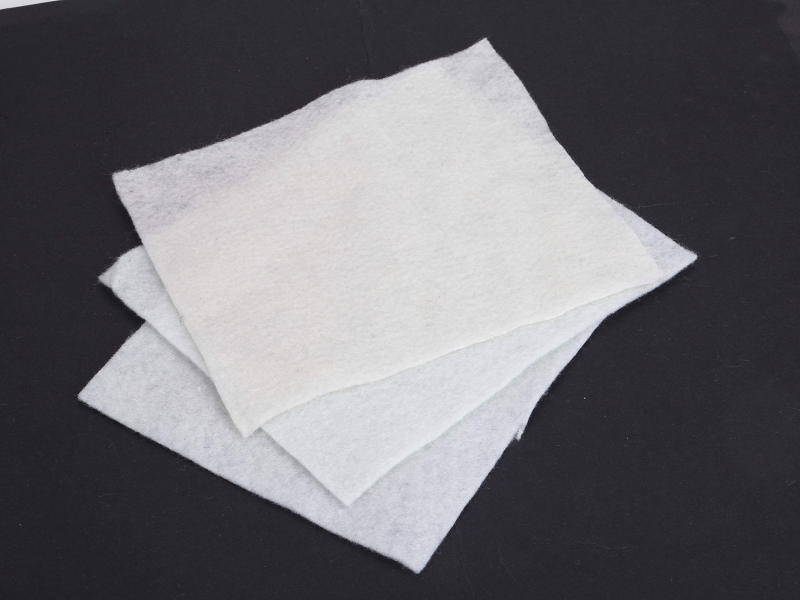
Fundamentally speaking, a geotextile is defined as a textile product possessing water-permeability properties, which is almost exclusively derived from polymeric compounds such as polypropylene or alternatively constructed from polyester-based resins. Its primary design philosophy involves strategic integration with mineral particles and geological formations to optimize the outcomes of infrastructure development initiatives within the specific context of ground stabilization, these engineered material solutions deliver three essential and synergistic roles:
2.1 Geotextile Fabric for Soil Stabilization – Separation
This stands as the fundamental and most apparent function. Within contexts such as unsealed pathways or railway track foundations, a stratum of purified, resilient granular material is positioned atop a feeble subterranean terrain. In the absence of a separating medium, the vibrational impacts from moving vehicles compel the aggregate to penetrate downward into the malleable earth, concurrently permitting the diminutive soil fragments to ascend and infiltrate the aggregate matrix. This amalgamation process, termed “pumping,” undermines the load-bearing capacity of both strata. The geotextile material serves as a partition, obstructing this commingling and safeguarding the compressive strength and permeability attributes
2.2 Geotextile Fabric for Soil Stabilization – Reinforcement
Geosynthetic materials, especially the robust woven and nonwoven types, exhibit remarkable tensile resilience—a characteristic absent in natural earth formations. When embedded within a soil matrix, these geotextiles effectively bear tensile loads, thereby forming a reinforced soil composite system. This mechanism mirrors the role of steel reinforcements in concrete structures. The interfacial friction between soil and fabric facilitates stress transfer, enabling the creation of steeper, more secure slopes, embankments, and retaining walls that would be unattainable through conventional soil engineering methods alone.
2.3 Geotextile Fabric for Soil Stabilization – Filtration and Drainage
Geotextiles are meticulously designed to exhibit permeable characteristics, facilitating the passage of water while simultaneously entrapping soil particles. Within stabilization applications where hydrostatic forces (specifically, interstitial water pressure) may compromise the integrity of the soil, the geotextile functions as a filtering medium. When positioned in close proximity to the soil matrix, the material intercepts the outflow of water, thereby inhibiting the displacement of minute soil grains that could result in progressive erosion and subsurface piping. This regulated permeation ensures efficient water evacuation, which in turn diminishes the internal pore pressure of the soil, ultimately fortifying its structural resilience.
2. A Tale of Two Textiles: Woven vs. Non-Woven Geotextiles
Geotextiles vary significantly in their composition and performance. The production techniques employed during manufacturing profoundly influence their structural and functional attributes, which in turn determines their suitability for particular stabilization applications. These materials are broadly classified into two fundamental types: woven and non-woven geotextiles.
Geotextile Fabric For Soil Stabilization – Woven Geotextiles
Geotextiles are produced by systematically weaving yarns or tapes in a consistent arrangement, closely resembling the construction of conventional textile materials. This method yields a fabric characterized by exceptional tensile resistance and minimal elongation behavior. The apertures within these textiles generally exhibit greater uniformity and reduced dimensions. Woven geotextiles demonstrate outstanding performance in structural reinforcement scenarios. They represent the optimal solution for constructing reinforced earth retaining systems, addressing steep terrain stabilization challenges, and providing support to extremely weak foundation strata under substantial stress conditions where tensile capacity is the critical factor. While their capacity for maintaining soil particle separation remains highly effective, their permeability characteristics may not match the hydraulic conductivity levels achieved by non-woven alternatives.
Geotextile Fabric For Soil Stabilization – Non-Woven Geotextiles
These materials are fabricated by the random placement of artificial filaments, which are subsequently fused via mechanical (needle-punching), thermal, or chemical methodologies. The outcome is a substantial, felt-like textile substrate. Non-woven fabrics are distinguished by their elevated porosity and extensibility (capable of considerable elongation). Their fundamental advantages encompass segregation, particulate separation, and fluid conveyance. They are particularly suited for applications situated behind structural supports, within underground conduit networks, and for demarcating subterranean strata from granular bases in environments where fluid dynamics are a critical factor, such as beneath transportation routes in humid geographical regions.
3.The Geotextile Fabric For Soil Stabilization: How Geotextiles Actually Work
Understanding the core functions is one thing; visualizing how they mechanically stabilize soil is another. The process is a synergy of physics and material science.
When an external force is exerted on unconsolidated ground (such as a heavy vehicle traversing a unpaved pathway), the ground material shifts sideways in a fracture mechanism characterized by shear displacement. The particulate matter descends, while the adjoining terrain elevates along the margins. Upon the integration of a geosynthetic fabric, it obstructs these shear zones. As the ground endeavors to displace horizontally, it activates frictional resistance across the extensive interface of the geotextile. The textile, owing to its superior tensile capacity, counteracts this displacement, effectively securing the soil mass. This restraining action disperses the imposed load across a broader subgrade region, thereby diminishing localized stress and inhibiting significant deformation.
At its core, the geotextile induces the soil into a condition of "membrane-like stress." It functions as a stretched sheet that bears the imposed weight from above. This principle explains how a slender fabric layer facilitates development on exceptionally weak substrates such as peat or clay, which were formerly deemed unsuitable for construction without extensive and costly soil removal techniques. From Theory to Terrain: Key Applications in Soil Stabilization
The practical applications of geotextiles in stabilization are vast and touch nearly every aspect of infrastructure development.
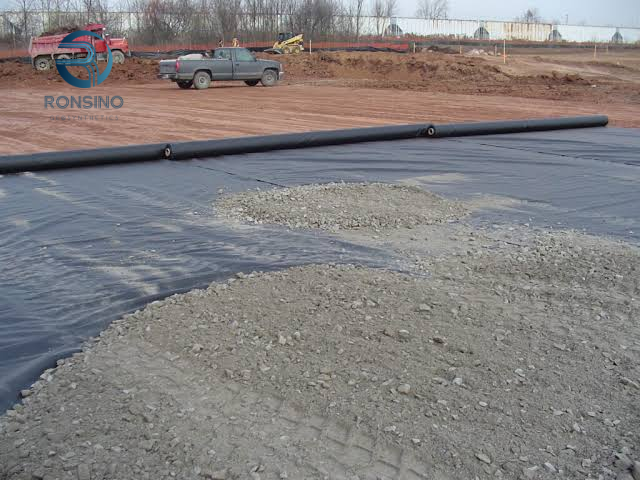
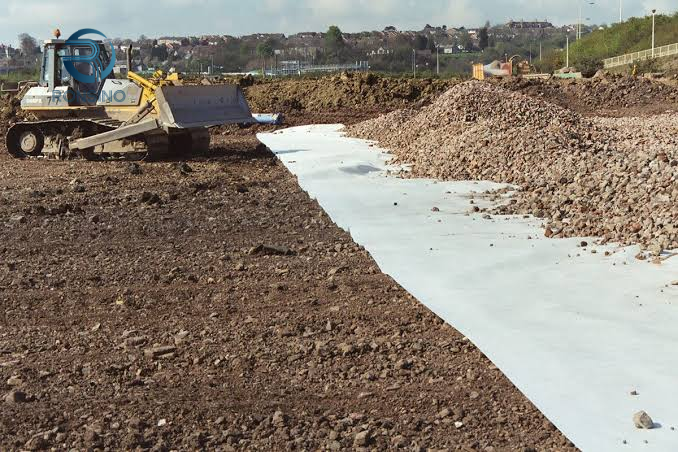
Unpaved and Paved Roads: This represents the most prevalent utilization. A geotextile installed beneath the roadway structure and atop the unstable subsoil serves dual functions of segregation and fortification, thereby diminishing the necessary thickness of granular material by as much as half and considerably prolonging the intervals between required upkeep procedures.
Parking Lots and Construction Sites: The construction of temporary access routes and material storage zones on unreliable terrain becomes both viable and enduring through the utilization of geotextile fabrics, thereby averting the immobilization of construction equipment due to ground subsidence.
Embankments and Slopes:Constructing protective barriers atop unstable ground or developing steep inclines presents a persistent dilemma in the field of soil engineering. The strategic incorporation of geosynthetic materials within the embankment delivers essential resistance to tension, thereby preserving structural integrity and averting potential collapses.
Reinforced Soil Retaining Walls (MSE Walls): Mechanically Stabilized Earth (MSE) walls use layers of geotextile as tensile elements to create vertical or near-vertical walls. This is a cost-effective and efficient alternative to traditional concrete retaining walls.
Railway Construction: Geotextiles stabilize the track bed, separating the ballast from the sub-ballast and subgrade, which reduces settlement and maintains track alignment.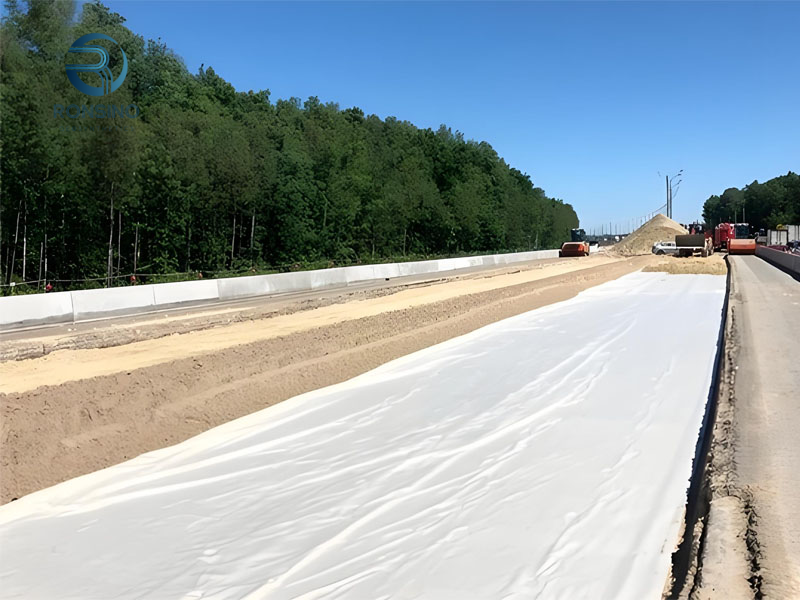
4.Choosing the Right Geotextile Fabric For Soil Stabilization: Critical Properties and Specifications
Selecting the appropriate geotextile is not a matter of guesswork; it is a precise engineering decision based on specific properties. Key design properties include:
Grab Tensile Strength (ASTM D4632):Measures the force required to break a fabric sample. Crucial for reinforcement applications.
Puncture Strength (ASTM D4833): Assesses the fabric’s resistance to penetration by sharp objects (like rocks), ensuring it survives installation.
Trapezoid Tear Strength (ASTM D4533):Evaluates the resistance to tearing forces, important for durability.
Apparent Opening Size (AOS) or O90 (ASTM D4751):This indicates the approximate largest pore size in the fabric. It is the primary factor in filtration design, ensuring the fabric retains the necessary soil particles while allowing water to pass.
Permittivity (ASTM D4491): A measure of the fabric’s ability to allow water to flow through it in a direction normal (perpendicular) to its plane. Critical for drainage design.
UV Resistance: The fabric’s ability to withstand degradation from sunlight before being covered, which is vital for handling and storage on-site.
An engineer will analyze the soil type (grain size distribution), the loading conditions, and the hydraulic requirements to specify a geotextile with minimum values for these properties.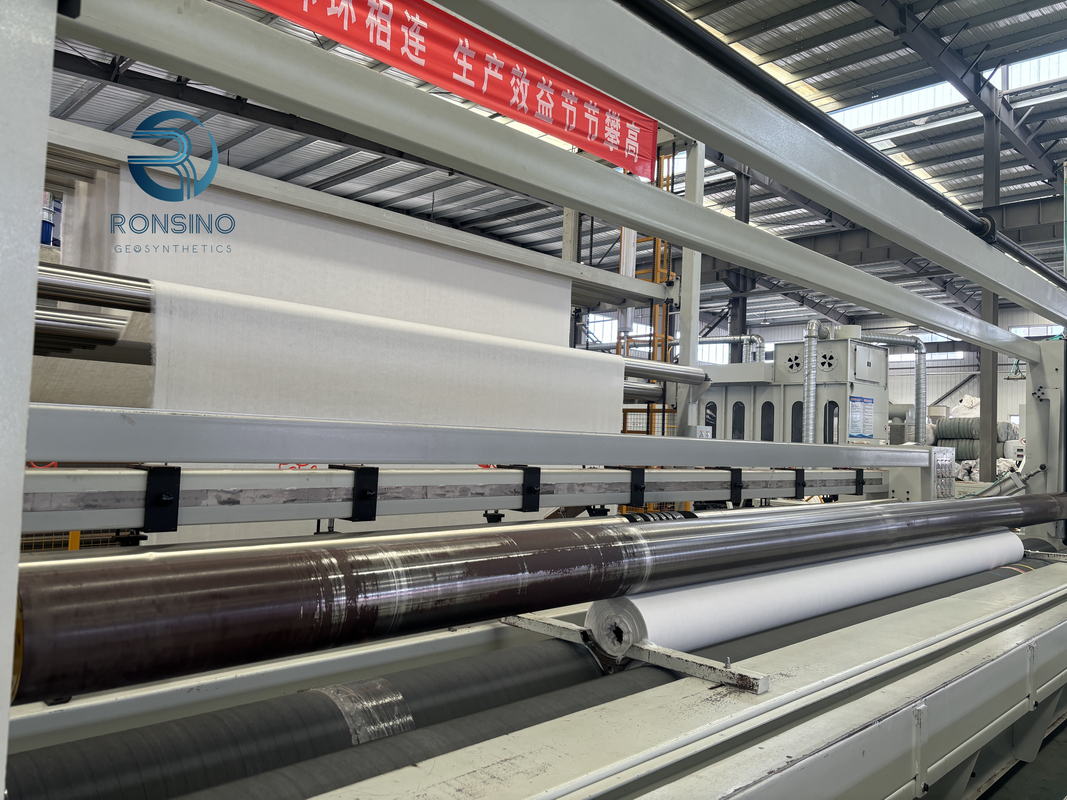
5. The Blueprint for Success: Proper Installation Guidelines
The best geotextile will fail if installed incorrectly. Proper installation is a multi-step process:
Site Preparation:The foundation shall be shaped to the required elevation and thoroughly densified. Any materials capable of piercing the geotextile, including sharp-edged items, waste matter, and plant growth, must be entirely eliminated.
Geotextile Placement:Rolls of geotextile are laid out manually or with machinery along the prepared subgrade. The fabric should be laid smoothly without wrinkles but also without excessive tension.
Seaming and Overlap:Adjacent coils must be effectively connected, and this process is usually accomplished by overlapping the coils. The specific overlap length (usually between 12 and 36 inches) needs to be determined comprehensively based on the load-bearing capacity of the base layer and the application scenario. For critical projects, seams need to be reinforced with stitching or welding to ensure connection reliability.
Anchorage: On slopes, the top end of the geotextile roll must be anchored in a trench to prevent it from being pulled down during fill placement.
Backfilling:The initial layer of fill material (usually aggregate) should be placed from the center of the roll outwards to avoid creating wrinkles. The drop height should be limited to prevent damage, and lightweight equipment should be used for initial spreading.
Compaction:Compaction of the fill material can begin once a sufficient cover (typically 6-12 inches) is in place to protect the geotextile from direct contact with machinery.
We are seeing the development of:
Smart Geotextiles: Fabrics with integrated sensors to monitor strain, temperature, and moisture in real-time, providing early warning of potential failures.
Biodegradable Geotextiles: Made from natural fibers like coir or jute, these are used for temporary erosion control on slopes where long-term synthetic presence is undesirable.
Nanotechnology-Enhanced Geotextiles: Incorporating nanoparticles to improve properties like UV resistance, strength, or even to give the fabric contaminant-absorbing capabilities for environmental remediation.
In summary, geotextile material transcends the perception of being merely a synthetic membrane. It represents an advanced, scientifically designed innovation that has profoundly reshaped our interaction with the subsoil. By leveraging the fundamental yet robust mechanisms of partition, fortification, and permeability, it enables the construction of more secure, resilient, and eco-friendly engineering works on terrain that was previously deemed unsuitable. Indeed, it serves as the unseen matrix that underpins and sustains contemporary civilization.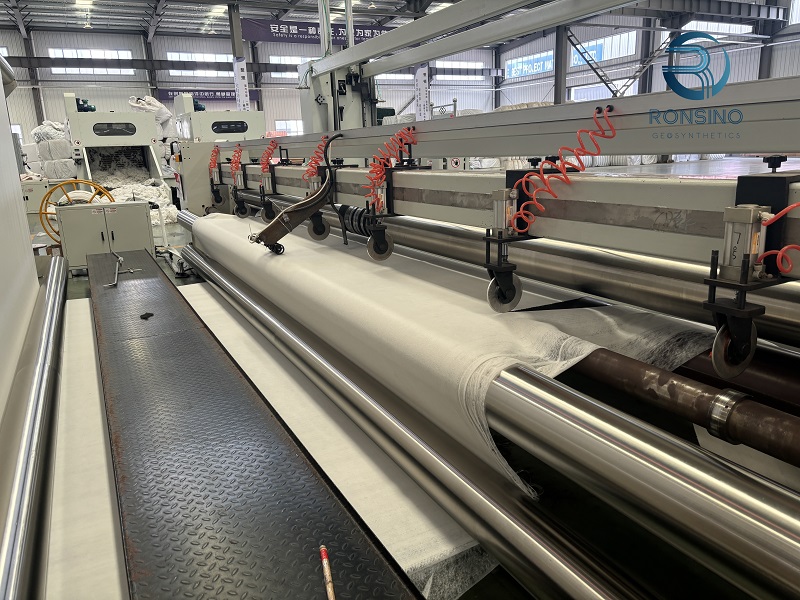
6. How to Choose the Reasonable Supplier:
RONSINO consistently prioritizes technological innovation, enhances its manufacturing infrastructure, and strengthens its end-to-end engineering solutions. We have allocated 10 million dollars to upgrade our production facility, which is outfitted with cutting-edge automated assembly lines. These advanced systems enable the creation of premium Geosynthetic clay liners and other geosynthetic materials, utilizing refined manufacturing techniques. Our diverse portfolio of geosynthetic products is distinguished by their guaranteed quality, superior performance, exceptional resilience, and optimal value proposition.
The bentonite waterproof blankets and other geosynthetic materials products and solutions produced by the RONSINO brand can fully meet your diverse needs with our strong technical strength, innovative engineering design solutions and excellent customer service. RONSINO has always been committed to using our innovative and high-performance geosynthetic products to overcome the toughest challenges in various civil engineering, mining and environmental protection fields. Strict quality control, highly competitive ex-factory prices and efficient delivery cycles together constitute our core competitive advantages.