PP Non Woven Geo Fabric for Embankment Reinforcement Project in Guyana
case · 2025-11-27 · 0 views
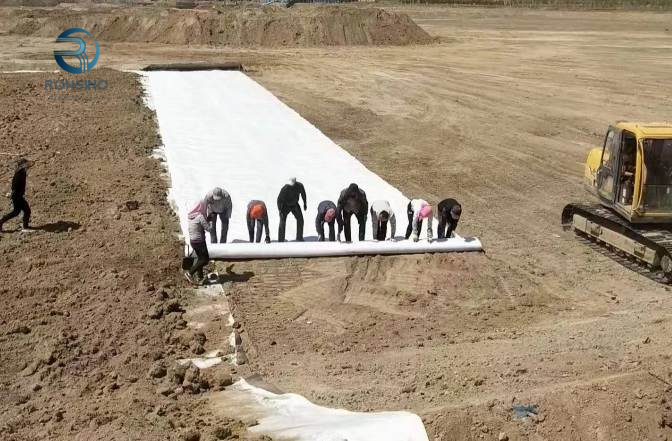
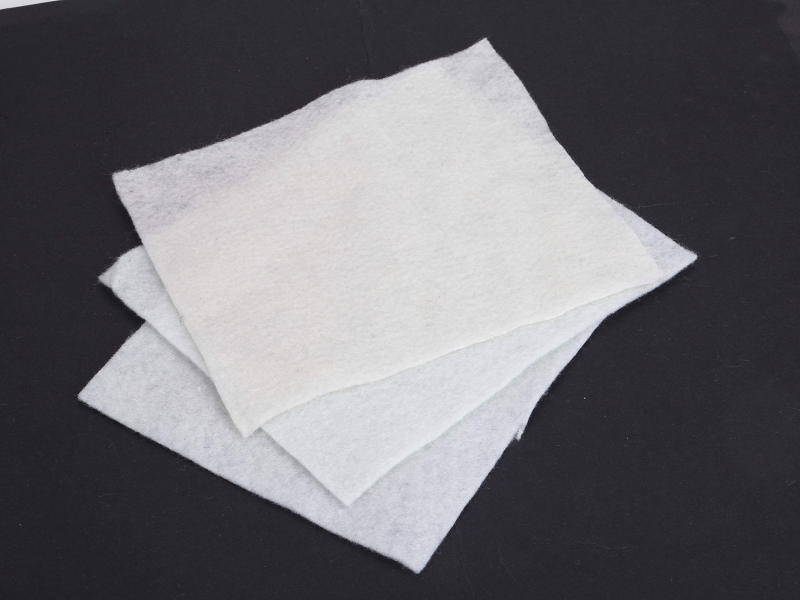
PP Non Woven Geo Fabric, a novel geotechnical and civil engineering material, is made from high - quality continuous polypropylene fibers through polyester filament formation and consolidation. Its fiber forms a 3D framework. Widely used for drainage, pavement interlayers, and separation/stabilization on roads, it has excellent stretching, puncture, acid - alkali and aging resistance. Filament high - strength non - woven geotextiles are used in civil engineering for soil layer/material separation, particle filtering, water drainage and structure protection.
Benefits
The advantages of using non - woven geotextiles for roadbed reinforcement:
1) Facilitate construction with less disruption and less organic soil displacement.
2) Provide initial support for vehicles on soft soils to enable laying of fill materials.
3) Prevent embankments from penetrating into soft roadbeds.
4) Maintain the integrity of embankment projects. It doesn't reduce overall settlement but promotes a more even settlement pattern across the embankment, including edges and areas with different layer thicknesses. These synthetic materials reduce differences in settling rates, distribute loads better, and help avoid problems due to uneven settling.
1) Excellent temperature resistance: Asphalt mixture is usually paved at around 150℃, and modified asphalt has a higher temperature. PET Filament geotextile must neither melt nor soften at this temperature and should function normally, with the ability to withstand temperatures over 170°C.
2) Excellent asphalt absorption: Initially, uniformly spray the permeable asphalt layer. Subsequently, lay out the PET Filament geotextile. The PET Filament geotextile ought to be capable of absorbing the asphalt and attaining a state of saturation. It is essential that the PET Filament geotextile possesses outstanding adsorption capabilities in order to effectively perform the task of asphalt absorption.
3) Excellent uniformity: The PET Filament geotextile belongs to an anisotropic substance. In order to guarantee a consistent strength level, the ratio of the two - way strengths ought not to exceed 12. Under normal circumstances, it is advisable to opt for PET Filament geotextile rather than using woven geotextile.
4) Anti - aging performance: PET Filament geotextiles need to sustain normal operating conditions throughout the service life of the pavement.
5) Water - passing ability: PET Filament geotextiles also need to possess excellent water - passing capacity, and this characteristic can be gauged through the vertical permeability coefficient.
Case study
Location –Guyana
Product –PP Non Woven Geo Fabric
Purpose –Reinforced Embankment for Highway
Project Background
A Guyana client has a road - building project. The new road runs along a mud - lake boundary with much peat. Usually, peat would be removed by displacement or excavation and replaced with granular fill. However, traditional methods are limited:
There's no suitable disposal site for organic soil in the area.
As it's a wetland, excavating organic soil may disrupt the ecological balance, raising environmental concerns.
Handling large - volume soil is costly, covering excavation equipment, transport, and labor.
Direct foundation observation requires an expensive dehydration process.
Due to these factors, the design engineer proposed building a dike on the organic soil.
Issue
Technical experts find constructing an embankment unfeasible without subgrade or embankment reconstruction. As excavation and replacement are impractical, other approaches like wick drains, stone columns, etc. are explored.A comparison of these methods in feasibility, performance and cost - effectiveness shows geosynthetics is the most efficient. Metal reinforcements are excluded due to high corrosion susceptibility and relatively high cost in acidic organic soils.
Solution
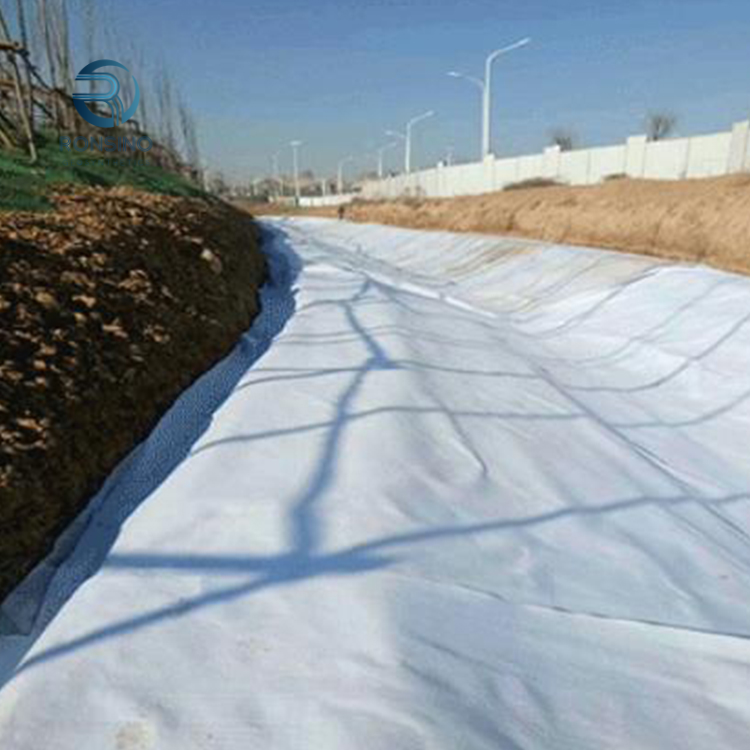
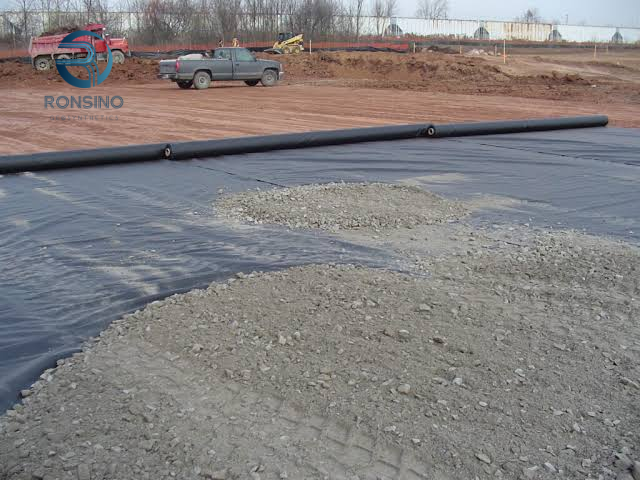
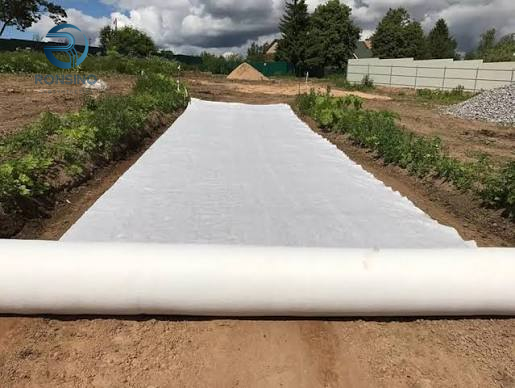
In reply to client queries, RONSINO suggests offering non - woven geotextiles for reinforcement. Laying a polypropylene (PP) non - woven geo - fabric at the embankment base can enhance stability by increasing shear strength.Theoretically, it provides extra rigidity at the base for more uniform load dispersion.As it can reduce shear stress at the embankment - subgrade boundary, it lessens the chance of excessive lateral expansion, especially on soft soil common at global infrastructure sites.
In Guyana, customers and local technicians evaluated our company's suggestions and thought they could solve current problems. So, we sent 200 - gram and 300 - gram non - woven geotextile samples to the customer for testing. After a full inspection, the customer chose the 200 - gram geotextile for their roadbed project. We were very satisfied with this client.
Summary
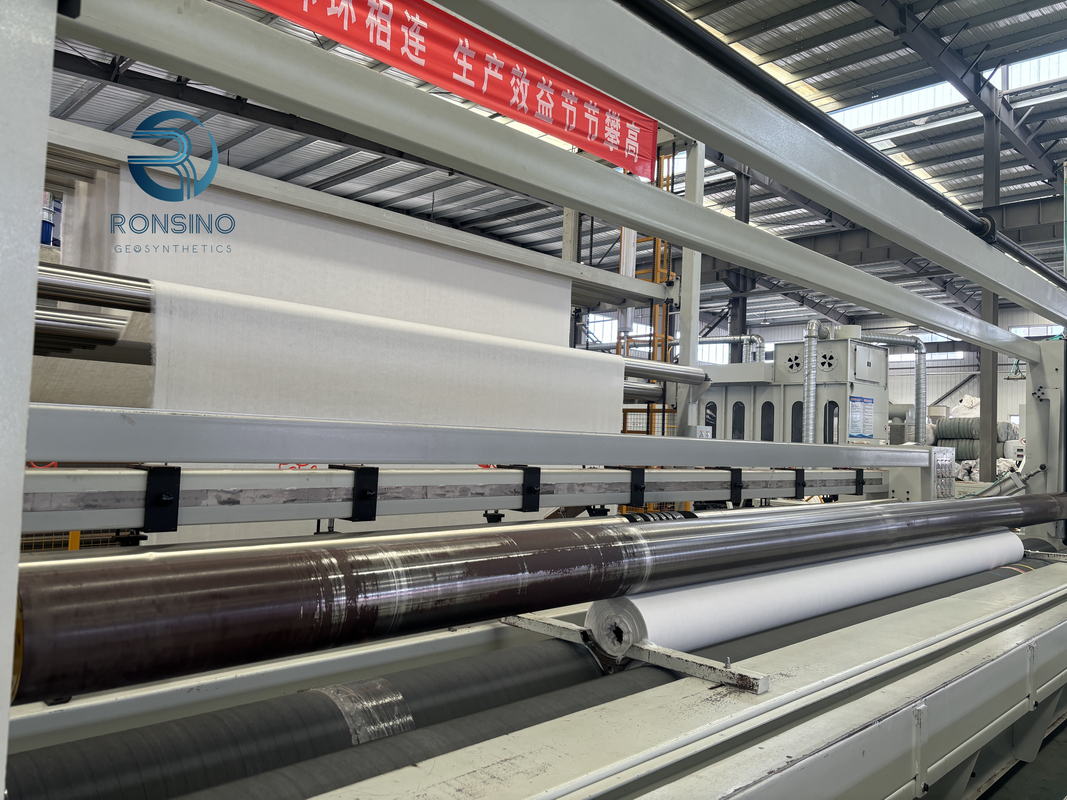
PP Non - Woven Geosynthetic Fabric is a type of high - quality non - woven geotextile material. It comes with multiple functions such as isolation, filtration, water drainage, separation, protection and upkeep among others.Filament Polyester Non - Woven Geotextile is produced through an elaborate process. First of all, fibers are extruded. After that these extruded fibers are spread out on a production "surface". Then needles punch the fabric simultaneously from both its upper and lower sides in order to interlock the fibers together firmly. This way it can form a geotextile with stable dimensions that can maintain its shape well in various applications.
Filament polyester non - woven geotextiles are widely used in construction and environmental projects like road building, landfills, canals, and salt ponds. They have the following features:
1.Outstanding permeability and filtration. They separate soil layers, filter fine particles, and allow water to pass, crucial for drainage and structure protection.
2.Cost - effective. Low production cost and easy installation save time and labor, suitable for large - scale projects.
3.Reinforce retaining walls. They evenly distribute backfill soil pressure, enhancing wall stability.
4.Improve slope stability. They reinforce slope soil, reducing slippage risk and preventing erosion and freeze - related damage.
Specifications of PP Non Woven Geo Fabric for embankment reinforcement project in Guyana
Total filament geotextile quantity – 218400 square meters
Filament Geotextile specification – 200 gsm
Each roll size is 6m*100m
Four 40HC containers
About RONSINO
RONSINO produces and wholesales high - performance geotextiles, geomembranes and other geosynthetics to over 36 countries. Its products, widely used in waste management, water storage, etc., have clients across multiple continents.In Oceania, Australia and New Zealand are customers; in Europe, France, Sweden, etc. use its products. In North America, Mexico and Ecuador are emerging markets, and Brazil in South America has high demand. In Asia, Pakistan and Bangladesh use the materials for flood and water management, Thailand for coastal tourism, and India has a large share due to infrastructure spending. In Western Asia, UAE has skyscraper and landfill projects, Saudi Arabia focuses on oil - related infrastructure, and Qatar needs geosynthetics for stadium ground treatment. In Africa, Kenya's demand for road building and water storage is rising.
RONSINO is not only manufacturing best quality geosynthetic products but also providing professional design and installation service. OEM, ODM, custom development and fabrication are also available. If you have any questions or inquiries, please fill and submit the following form, we will reply as soon as possible.