Nonwoven Short Fiber Geotextile Fabric for Sewage Treatment Construction in Netherlands
case · 2025-10-09 · 0 views
Case Study
Construction: Sewage Treatment Plant
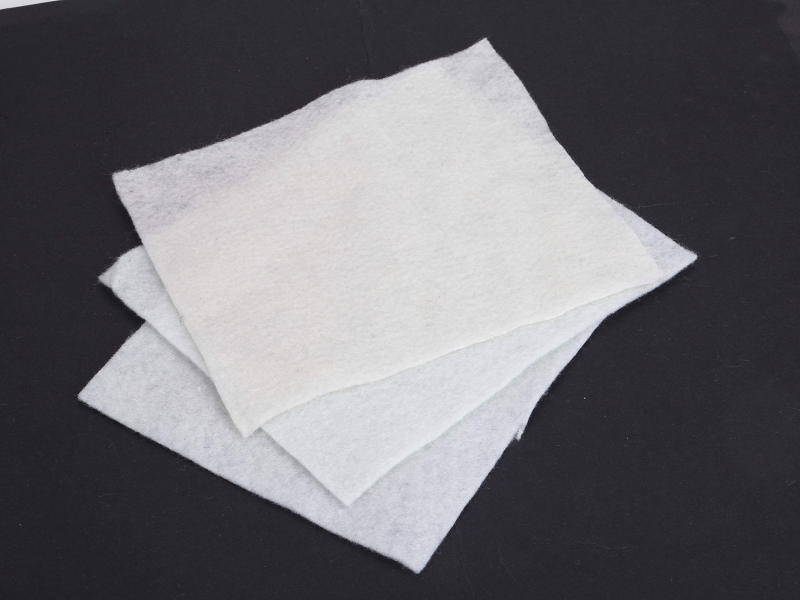
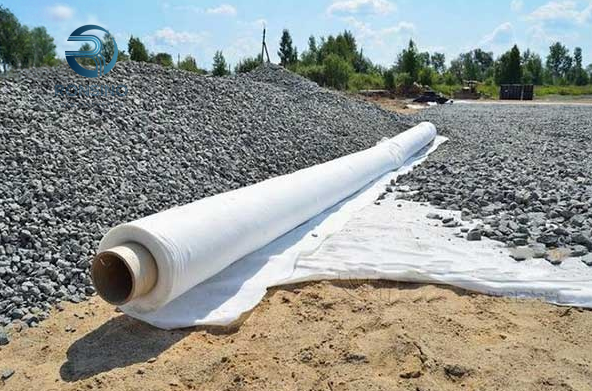
Product: 300gsm PP Nonwoven Short Fiber Geotextile Fabric
Location: Netherlands
1.Advantage
1) Excellent drainage and vertical permeability: The thickened non-woven fabric and acupuncture reinforcement structure form a three-dimensional connected pore network, which can quickly drain the retained water in a plane and vertically penetrate the water body.
2) Leading tensile index: under the same weight, the longitudinal and transverse tensile strength is better than that of conventional needle-punched non-woven products, improving the engineering safety factor.
3) Excellent elongation: It can fully extend and deform when subjected to force, and can easily fit the undulating base surface without breaking.
4) Outstanding UV aging resistance: The polyester fiber main body combined with stabilizing additives can resist solar radiation for a long time, delay performance degradation, and extend the service life.
5) Good chemical stability: It is difficult to be corroded by common soil corrosive media such as acids, alkalis, gasoline, diesel, and salt, and the fiber structure mechanics and functions are kept intact.
6) High interface friction coefficient: The surface is rich in hairiness and not easy to fall off. It provides greater anti-slip resistance than traditional geotextiles and reduces the risk of inter-layer slippage.
7) Strong creep inhibition ability: The non-woven structure has an extremely low deformation rate under long-term constant load and can maintain the designed function without deterioration for decades.
2.The role of PP Nonwoven Short Fiber Geotextile Fabric
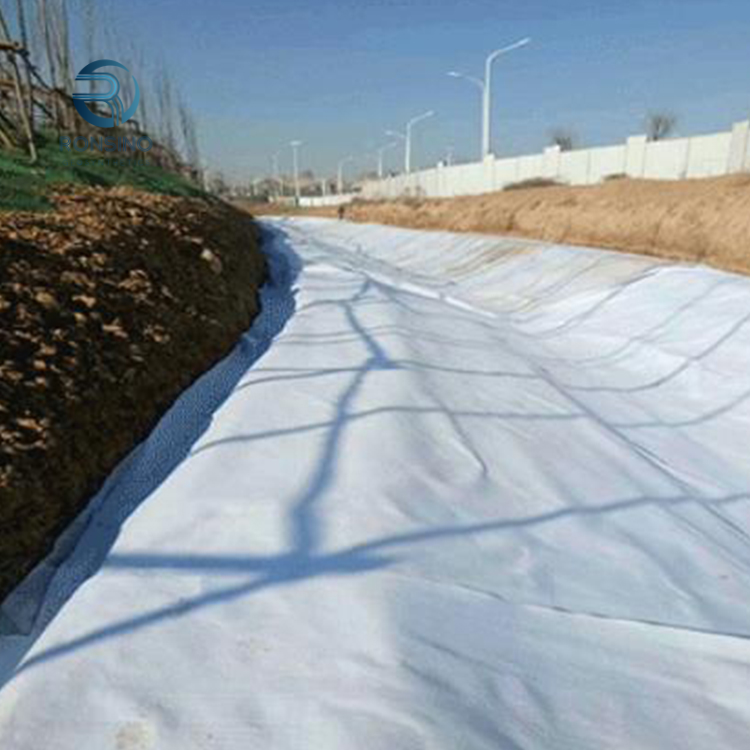
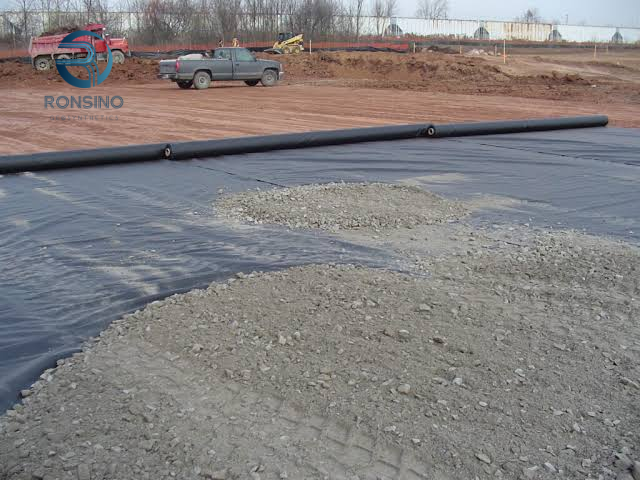
Non-woven staple fiber geotextiles can protect roadbed risks (including freezing damage). Under continuous cyclic load, it prevents the subgrade pore water pressure from exceeding the limit and causing the weak soil to press into the coarse-grained layer and avoids the "boiling" phenomenon. It has three ecological functions: first, it is suitable for various slope vegetation projects, retaining water and preventing loss, and used as a seeding matrix to promote the interweaving of plant roots into a stable ecological slope; second, it can construct flexible slopes to achieve comprehensive greening, replace high-energy-consuming rigid materials, and reflect eco-friendliness; third, it can be used in landfills to improve closing conditions and enhance stability, or it can be combined with HDPE membranes to delay sewage leakage.
3.Issue
In view of the fact that the client's construction project is intended to be used in industrial sewage treatment operations, in view of the strong acid-base properties and the presence of diverse chemical substances in industrial wastewater, in order to prevent the soil and groundwater environment from being polluted due to sewage leakage, effective anti-seepage measures must be implemented simultaneously and properly protected; therefore, geotextiles used as buffers and protective layers have extremely high standards and requirements in terms of acid and alkali resistance.
RONSINO brand non-woven staple fiber geotextile rolls are made of polypropylene short fibers through web formation and consolidation processes. The internal fibers are arranged in a three-dimensional distribution. It is a new type of building material used in the field of geotechnical engineering and civil engineering. In addition to having excellent mechanical strength properties such as tensile force and puncture resistance. The material also has excellent vertical and horizontal drainage and good elongation properties. It also has excellent biological resistance, excellent acid and alkali resistance, outstanding aging resistance and other chemical properties. In addition, the polypropylene staple fiber geotextile also has the characteristics of a wide range of pore sizes and a tortuous distribution, which gives it good penetration and filtration efficiency.
4.Solution
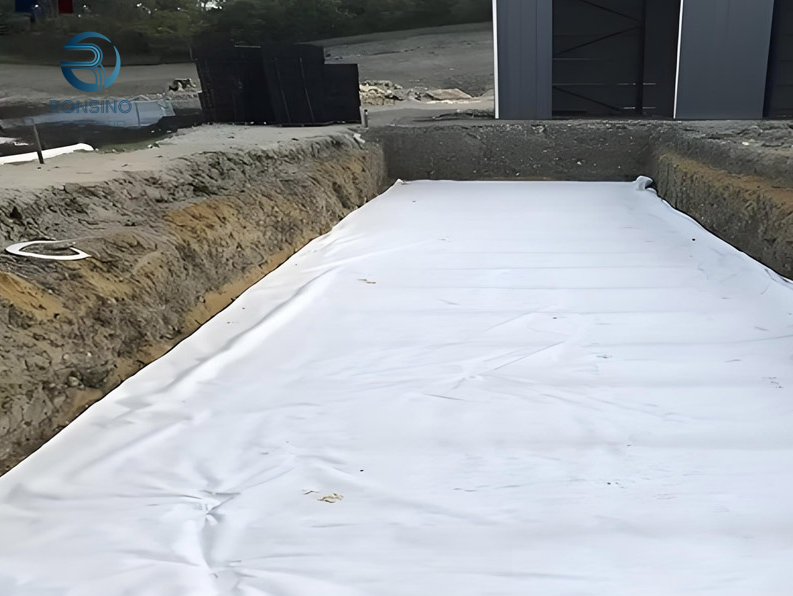
In August 2022, a Dutch customer contacted our team through LinkedIn, saying that he had paid attention to the various geosynthetic materials trends we displayed on the platform and believed that our geotextiles met the engineering design quality requirements of his project, so he submitted a purchase inquiry. After further communication, we learned that the project is a sewage treatment plant of about 18,000 square meters. The customer clearly needs 300g/㎡ non-woven polypropylene staple fiber geotextile, which can be used at the bottom of the sewage treatment tank to serve as a buffer layer and reinforce the underlying soil structure. After negotiation, we provided a quotation and related product test reports. After review, the customer expressed satisfaction with the quality assurance and requested physical samples to verify product production standards. We immediately sent geotextile samples with specified weight and some other product samples, hoping to use them in their future projects.
5.About RONSINO
Since its establishment in 2007, RONSINO has been committed to providing one-stop geosynthetic materials and system solutions to the world. For more than ten years, the company has sold core products such as anti-seepage membranes, geotextiles, and honeycomb cells to more than 81 countries and regions around the world, with markets covering Australia, Europe, Latin America, the Middle East, Africa, and North Asia.
RONSINO is not only manufacturing best quality geosynthetic products but also providing professional design and installation service. OEM, ODM, custom development and fabrication are also available.