Long Fiber Geotextile Fabric for Driveways Project in Paraguay
case · 2025-12-20 · 0 views
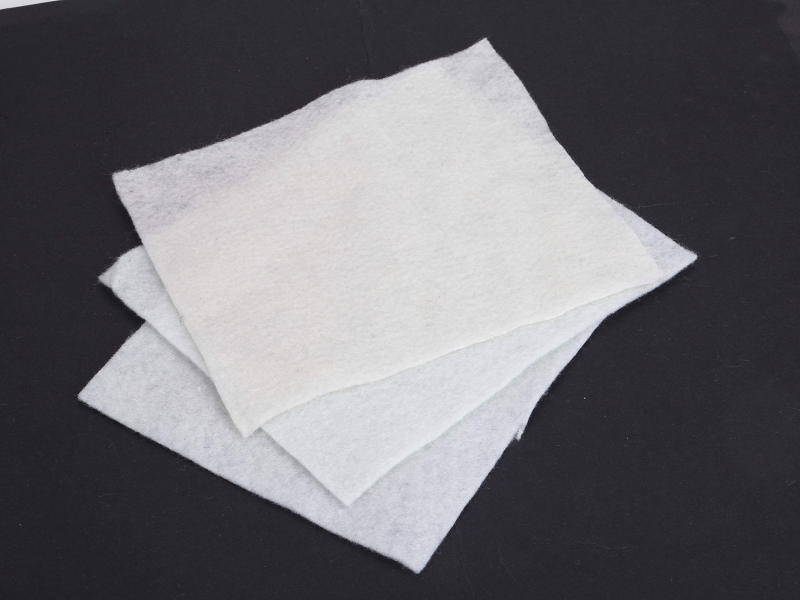
Long Fiber Geotextile Fabric, also called non - woven geotextile, is a cloth - like permeable geosynthetic made of synthetic fibers by needle - punching or weaving, usually 4 - 6 meters wide and 50 - 100 meters long.It has remarkable properties: excellent filtration to separate soil layers in driveway ground structures, strong reinforcement and protection for foundation stability, high tensile strength to resist damage. It's permeable to prevent waterlogging, performs well in extreme temperatures, resists aging and corrosion.An ideal geosynthetic, it's widely used in driveway and railway construction for ground reinforcement, filtration and protection.
Features
It boasts excellent air and water permeability, enabling water to permeate through while effectively curbing the loss of sand and soil.
It can efficiently disperse, transfer or break down concentrated stress, thus protecting soil from external damage.
It prevents intermingling between the upper and lower layers of materials such as sand, gravel, soil and concrete.
The mesh is not prone to clogging, and its structure, formed by unformed fibrous tissues, features good ductility and flexibility.
With high water permeability, it can still retain strong water penetration capability even under the combined pressure of soil and water.
It has outstanding corrosion resistance. Made from chemical fibers like polypropylene or polyester, it is resistant to acids, alkalis, oxidation, corrosion and insect damage.
Its advantages also include simple construction, light weight and convenient operation.
Case Study
Location: Johor, Paraguay
Product: 200gsm Long Fiber Nonwoven Geotextile
Application: Driveway Construction
With geotextile fabrics being used so commonly on today’s active jobsites, it is hard to believe that this technology did not even exist just eight decades ago. This technology is commonly used to separate soil layers, and has turned into a multi-billion dollar industry.
While the market for geotextiles did not even exist just 70 years ago, by 2018 in had turned into a $4.1 billion market worldwide. And it continues to grow at a rapid rate. It is projected that this number will grow at a compounding annual growth rate (CAGR) or 12.1 percent through the year 2025.
The importance of correct geotextile installation
Driven by the proven effectiveness of its products, the geotextile market has witnessed rapid expansion and gained widespread recognition and adoption across diverse sectors. When selected appropriately and installed correctly, long fiber geotextile fabric delivers remarkable performance benefits, with its soil-separating function standing out as a key advantage.
Prior to the application of geotextiles, the construction industry was frequently plagued by the problem of soil layer intermingling during on-site construction processes. This troublesome issue can be completely resolved by the proper deployment of geotextile fabrics. Selecting the ideal type of geotextile is therefore a critical step, with woven and non-woven variants being the two most prevalent categories on the market.
Woven geotextiles are fabricated from robust raw materials that exhibit low water permeability, whereas non-woven ones integrate decent mechanical strength with high permeability, making them well-suited for separation and filtration tasks. In addition to these two mainstream types, other important product lines such as woven monofilament and spun-bonded geotextiles are also available, each boasting unique combinations of strength and permeability to meet different engineering requirements.
Solution
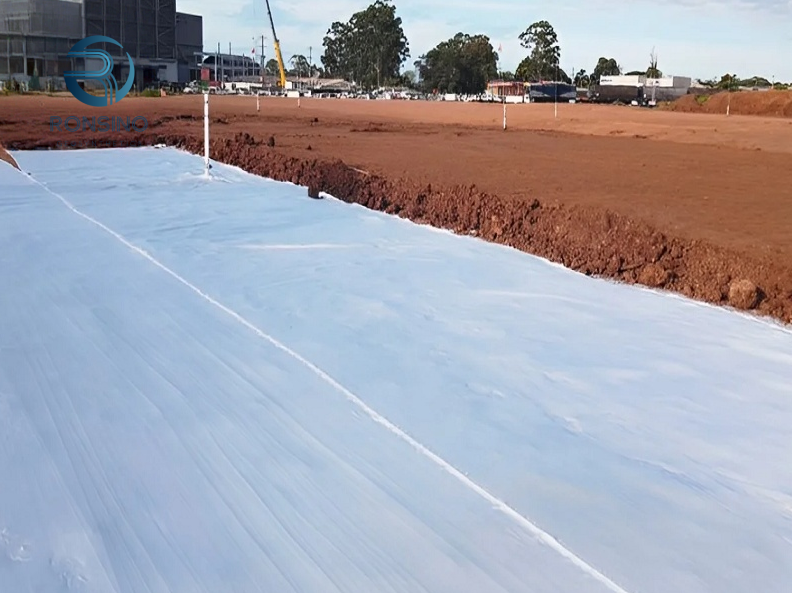
A customer found our company via the official website and noticed that RONSINO had undertaken a wide range of projects showcased there. He then consulted us on two key points: first, whether we had ever engaged in dam-related projects; second, for such projects, what the typical thickness specification of non-woven geotextiles would be. Additionally, he asked about the construction procedures of the material and if we could provide welding services.
Drawing on our years of industry experience, we recommended 125gsm non-woven geotextiles compliant with American standards for driveway applications to the customer. We also shared photos of dam projects we had previously completed for his reference, along with instructional videos demonstrating geotextile welding techniques and the operation of welding equipment.
Subsequently, the customer followed up with inquiries regarding the service life of the geotextiles corresponding to the two thickness options we proposed. Throughout our communication, the customer could perceive our professional expertise and rich project experience, which helped establish strong trust in our company.
Advantages
Geotextiles are typically manufactured from polypropylene or polyester fibers, utilizing production processes such as weaving, needle punching, or thermal bonding. Specifically, short-fiber needle-punched geotextiles are crafted from 100% virgin polypropylene staple fibers, with the fiber structure interlocked firmly through the needle-punching technique. As a category of non-woven geotextiles, this variant features notable strength, durability, water permeability and deformation resistance.
RONSINO’s short-fiber non-woven geotextiles are commonly applied in ground reinforcement and soil stabilization projects. They deliver impressive performance attributes including high tensile strength, favorable elongation rate, reliable UV resistance, excellent filtration capacity and strong wear resistance. Consequently, these products are extensively adopted in civil engineering, environmental engineering and construction initiatives, serving core functions like filtration, layer separation, material protection and water drainage.
Long Fiber Geotextile Fabric for Driveways Construction
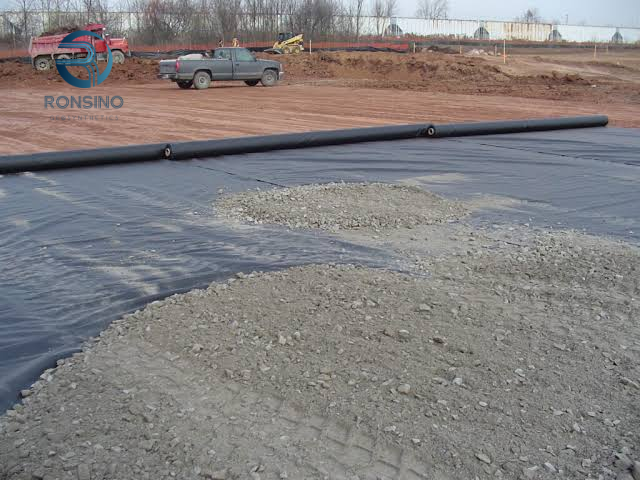
Have you ever watched road paving in progress, or observed the construction of residential buildings? And what about those massive rolls of black fabric laid out on the land adjacent to highways and interstates? Long fiber geotextile fabric for driveways is an indispensable component of construction work, whether it is for road infrastructure, large-scale buildings, or even residential properties.
Nonwoven geotextiles stand out with a host of benefits in the geotextile construction sector. Widely applied in roadway construction, these materials bring multiple advantages to road-related projects. By helping to minimize the formation of potholes, they can effectively extend the service life of paved roads. Deploying such geotextiles for driveways also has the potential to cut down considerably on the frequency of road maintenance and repair work.
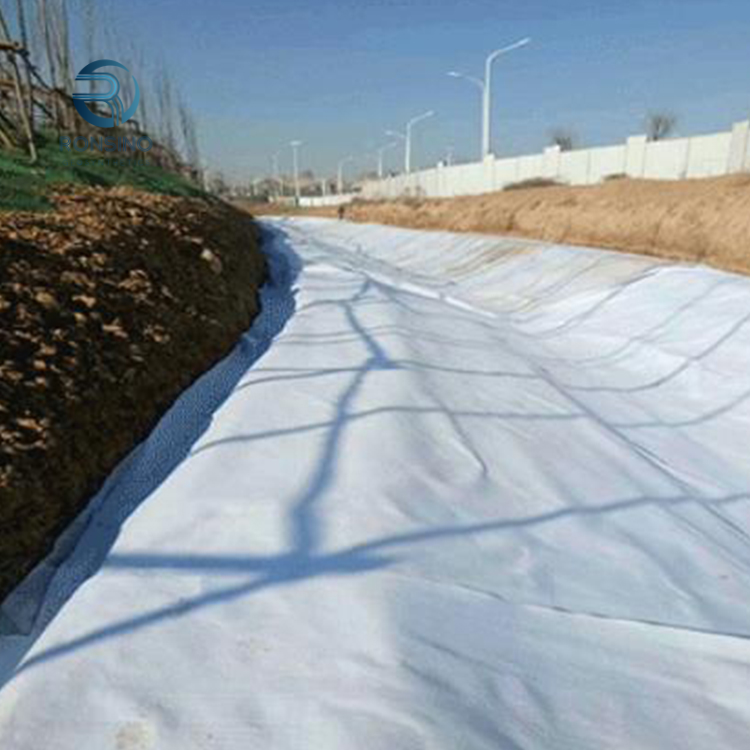
Beyond roadway applications, nonwoven geotextiles also play a key role in erosion control. Road maintenance teams utilize them on the land bordering highways and interstates, where they help to ward off soil erosion caused by rainfall, snowfall and wind erosion..
Examples of Nonwovens in Geotextiles and Construction Materials
1.Artificial Turf
2.Capillary Mats
3.Covers and Seed Strips
4.Geotextiles, Drainage and Erosion Control
5.Greenhouse Shading Screens
6.Thermal Insulation Materials
7.Modified Bitumen Roofing Membranes
8.Pavement Overlay Materials
9.Roadway Reinforcement Products
10.Roofing Components and Parts
11.Soil Stabilizing Agents
Why Choose Us
Polyester fibers demonstrate resistance to acids and weak alkaline substances yet are vulnerable to strong alkalis. In contrast, polypropylene fibers feature high chemical stability along with excellent tolerance to both acidic and alkaline conditions. When it comes to UV resistance, polyester outperforms polypropylene, which requires dedicated ultraviolet stabilization treatment for prolonged outdoor exposure. That said, since geotextiles are generally not exposed to direct sunlight in practical applications, superior UV resistance is not a critical performance indicator.
Polypropylene fibers are well-suited for deployment across a wide range of geological settings. Polyester, on the other hand, is susceptible to alkaline corrosion and can even decompose in weak alkaline environments, making it unsuitable for application in alkaline conditions. Given that landfill leachate typically contains highly acidic and alkaline components, non-woven fabrics made of polypropylene staple fibers are widely adopted in landfill engineering projects overseas.
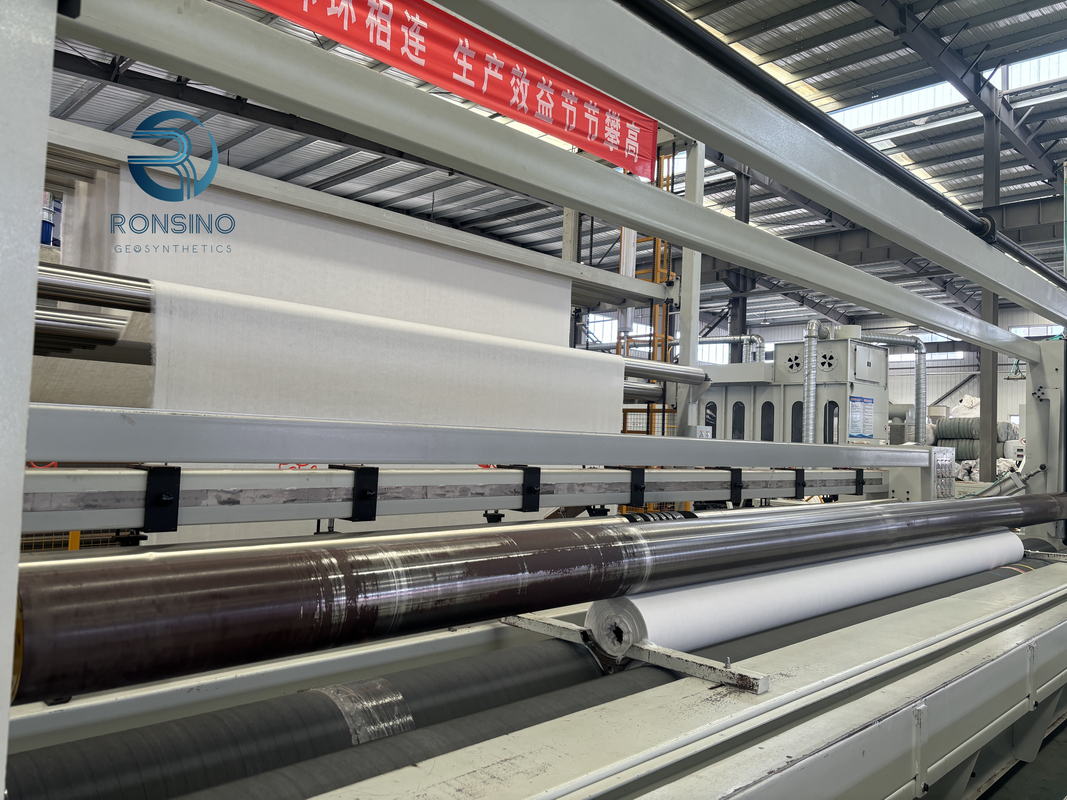
In the past, customers from Paraguay mainly sourced relevant products locally due to cost concerns. However, after visiting our facilities and opting for the CIF pricing term, they switched their procurement to our company, placing an order for 200,000 square meters of 200g PET filament geotextiles for their roadbed repair projects.
Geotextile Installation
Installation Steps
1.Prepare the installation siteStandard preparation work entails clearing away stumps, stones, and other sharp debris that could pierce the geotextile. For roadway applications, additional clearing of vegetation, roots, weeds, and topsoil may also be required.
2.Smooth and level the site surfaceShould soft soil be present in the area, it is advisable to excavate the problematic soil and replace it with a higher-quality fill material.
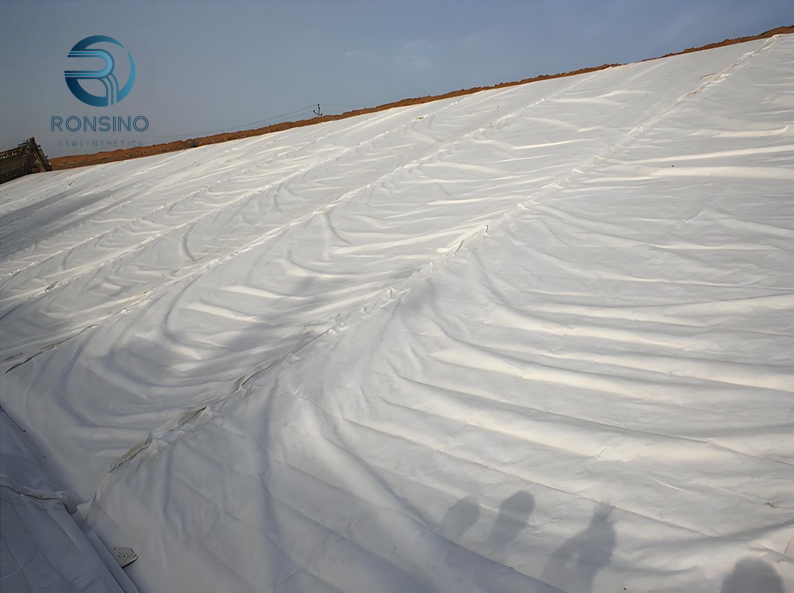
3.Lay the geotextile fabricUnroll and position the fabric in strict accordance with the project’s construction plans or on-site guidelines. The fabric must be pulled taut to ensure a flat, wrinkle-free surface. Overlap adjacent fabric sections as specified in the on-site instructions; in the absence of specific guidelines, a minimum overlap of 12 to 18 inches is recommended.
4.Secure the fabric in placeFasten the laid geotextile using staples, anchoring pins, backfill soil, or other heavy-weight materials.
About RONSINO
RONSINO manufactures and wholesales many types of effective and states of the art geotextile, geomembrane, and other geosynthetics to over 100 countries. RONSINO is not only manufacturing best quality geosynthetic products but also providing professional design and installation service. OEM, ODM, custom development and fabrication are also available. If you have any questions or inquiries, please fill and submit the following form, we will reply as soon as possible.