How To Select The Best Geotextile Fabric for Roads?
Blog · 2025-08-22 · 0 views
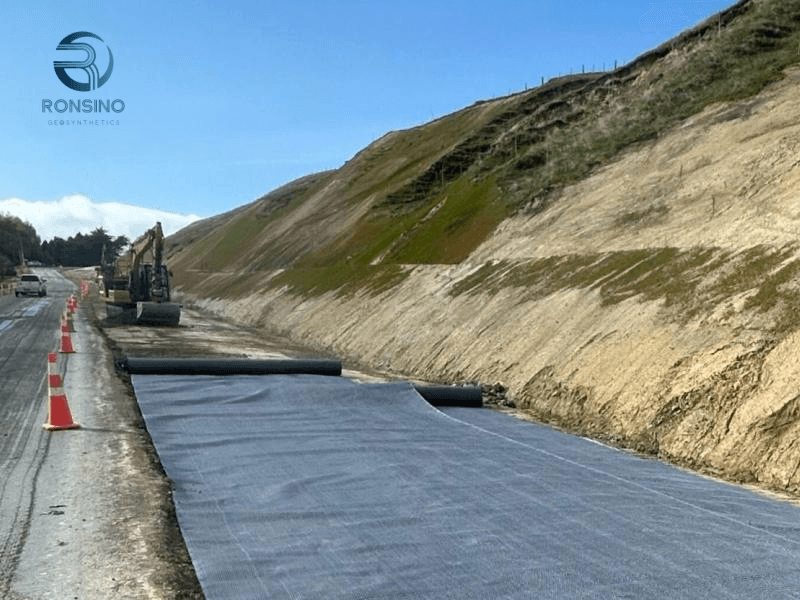
Choosing the right highway geotextile material requires comprehensive consideration of many factors, not just the nearby purchase. While local sourcing shortens delivery times, reduces transportation costs, and simplifies logistics coordination, material selection directly affects road structural stability, long-term durability, ecological impact, and overall project cost. Choosing the wrong materials can lead to premature damage, costly repairs and safety hazards. This guide analyzes the technical parameters of RONSINO geotextiles in detail to help you strike a balance between convenient procurement and strict quality requirements, and make a wise choice.
1.Define the Primary Function(s) with Precision: The Core Imperative
Geotextiles in roadways are engineered solutions, not generic blankets. Pinpointing the dominant functional requirement is the bedrock of selection:
1.1 Geotextile Road Fabric – Separation:
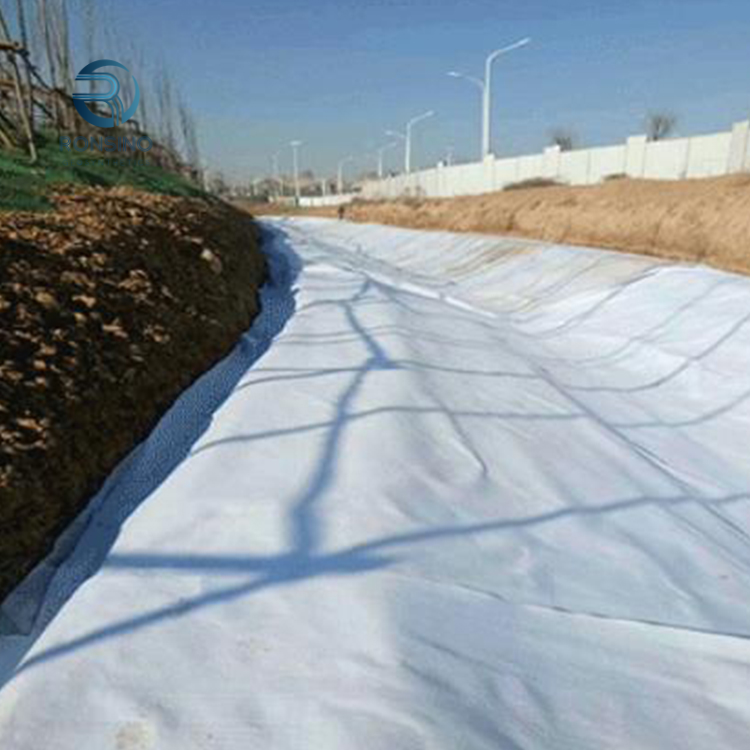
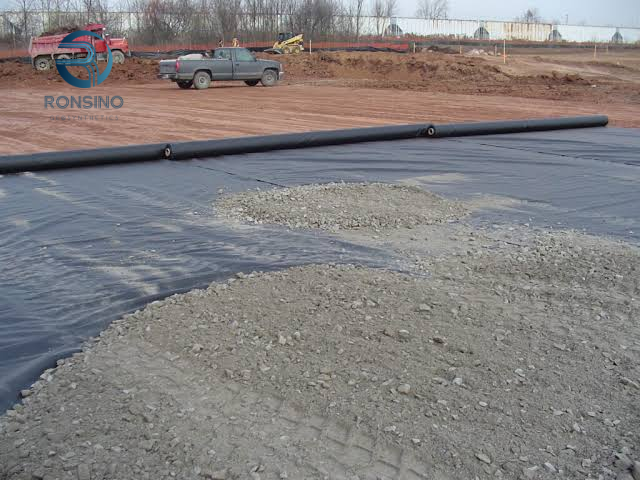
Geotextiles play a key role by forming a stable barrier between moist soft soil and the gravel base. If it fails, the intrusion of soil particles into the structural layer will cause deformations such as strength reduction, ruts, and pavement cracking.
Core performance requirements:
1.Excellent puncture resistance (ASTM D6241 standard CBR test) ensures it can withstand the load of stone laying and compaction equipment;
2.High-strength tear resistance (verified by ASTM D4632) ensures isolation function for decades of service;
3.Construction damage resistance is an essential characteristic of high-performance geotextiles.
1.2 Geotextile Road Fabric – Filtration:
Geotextiles enable lateral water drainage while blocking soil particles, with potential failures from clogging or piping.
Key Performance:
Proper filtration requires matching the geotextile's AOS (e.g., O95) to the soil's D85 size. It must have sufficient hydraulic conductivity (ASTM D4491) to prevent pressure buildup and maintain permeability under load for long-term performance.
1.3 Geotextile Road Fabric – Reinforcement:
Geosynthetics improve unstable subsoil load-bearing by dispersing stress, reducing uneven subsidence, and increasing foundation capacity.
Key traits: High tensile strength and elastic modulus (per ASTM D4595) enable effective soil reinforcement. Soil-geotextile friction ensures stress distribution, while junction integrity is critical for woven geogrids.
1.4 Geotextile Road Fabric – Drainage:
Geotextiles play a secondary but vital role in road drainage, aiding lateral water flow in specific areas like perimeter channels and retaining wall backfills.
Key Features:
Transmissivity (ASTM D4716) measures fluid movement along the surface, determining hydraulic efficiency under pressure. High compressive strength ensures stability under load.
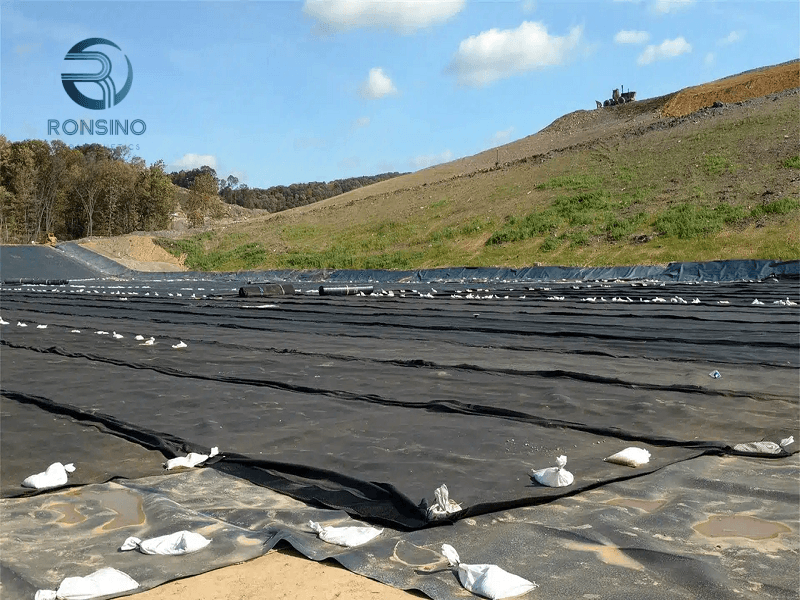
2.Conduct a Thorough Site-Specific Conditions Audit: Context is King
The local environment imposes unique demands that dictate fabric specifications:
2.1 Geotextile Road Fabric – Traffic Loading (ESALs – Equivalent Single Axle Loads):
High-intensity continuous vehicle traffic subjects the road surface to repeated mechanical stress, requiring the use of high-performance geosynthetics. These materials must have excellent load-bearing capacity, puncture resistance (ASTM D4533), structural stability under stress, and fatigue durability. In low-traffic traffic areas, geotextiles with lower performance requirements can still be used to meet engineering needs.
2.2 Geotextile Road Fabric – Aggregate Properties:
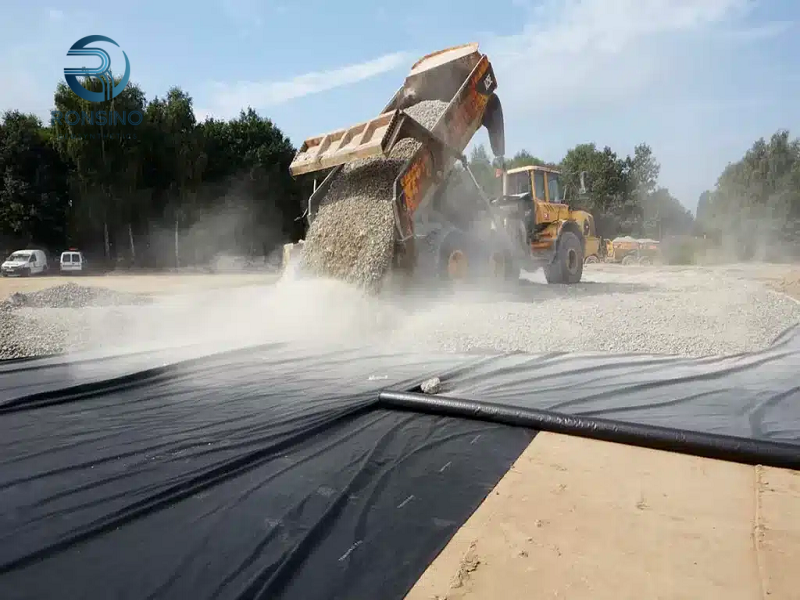
Rough, jagged crushed rock exhibits far greater abrasiveness during installation compared to polished, spherical gravel. Superior California Bearing Ratio penetration resistance and exceptional durability specifications become essential when using sharply angled aggregates to endure puncturing impacts during material deposition and densification processes.
2.3 Geotextile Road Fabric – Subgrade Soil Type:
Geotextile selection requires thorough particle size analysis (sieve and hydrometer methods). For fine-grained soils (silts/clays), balance opening size to prevent clogging while maintaining permeability under load. With coarse, irregular particles, prioritize puncture resistance. Soil plasticity affects long-term compatibility, influencing deformation and shear strength with the geotextile.
2.4 Geotextile Road Fabric – Hydrology & Climate:
In areas with high groundwater, heavy rainfall, or poor drainage, filtration and permeability are crucial. In freeze-thaw regions, geotextiles need high durability to withstand frost-related stresses. In arid zones, UV resistance is prioritized.
2.5 Geotextile Road Fabric – Construction Methods & Access:
Evaluate installation conditions: Does the geotextile come into direct contact with an uneven substrate? Is the base aggregate less than 15 cm? Is it directly crushed by heavy machinery? In extreme cases, AASHTO M288 Category 2 standard materials must be used to ensure tensile, puncture and tear resistance. Remote projects also need to consider roll size and weight to facilitate transportation and laying.
3.Match Material Type Rigorously to Function & Conditions: Beyond Basics
Understanding the inherent strengths and limitations of geotextile types is crucial:
3.1 Woven Geotextiles:Created by weaving filaments (mono/multi) or tapes (slit film).
Multifilament Woven Geotextiles:
High tensile strength and modulus make these ideal for reinforcement. Superior puncture resistance ensures durability, while controlled AOS enables effective soil separation and filtration with high permeability. Dimensional stability guarantees consistent performance.
Slit-Film Woven Geotextiles:
Cost-effective with high tensile strength, these suit structural reinforcement where in-plane flow isn’t critical. Lower permeability than multifilament options limits use to separation/stabilization in less permeable soils. Robust design prevents installation damage.
3.2 Nonwoven Geotextiles:
Produced by intertwining synthetic fibers (polypropylene or polyester) through mechanical, thermal, or chemical processes.
Needle-Punched Nonwovens: Ideal for geotechnical separation and filtration, offering excellent water/air permeability and soil retention. Their flexible structure ensures good substrate contact, balanced puncture protection, and filtration. Durable (Class 1-2), they suit most conditions but aren't best for high-tensile needs.
3.3 Composites geotextiles:
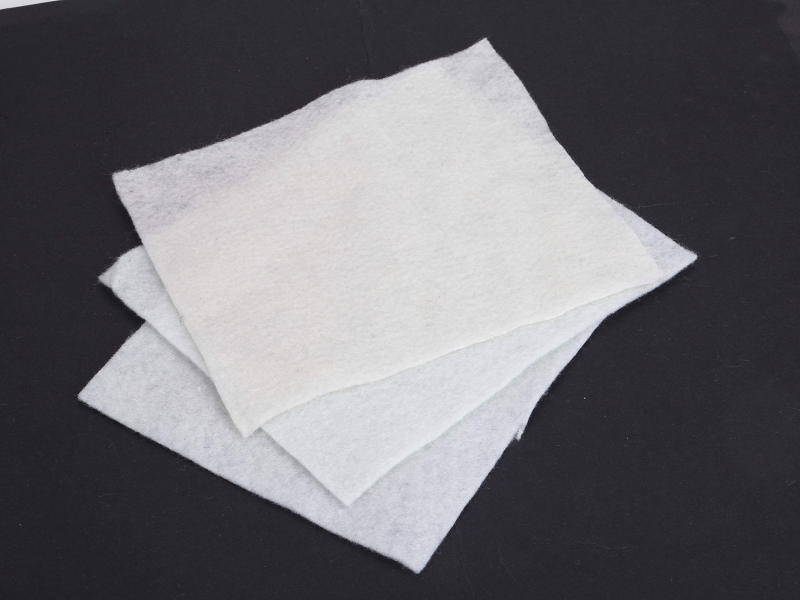
Some products combine layers (e.g., nonwoven for filtration + a woven or net for reinforcement) to achieve multiple high-performance functions simultaneously. Consider these for complex site requirements.
4.Decode Specifications: Demand Data Not Just Marketing
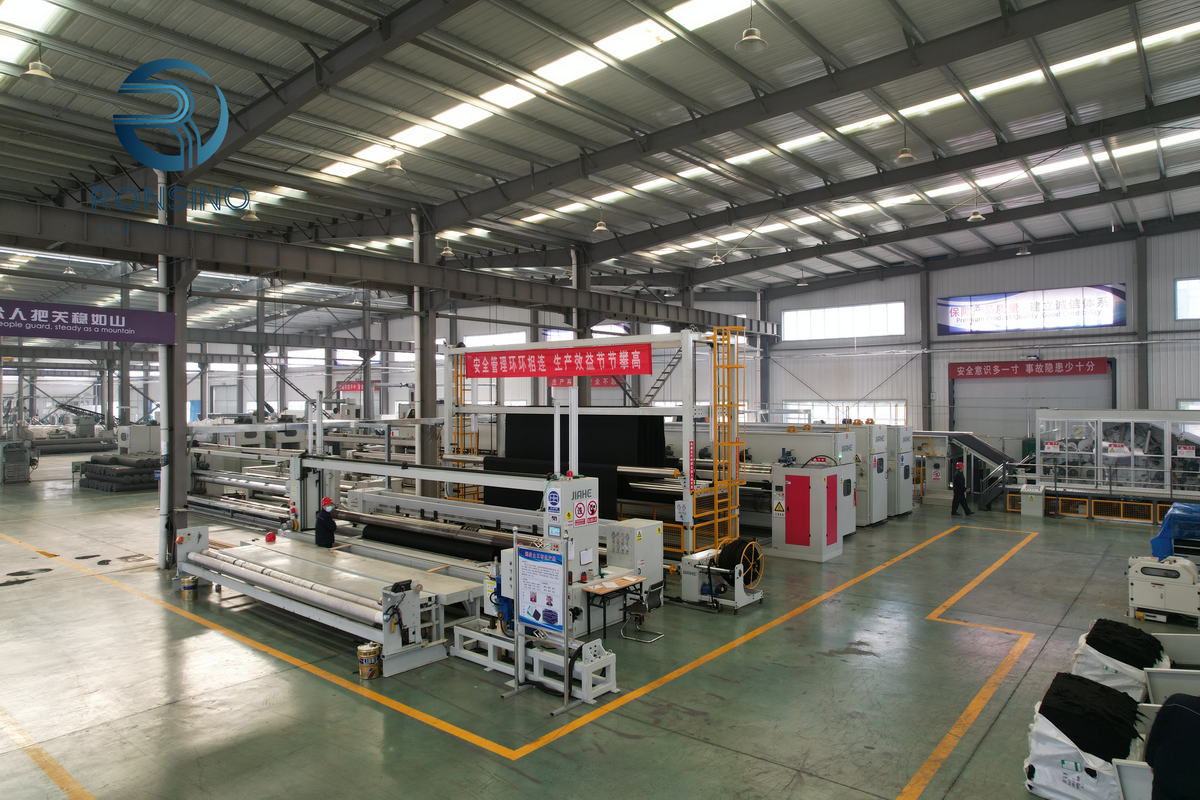
Choose materials wisely—don't rely solely on fabric weight (oz/yd² or g/m²), as it doesn't guarantee quality. Always request official Mill Test Certificates (MTCs) verifying compliance with standards like AASHTO M288 or local equivalents. Key traits to check include:
4.1 Physical Survivability:
The AASHTO M288 standard classifies geotextiles into Class 1 (Moderate Conditions) and Class 2 (Demanding Applications), setting benchmarks for Grab Tensile Strength (ASTM D4632), CBR Puncture Resistance (ASTM D6241), and Trapezoidal Tear Resistance (ASTM D4533). Selection depends on project-specific field stresses assessed during site evaluation.
4.2 Hydraulic Properties:
AOS (O95 – ASTM D4751) for filtration compatibility. Permittivity (ASTM D4491) for cross-plane flow. Transmissivity (ASTM D4716) if planar drainage is required.
4.3 Mechanical Properties:
Grab Tensile Strength & Elongation (ASTM D4632), Wide-Width Tensile (ASTM D4595) for reinforcement roles. Understand the difference.
4.4 Endurance Properties:
Ultraviolet (UV) Resistance (ASTM D4355/D7238) – specifies retained strength after defined UV exposure (e.g., 50% after 500 hours). Critical for exposed periods before covering.
5.Source “locally ” with Strategic Expertise: Local Knowledge Matters
Leveraging local suppliers (“locally ”) is smart logistics, but vendor selection requires due diligence:
5.1 Specialized Geosynthetics Focus:
Select specialized geotextile suppliers over general construction providers for superior technical expertise.
Key considerations for technical support:
Detailed product documentation?
Project-specific guidance?
Custom proposals based on site analysis?
Direct access to engineering consultation?
5.2 Uncompromising Quality Assurance:
Ensure that all suppliers furnish up-to-date, project-specific Material Test Reports (MTRs) issued by accredited third-party laboratories. These reports must confirm that the supplied materials strictly comply with the precise AASHTO M288 specifications (or their recognized equivalents) as outlined in your requirements. Maintaining uniformity across all material batches is essential to achieve optimal performance and reliability.
5.3 Logistical Reliability & Capacity:
Ensure they can consistently provide the necessary quantities in exact roll dimensions and deliver them punctually to your designated locations. Choosing a nearby supplier reduces transportation delays, lowers the risk of product damage during transit, and cuts down on expenses—particularly for large or heavy rolls. Verify their current inventory levels within your region to guarantee availability.
5.4 Reputation & References:
Seek recommendations from other contractors or engineers in your area. A reliable local partner is invaluable.
6.Conclusion: Where Local Convenience Meets Engineering Imperative
Sourcing geotextiles close to home optimizes the supply chain, but technical evaluation remains key. It is necessary to clarify the project’s requirements for material function and environment.
Technical indicators include:
1.Apparent pore size (AOS)
2.permeability coefficient
3.Load bearing capacity
4.CBR penetration resistance
5.Mechanical durability
6.UV resistance threshold
Screen suppliers who meet the standards and give priority to those who provide technical support and stable suppliers.
To ensure material performance is reliable, geographical convenience is no substitute for technical applicability.
Need expert guidance specifying the ideal geotextile for your specific local road project conditions? Contact our technical team for tailored advice.