Heat Treated Nonwoven Geotextile Faric for Road Construction in Italy
case · 2025-10-24 · 0 views
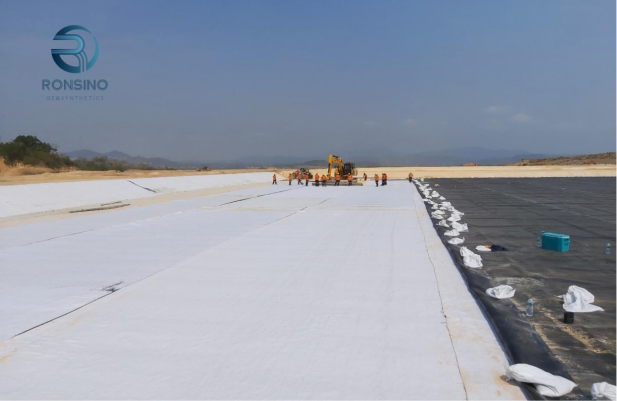
1.Function of geotextile:
1.Separation: Use polyester staple fiber needling to separate building materials like soil particles, soil, and soil - concrete interfaces. This differentiates physical characteristics (particle size, distribution, moisture saturation, density), preventing material loss and inter - mixing, preserving raw material form and performance, and stabilizing the structure.
2.Filtration (Reverse Filtration): Polyester staple fiber needled geotextile has good permeability, allowing liquids to flow smoothly. It filters out soil particles, sand dust, and small stones, ensuring construction progress and stability.
3.Drainage: It has excellent water - conducting properties, creating channels in soil particles to discharge excess water and trapped oxygen, maintaining soil moisture balance and preventing waterlogging.
4.Reinforcement: Applying geotextiles enhances soil toughness and impact - resistance, strengthens soil mechanical properties, and improves the stability of soil - based building structures. It also supports the soil and prevents deformation under load.
5.Cushioning and Protection: When water surges, it acts as a protective layer, distributing stress, reducing its intensity, and protecting the soil from impact damage.
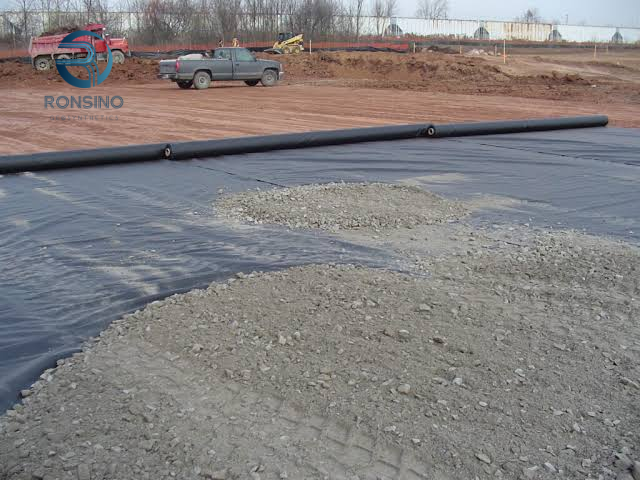
6.Anti - Penetration & Composite Application: The composite of geomembrane and geotextile is puncture - resistant, has high tensile strength, appropriate permeability, and can withstand high temperatures. Polyester staple fiber needled geotextile is widely used in railway, highway, gym, dam, tunnel, and environmental protection projects.
2.Issue
During highway building, the roadbed may cave in because of rain erosion. Figuring out how to enhance the quality of the project, extend its service life, cut down the construction period, and lower the project cost has emerged as a significant issue.
3.Solution
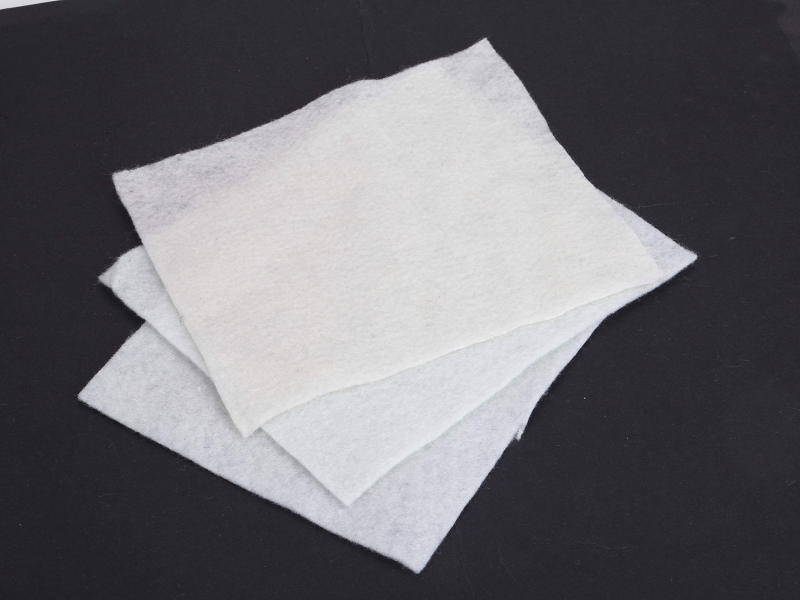
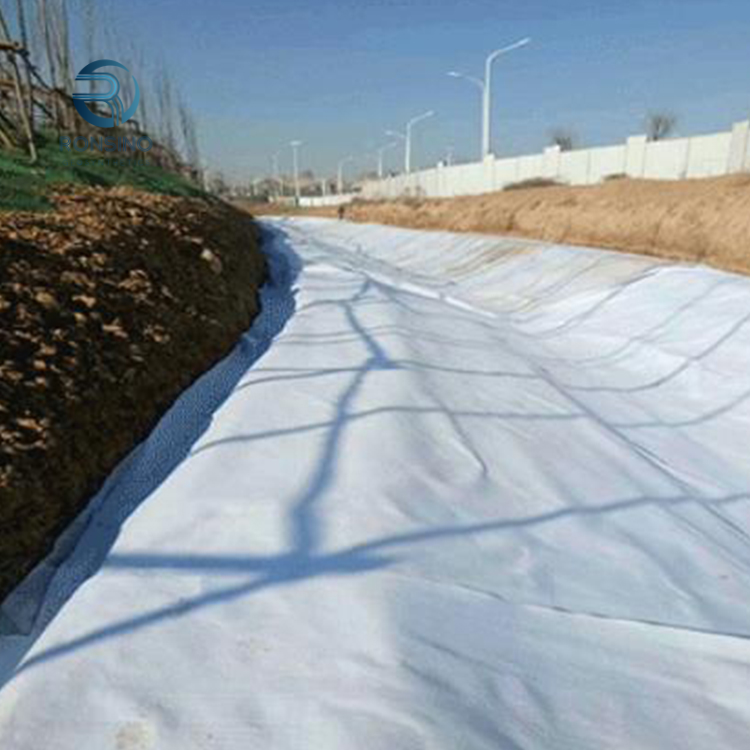
Non - woven geotextile is made of 100% pure virgin staple polypropylene fibers by needle - punching. It's a sturdy, permeable and deformation - resistant non - woven filter fabric.RONSINO's short - fiber non - woven geotextile, with high tensile strength, elongation rate, UV stability, and good filtration and abrasion resistance, is widely used for ground support and soil stabilization. It's applied in filtration, separation, protection and drainage in civil and construction projects, especially highway construction, strengthening soil, dewatering and preventing water erosion and soil loss.An Italian customer's mining project needed 200,100 square meters of PP short - fiber non - woven geotextile for road building and reinforcement. RONSINO provides various geotextiles. After discussion, the customer chose the heat - treated PP short - fiber non - woven geotextile, which has high tear and tensile strengths and acid - alkali resistance, ideal for mining.
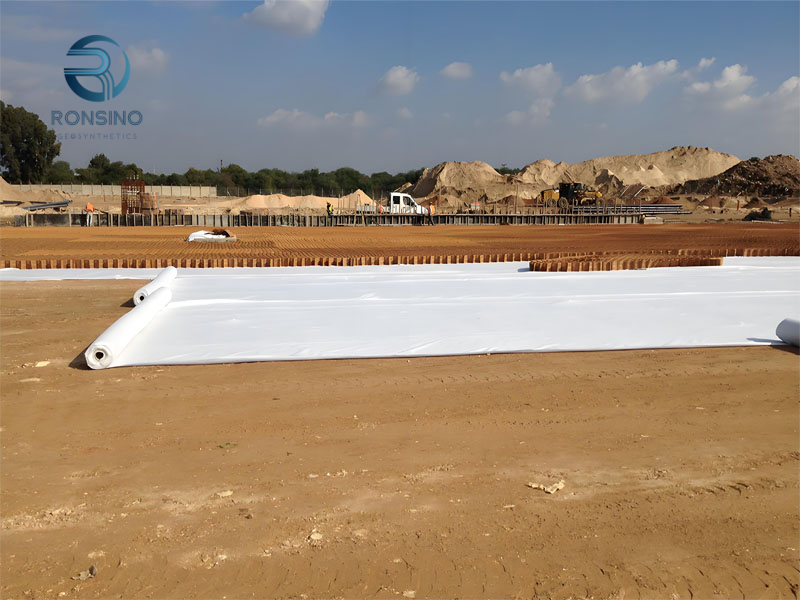
4.Specifications of Heat Treated Nonwoven Geotextile Faricfor Road Construction in Italy
Case Study
Location : Italy
Product(s) : Heat Treated Nonwoven Geotextile Faric
Application : Road Construction
Total PP Short fiber Nonwoven Geotextile quantity – 200100m2
PP Short fiber Nonwoven Geotextile specification – 150 g/m2
Each roll size is 5.8m*200m
Three 40HQ containers
5.Geotextile construction method and precautions
During geotextile transportation, avoid pulling to prevent puncture by sharp items.
Before construction, clean the base layer thoroughly. If possible, rinse it with water to remove debris. Mend base cracks with asphalt; otherwise, it'll affect paving and later use.
When laying geotextiles, straighten and pave them as flat as possible for close adhesion to the base. If there's oil on the bottom, use a roller - brush and sprinkle small stones or coarse sand.
Keep the woven fabric dry during paving. If wet, wait until dry. Smoking is prohibited. After paving, avoid walking, moving tools, or placing heavy objects on it.
At lap joints, have an overlap and pave layer by layer. Weld joints for stability. Pay attention to slopes and corners and shorten splicing length to prevent wrinkles.
6.Construction methods
It should stretch from the lowest to a higher point without being overly taut. About half of the width should be left for local subsidence and expansion. Considering the project's actual situation, pave the slope from top - down.
Longitudinal joints of adjacent frames should be offset by over one meter, not on the same horizontal line.
The longitudinal joint should be over 1500 meters from the dam toe and the bend and set on a flat surface.
Pave the slope first, then the site bottom. What are the features and functions of the geotextiles used in construction?
When laying materials on slopes, ensure the film - spreading direction is parallel to the slope line.
7.About RONSINO
RONSINO has been specializing in delivering one stop geosynthetics products and solutions to worldwide customers since its foundation in 2007. RONSINO had provided many types of effective and state of the art geomembranes, geotextiles, geocells, geosynthetic clay liners (GCLs), drainage boards, geogrids to over 81 countries. Our main customers are from Australia, France, Sweden, UK, Hong Kong, Hungary, New Zealand, Poland, Mexico, Ecuador, Brazil, Pakistan, Bangladesh, Thailand, Vietnam, Malaysia, Indonesia, Singapore, Philippines, Sri Lanka, India, UAE, Saudi Arabia, Qatar, Kenya, Ghana, Ethiopia, Somalia, Nigeria, South Africa, Swaziland, Mongolia, etc.
RONSINO is not only manufacturing best quality geosynthetic products but also providing professional design and installation service. OEM, ODM, custom development and fabrication are also available. If you have any questions or inquiries, please fill and submit the following form, we will reply as soon as possible.