Filament Ground Fabric for Driveway Road in Somalia
case · 2025-11-13 · 0 views
Filament Ground Fabric Application
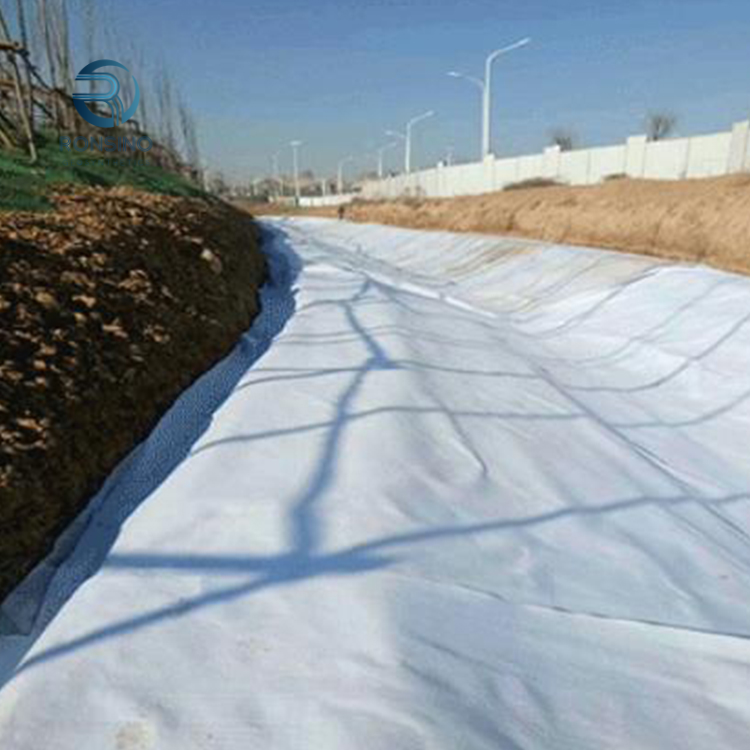
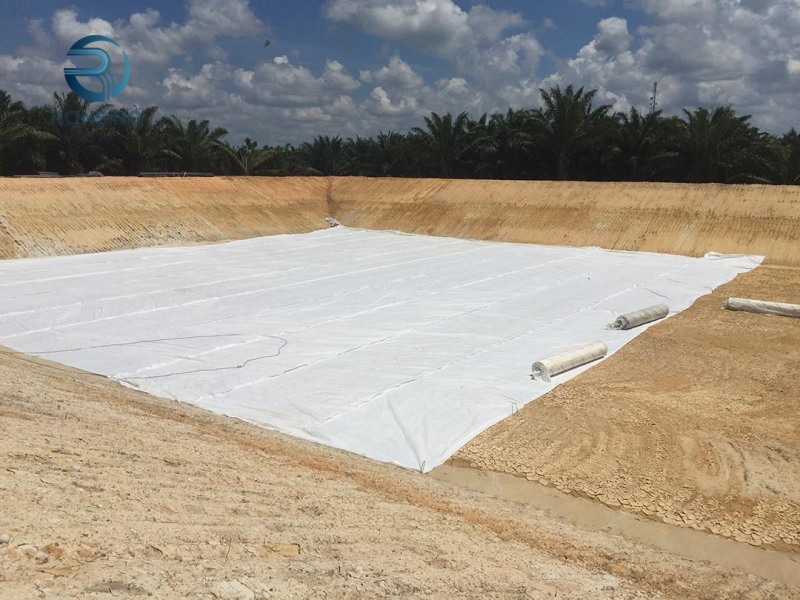
1.In water conservancy projects, it is applied to the reverse filtration of dams and slope protection, as well as the isolation and seepage control of channels.
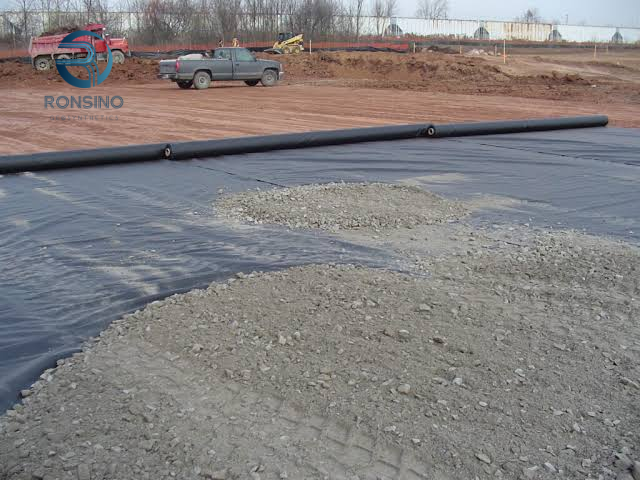
2.For highways, railways and airport runways, it is used for foundation isolation, anti-filtration and drainage, as well as the reinforcement and drainage of soil slopes, retaining walls and pavements.
3.In port engineering, it is applied to the treatment of soft foundations, along with the reinforcement and drainage of beach dikes, harbor piers and breakwaters.
4.Polyester filament geotextiles have been extensively utilized in the field of infrastructure construction and are gradually being adopted in a broader scope of fields.
As polyester serves as the primary synthetic fiber in the manufacturing of PET filament geotextiles, these materials possess excellent anti-embedding and corrosion-resistant capabilities.
Being a water-permeable material, filament geotextile boasts an effective filtering and isolating function.
Its fluffy structure endows it with favorable drainage performance.
PET filament geotextile features strong puncture resistance, which in turn ensures its reliable protective performance.
With a high friction coefficient and tensile strength, geotextile exhibits prominent georeinforcement properties.
Geomaterials have attracted attention for their application in rock engineering, particularly in flood control and emergency response scenarios. Engineers show great interest in them due to their remarkable effectiveness. The government has formulated regulations governing the use of geosynthetics for seepage prevention, water filtration, drainage, reinforcement, and protection, which promotes the wider application of these new materials. They are frequently employed to prevent seepage in canals within irrigation districts.
Issue
A client based in Somalia came across our driveway fabric case study via Google. They have requested the RONSINO team to develop a targeted solution—one that can effectively prevent the formation of ruts and potholes, minimize the frequent need to replace the majority of the driveway’s gravel surface every few years, and further extend the service life of asphalt or concrete driveways by mitigating cracking issues.
Solution
PET filament geotextiles are the primary material of choice for general engineering applications. Boasting a versatile range of functions, including impermeabilization, reversed filtration, drainage, isolation, reinforcement, protection and sealing, these geotextiles deliver reliable anti-seepage performance. When compared with traditional masonry and concrete materials, they offer notable advantages: lower upfront investment, simplified construction procedures, shorter project timelines, superior seepage prevention, and higher effective utilization rate of channels—thus cutting down on overall costs and compressing construction schedules.
In the view of international agricultural engineering professionals, PET filament geotextiles are defined as a category of geotextiles or geosynthetics. Positioned between soil and structures like pipes, gabions or retaining walls, these materials are engineered to facilitate water flow while inhibiting soil displacement. Separately, PET filament geotextiles are also characterized as fully water-permeable geosynthetic products made from textile fabrics—materials that play a structural role in man-made projects and are applicable to soil, rock, earth and other geotechnical engineering scenarios.
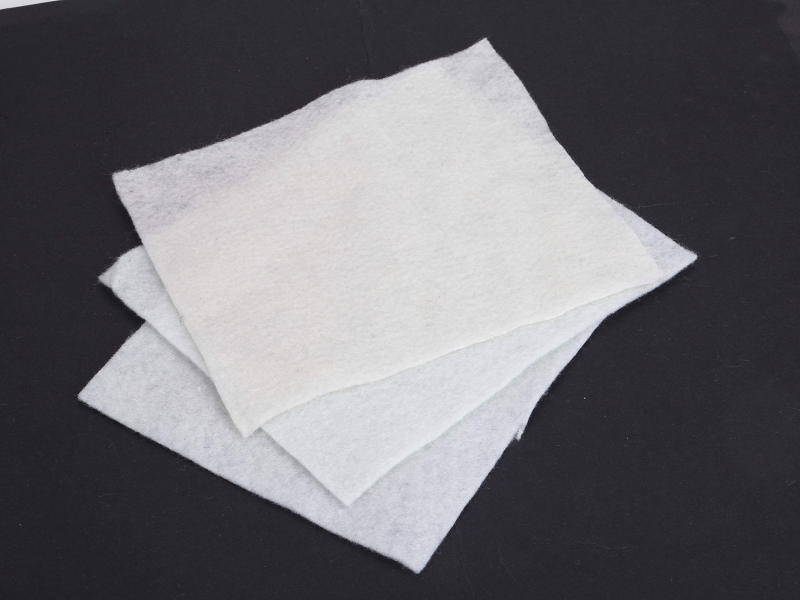
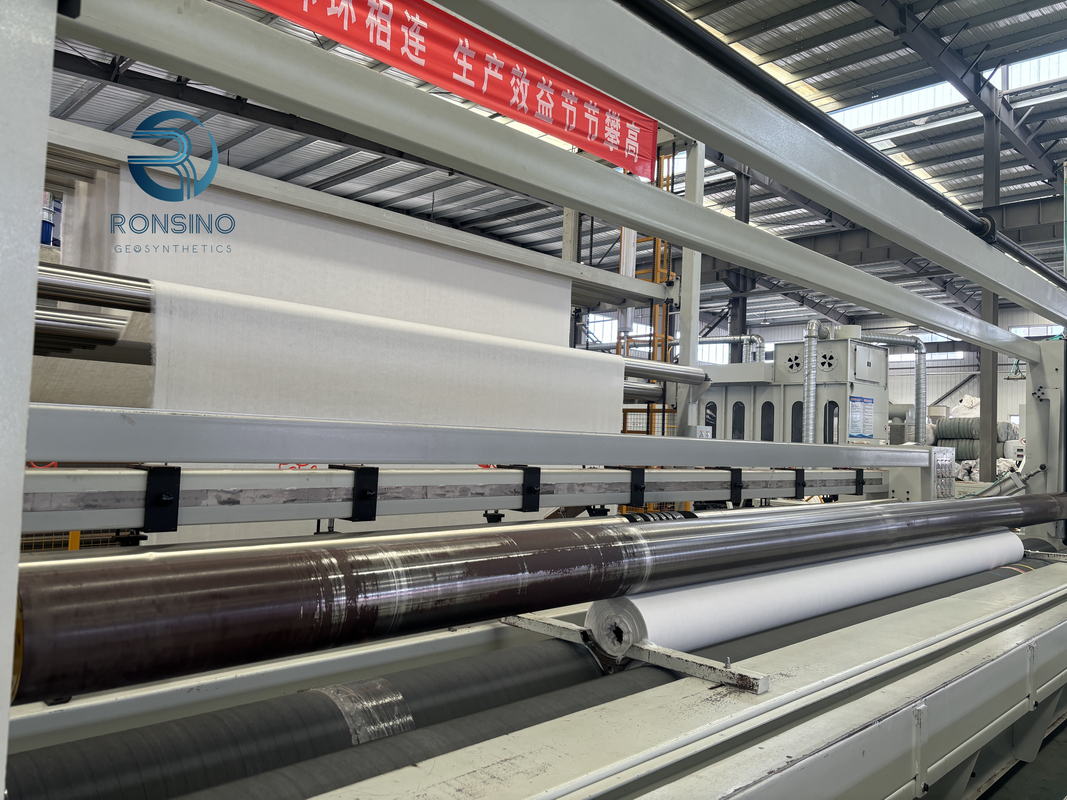
Filament Ground Fabric is manufactured directly via a polyester-based process that integrates spinning and needle-punching consolidation steps. Its product specifications are flexible, with grammage options ranging freely from 80 to 800 gsm. As a geosynthetic material tailored for geotechnical and civil engineering applications, it is produced using polyester filament formation and consolidation techniques, resulting in a three-dimensional fiber structure. Beyond its favorable mechanical properties, this fabric also exhibits outstanding vertical and horizontal drainage capabilities, desirable elongation performance, and high chemical stability—including resistance to biological degradation, acids, alkalis, and aging. Furthermore, it features a broad pore size range and tortuous pore distribution, which together endow it with superior permeability and filtration performance.
Summary
Functions of PET Filament Geotextiles
Air and Water Permeability
The material’s excellent air and water permeability enables water to pass through smoothly while effectively retaining sand and preventing its loss.
Superior Water Conduction
It features strong water conductivity, which allows it to form internal drainage channels within the soil and facilitate the discharge of excess liquid and gas from the soil structure.
Structural Stabilization
It can boost the soil’s tensile strength and deformation resistance, thereby enhancing the stability of building structures and optimizing the overall soil quality.
Stress Dispersion
It efficiently diffuses, transfers or decomposes concentrated stress, protecting the soil from damage caused by external forces.
Layer Separation
It prevents intermixing between different layers of sand, soil and concrete in engineering structures.
Pressure-resistant Water Permeability
It maintains excellent water permeability even under the combined pressure of soil and water.
Corrosion Resistance
Made from chemical fibers such as polypropylene or polyester, it is resistant to acids, alkalis, corrosion, moth damage and oxidation.
Easy Construction
It is lightweight, convenient to handle and simple to install on construction sites.
PET Filament Geotextile has the Following Characteristics
Thanks to the six aforementioned functions, PET filament geotextiles boast broad applicability across a wide array of projects, including railways, highways, sports facilities, dams, hydraulic structures, tunnels, coastal roads, land reclamation initiatives, and environmental protection projects.
Key Application Fields of PET Filament Geotextiles
Water Conservancy Engineering
Coastal seawalls, river and lake embankment improvement projects; reservoir reinforcement works; land reclamation programs; flood control and emergency response projects.
Highway, Railway & Airport Engineering
Soft ground reinforcement; slope protection; anti-reflective cracking layers for pavement structures; drainage systems; green isolation belts.
Power Engineering
Foundation construction for nuclear power plants; ash dam projects of thermal power plants; hydropower station construction projects.
Port & Waterway Engineering
Port projects
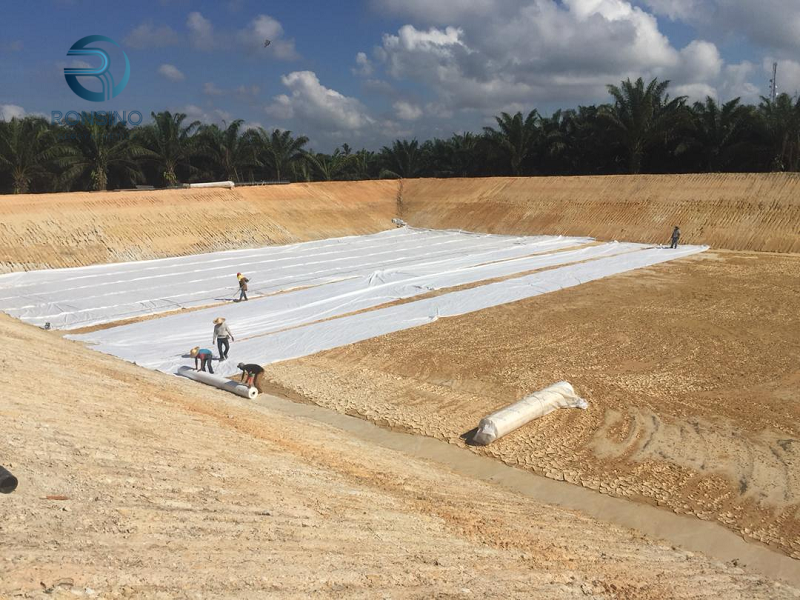
CASE STUDY of Filament Ground Fabric for Driveway Road in Somalia
Location : Somalia
Product(s): Filament Ground Fabric
Application : Driveway fabric Constrution
Total PET filament geotextile quantity–101480squares meters
PET filament geotextile Weight – 200gsm
PET filament geotextile Each roll size is 6m*100m
About RONSINO
RONSINO manufactures and wholesales many types of effective and states of the art geotextile, geomembrane, and other geosynthetics to over 36 countries. Our geosynthetic products are widely used across a variety of industries including waste containment, water containment, aquaculture, industrial project, energy project and mining projects, etc.
RONSINO is not only manufacturing best quality geosynthetic products but also providing professional design and installation service. OEM, ODM, custom development and fabrication are also available. If you have any questions or inquiries, please fill and submit the following form, we will reply as soon as possible.