Filament Geotextile Membrane for Road Construction in Canada
case · 2025-09-24 · 0 views
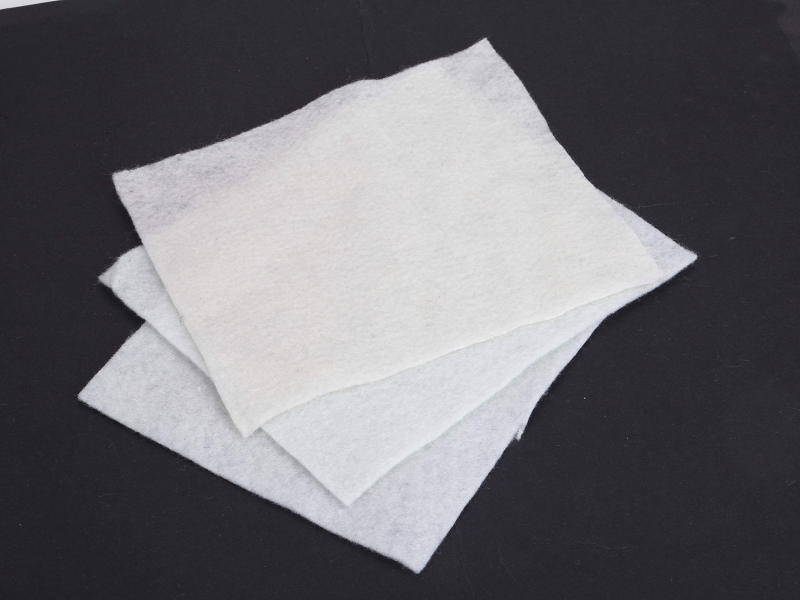
Filament nonwoven geotextile,a tough flexible geosynthetic material made of continuous filaments bonded via specialized non-woven processes, is widely used in civil construction and soil conservation projects. Its interlaced fiber structure with abundant fine pores delivers excellent filtration and drainage performance, blocking fine soil particle loss while allowing smooth passage of water and air to maintain soil structural stability. Boasting high tensile strength and great durability, it effectively disperses external loads to provide reliable reinforcement for soil, and retains stable structure and functions under various complex environments with strong resistance to UV radiation, chemical erosion and biodegradation.
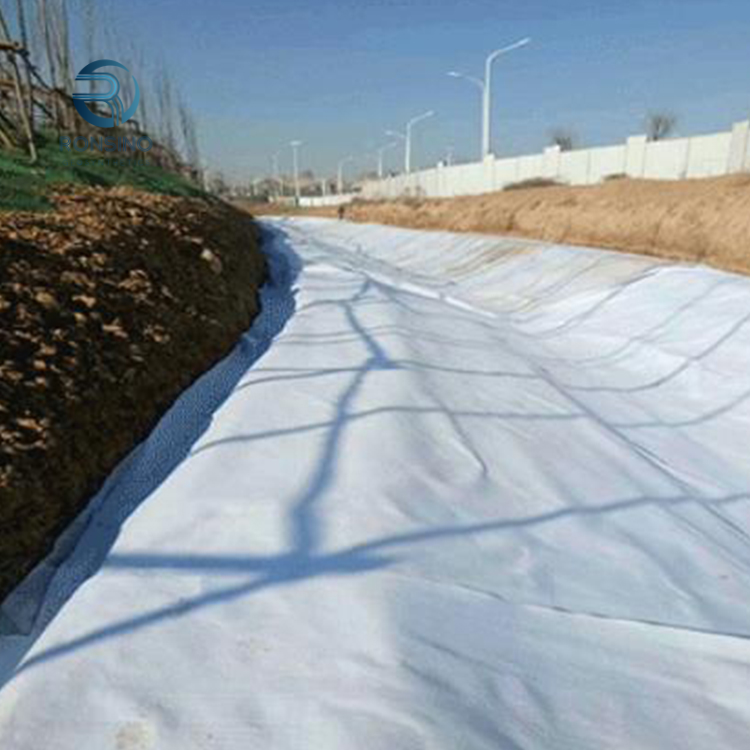
Filament-spun nonwoven geotextile has three core applications. First, as a specialized protective layer against both surface and subsurface soil erosion, it slows runoff, prevents fine soil loss when laid over bare soil, and preserves soil quality as well as the long-term sustainability of arable farmland. Second, it is widely used in soil filtration and drainage systems: installed in underground drainage pipelines, side ditches and geomembrane composite systems, it enables efficient water filtration and discharge, avoids soil layer water stagnation, and forms unobstructed drainage paths. Third, it serves soil stabilization needs in civil engineering: acting as a reinforcement layer to improve the tensile strength and overall structural stability of the soil matrix, it is extensively applied to road beds, railway subgrades, river embankments and other infrastructure, to deliver reliable stabilization effect and enhance structural durability of related works.
1.Advantage of Filament Non Woven Geotextile Fabric
RONSINO polyester filament spunbond nonwoven geotextile is a novel construction material for geotechnical and civil engineering, produced via specialized polyester filament web forming and consolidation, with interwoven fibers forming a stable 3D network structure. It features excellent mechanical properties (high tensile, tear and puncture resistance), superior longitudinal and transverse drainage capacity, good elongation, strong chemical resistance (anti-biodegradation, acid/alkali corrosion resistance, long-term aging resistance), plus wide pore size distribution and twisted interconnected pore paths for outstanding permeability and filtration performance.
Its core advantages in road construction are as follows:
High strength & structural stability: It withstands static surface loads and dynamic traffic loads, improves foundation soil's tensile and shear resistance, and greatly enhances road subgrade stability and bearing capacity.
Excellent filtration & drainage: Its unique porous structure blocks soil particles to prevent fine soil loss and scouring, and accelerates excess soil water discharge to avoid subgrade softening caused by moisture accumulation.
Effective soil erosion control: It stabilizes soil surface structure, prevents wind erosion, water scouring, and subgrade/slope collapse and sliding, protecting the road's structural integrity.
Good water & air permeability: It enables free circulation of water and air between the geotextile layer and underlying soil, maintaining soil moisture balance to avoid problems caused by over-saturated soil.
Outstanding durability & corrosion resistance: It maintains stable performance under long-term UV radiation, chemical corrosion and microbial erosion, extending the road's service life.
With the above comprehensive properties, this geotextile is a highly reliable and efficient construction material that can effectively improve the construction quality and long-term operation sustainability of various highway projects.
2.Issue
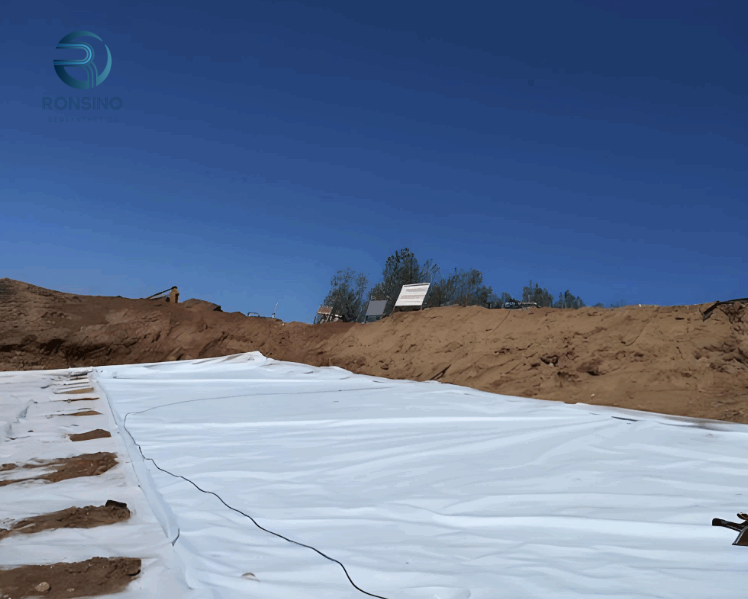
Stretching across multiple regions of Canada, the planned highway alignment traverses thick layers of soft soil, most of which lie within vast, flood-prone floodplain zones. The unique properties of soft soil have become a core design priority for this road construction project, requiring targeted, rigorous research and attention from the entire design team. This type of soft soil is typically marked by ultra-high moisture content, poor water permeability, and extremely low bearing strength. If no effective treatment measures and scientific construction management are put in place, the finished highway will face prominent risks of uneven subsidence and pavement cracking.
A reliable soil reinforcement solution was therefore urgently required to address these potential hidden risks. After multiple rounds of scheme comparison and feasibility research, the technical team of the general contractor contacted the engineering team of RONSINO Geosynthetics, to look for filament geotextile membranes with matching specifications for roadbed reinforcement, so as to effectively improve the overall bearing strength and water permeability of the roadbed structure.
3.Solution
Polyester geotextile fabric counts as a prevalent geotechnical material that is massively utilized in road construction works. Equipped with exceptional tensile strength, favorable durability and prominent impermeable properties, it can effectively enhance the stability and load-bearing capacity of soil layers, while also avoiding soil erosion and various hydrological risks.
During a road construction program launched in the northern part of Canada, substandard geological conditions and unsatisfactory soil stability created demand for road subgrade reinforcement. The construction team chose polyester filament nonwoven geotextile fabric to conduct the reinforcement construction.
Specifications of Filament Nonwoven Geotextile Fabric for Road Construction in Canada
Product: PET Filament Nonwoven Geotextile
Specification: 300 gsm
Roll size: 4m×100m
Quantity: 90000 square meters
Pre-construction Prep
Clear and level roadbed to remove surface debris, loose gravel and unstable soft soil, lay required-thickness sand layer on the reinforcement zone to optimize base performance.
Geotextile Laying
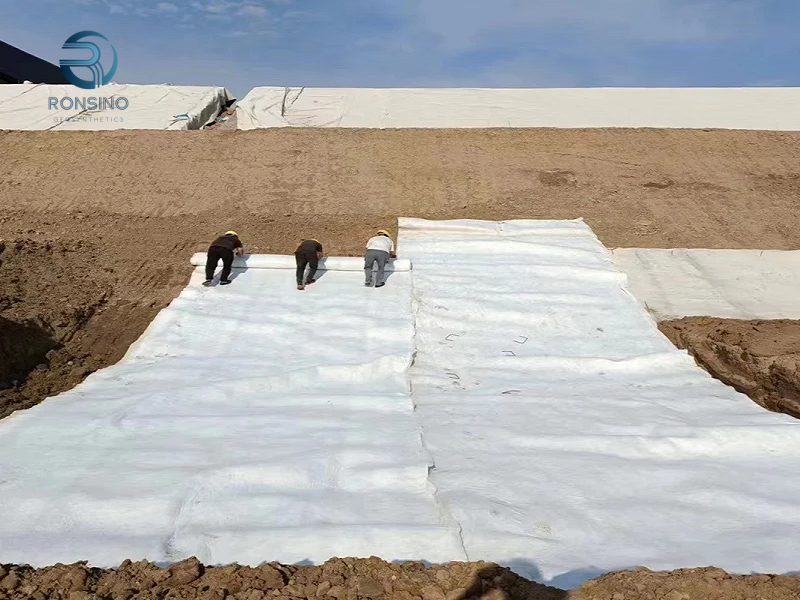
Lay site-matched polyester filament nonwoven geotextile flat on pretreated roadbed, fully unfold and fix promptly, keep it straight to avoid wrinkles, stacking or excess overlapping.
Fixing & Splicing
Fix laid geotextile firmly to roadbed with U-nails or special fixtures to avoid displacement. For large-area construction, splice pieces via hot melting or lap bonding for seamless connection to boost overall reinforcement effect.
Overburden Laying & Compaction
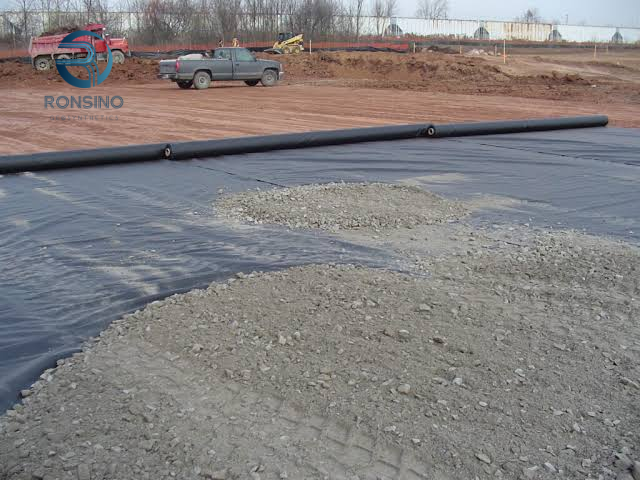
Cover fixed geotextile with qualified sand or filling materials of proper thickness, conduct layered compaction per specifications to improve subgrade bearing capacity and protect geotextile from external damage including UV radiation and mechanical scraping.
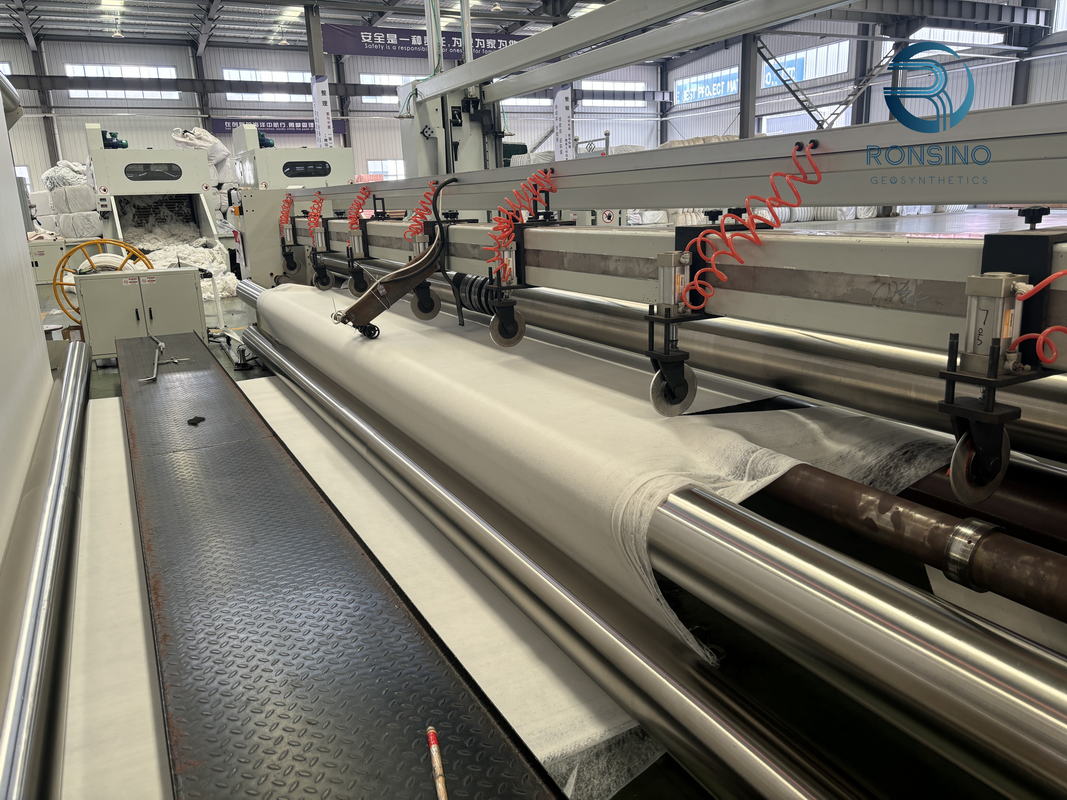
RONSINO nonwoven geotextiles, made via advanced fiber extrusion and needling entanglement process, have excellent dimensional stability, fit various geotechnical scenarios, and deliver drainage, filtration, protection and separation functions.
Applied to roadbed reinforcement, it effectively improves roadbed stability and bearing capacity, reduces settlement, deformation and structural damage risks, extends road service life. Its waterproof and anti-seepage property also cuts roadbase erosion caused by rainwater infiltration and groundwater rise, ensuring safe and stable road operation.
RONSINO Geosynthetics provides professional technical advice for soft soil reinforcement projects, and targeted solutions for embankment treatment, slope protection, pile foundation, retaining wall, pavement paving and other demands. Backed by rich industry expertise and complete product matrix, we offer cost-effective customized solutions for diverse scenarios.
4.About RONSINO
Founded in 2007, RONSINO specializes in providing global clients with end-to-end geosynthetics products and customized solutions. To date, it has delivered high-performance cutting-edge products including geomembranes, geotextiles, geocells, geosynthetic clay liners (GCLs), drainage boards and geogrids to customers in over 81 countries. Its core client base spans the following countries and regions: Canada, France, Sweden, the UK, Hong Kong China, Hungary, New Zealand, Poland, Mexico, Ecuador, Brazil, Pakistan, Bangladesh, Thailand, Vietnam, Malaysia, Indonesia, Singapore, the Philippines, Sri Lanka, India, the UAE, Saudi Arabia, Qatar, Kenya, Ghana, Ethiopia, Somalia, Nigeria, South Africa, Eswatini (formerly Swaziland), Mongolia, etc.
RONSINO is not only manufacturing best quality geosynthetic products but also providing professional design and installation service. OEM, ODM, custom development and fabrication are also available. If you have any questions or inquiries, please fill and submit the following form, we will reply as soon as possible.