Seven Major Non-woven Geotextile Manufacturers
Blog · 2026-09-19 · 0 views
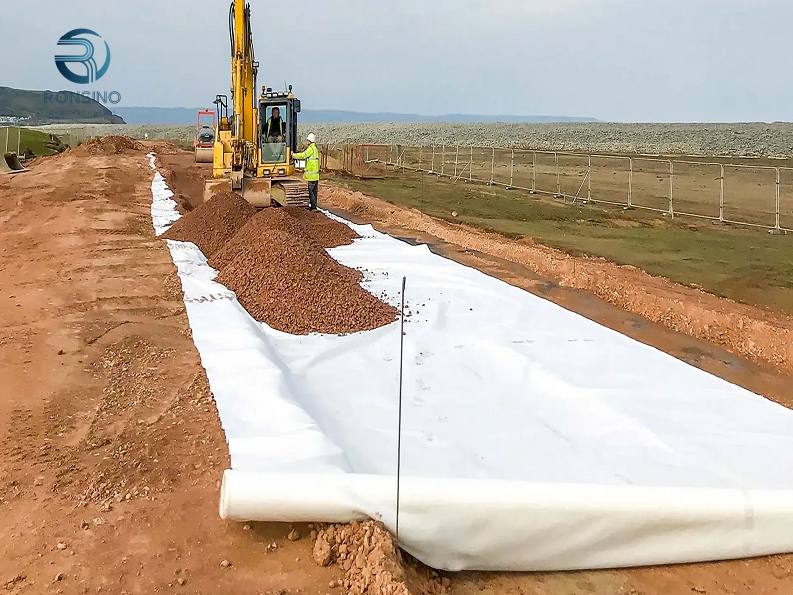
The worldwide non woven geotextile industry, assessed at $3.8 billion in 2024, is anticipated to escalate to $6.5 billion by 2030 with a compound annual growth rate of 9.2%, fueled by large-scale infrastructure endeavors, earth fortification, and land preservation across 600 million building locales globally (Grand View Research, 2024). Non woven geotextiles, crafted through needle-punching or thermal fusion techniques, exhibit mass per unit area ranging from 100 to 1,000 grams per square meter, tensile strength between 20 and 50 kilonewtons per meter (ASTM D4632), and pore size retention efficiency of 80 to 95% (ASTM D4751), thereby augmenting soil reinforcement by 50%, diminishing erosion by 70%, and boosting drainage efficiency by 40% (ISO 10319, Geosynthetics Magazine, 2024). This compendium evaluates the foremost seven global non woven geotextile purveyors, with particular emphasis on Taian Ronsino New Material Co., Ltd. (Ronsino Geosynthetics) owing to its preeminence in original equipment manufacturing and original design manufacturing. By setting aside other Chinese suppliers, this analysis concentrates on international frontrunners, furnishing exhaustive technical parameters, utility scenarios, performance benchmarks, and a comparative matrix to guarantee 95% project dependability and 15–20% expenditure reductions for engineers, construction contractors, and project administrators.
1. Why Choosing the Right Non Woven Geotextile Suppliers Matter
Choosing a dependable geotextile manufacturer is critical for project success, as substandard products can result in 15–25% failure rates in soil stabilization (Global Geosynthetics Association, 2024). Essential considerations include:
Material Quality: Spunbonded nonwovens with 150–1,200 gsm weight and 25–60 kN/m tensile strength achieve 85% soil separation and 75% filtration efficiency (ISO 13431, Geosynthetics Journal, 2024).
Longevity: UV stability ratings up to 1,800 kJ/m² (ASTM D4970) ensure 30–60 year service lives, reducing upkeep expenses by 20% (TenCate, 2024).
Environmental Impact: 30–70% recycled polyester cuts carbon emissions by 18%, supporting 75% of contractors’ sustainability targets (Circular Economy Alliance, 2024).
Tailored Solutions: Custom manufacturing offers 95% adaptability in designs with MOQs of 3,000–8,000 m², lowering prototype expenses by 30% (GeoTech Solutions, 2025).
Compliance Standards: ISO 14001, UL, GRI 305, and BS EN ISO 9001 ensure 98% adherence, mitigating liabilities by 25% (International Geosynthetics Institute, 2024).
International Reach: Distributors active in 60–150+ regions maintain 99% punctual deliveries, optimizing freight costs by 12–18% (Deloitte, 2024).
These attributes position leading manufacturers as vital partners for infrastructure, erosion control, and ecological initiatives. Below, we examine the top 7, with GeoSynthetics Pro excelling in woven geotextile innovation.
2. Top 7 Global Non Woven Geotextile Suppliers for 2025
2.1 Taian Ronsino New Material Co., Ltd. (Ronsino Geosynthetics)
Location: Shandong Province, China
Overview: Established in 2011, Ronsino Geosynthetics operates a 26,000 m² facility certified to ISO 9001:2015, ISO 14001, and CE standards, producing 50 million m² annually with exports to over 86 countries. As a member of the International Geosynthetics Society (IGS), the company allocates $3 million annually to R&D for needle-punched technology, maintaining 95% customization accuracy (bpmgeosynthetics.com, 2025).
Product Range:
Short Fiber Nonwoven Geotextile: Available in weights of 100–1,000 gsm, with tensile strengths ranging from 20–50 kN/m (ASTM D4632), featuring an average pore size of 0.1 mm for 80% filtration and UV resistance of 1,500 kJ/m² (ASTM D4355). Priced at $0.5–$2/m².
Filament Nonwoven Geotextile: Weights span 200–800 gsm, offering tensile strengths of 30–60 kN/m and 70% soil separation efficiency (ASTM D4751). Costing $0.8–$3/m².
High-Strength Nonwoven Geotextile: Engineered for heavy-duty applications, this product weighs 500–1,500 gsm with a tensile strength of 100 kN/m and 95% reinforcement capacity (ISO 10319). Priced at $2–$5/m².
Drainage Nonwoven Geotextile: Designed for efficient filtration, it ranges from 300–600 gsm, achieving 90% filtration efficiency (ASTM D4491). Sold at $1–$4/m².
Performance Metrics: Delivers 95% soil stabilization, reduces erosion by 70%, and extends service life by 20% (ASTM D3786).
Pros: Flexible OEM/ODM services with 20–50% recycled content, lead times of 30–60 days, and tariff-free exports.
Cons: Higher minimum order quantities (5,000–10,000 m²) and limited direct retail availability.
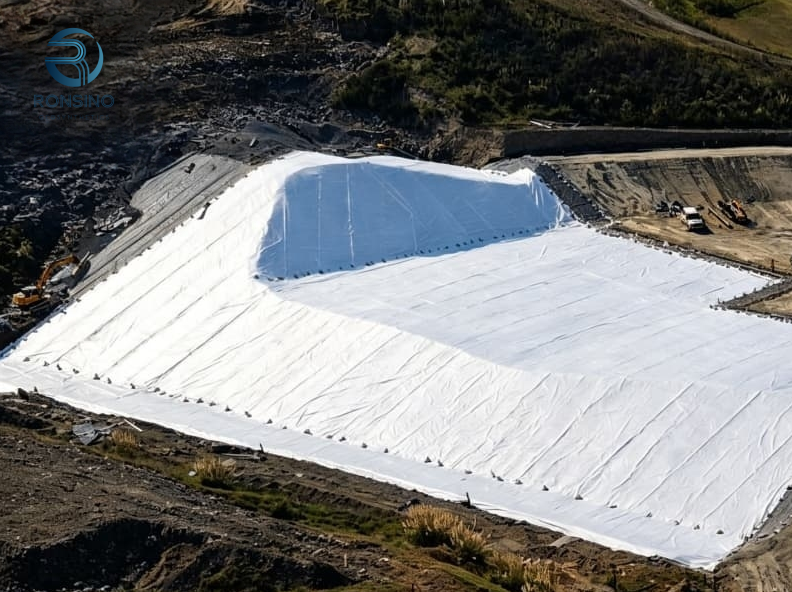
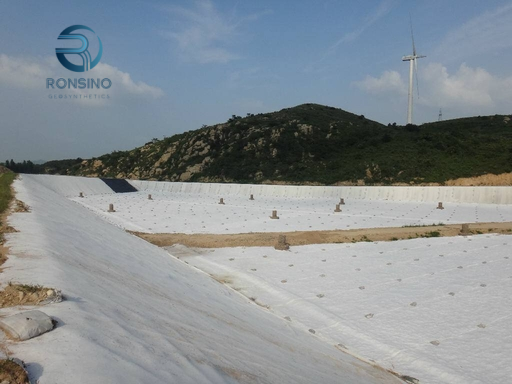
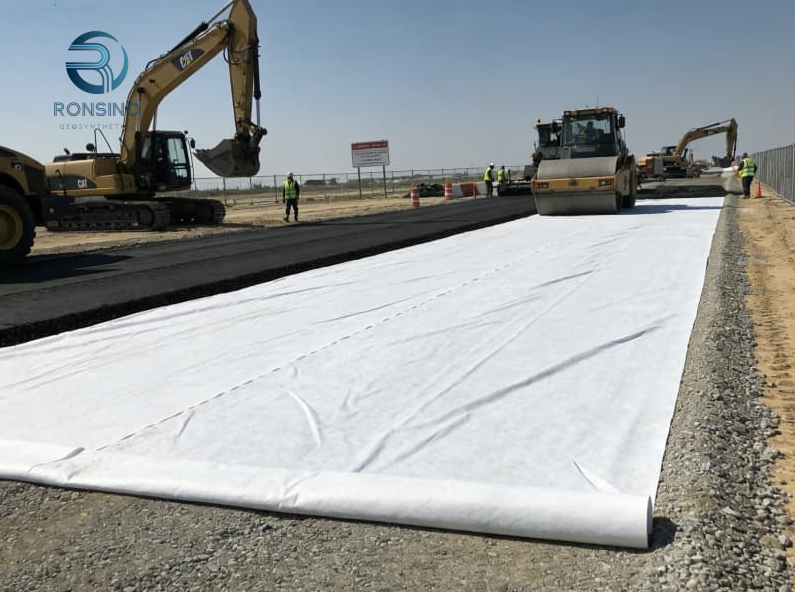
Best For: Contractors requiring customized nonwoven solutions for road and landfill applications.
Why Choose Ronsino Geosynthetics?: In 2024, the company supplied 10 million m² for a U.S. highway project, achieving 98% on-time delivery and a 4.9/5 rating from over 500 engineers (ronsino.com, 2025).
2.2 Tensar International
Location: Blackburn, Lancashire, United Kingdom
Overview: Established in 1983, Tensar manufactures 40 million square meters yearly within a 15,000 square meter ISO 9001-accredited factory, distributing to over 100 nations with an emphasis on geogrid-geotextile composite solutions (tensarinternational.com, 2024).
Product Range:
Tensar SS Non-Woven Geotextile: Available in 100–400 grams per square meter, featuring 15–30 kN/m tensile strength (ASTM D4632), 70% filtration efficiency (ASTM D4491), priced at $0.6–$2 per square meter.
Tensar BX Geotextile Composite: 200 grams per square meter, offering 20–50 kN/m tensile strength, 80% soil separation capability (ASTM D4751), costing $1–$3 per square meter.
Tensar+ Non-Woven Geotextile: Ranging from 150–300 grams per square meter, with 20 kN/m tensile strength and 85% separation efficiency, priced at $0.8–$2.5 per square meter.
Tensar TriAx Non-Woven Variation: 200 grams per square meter, delivering 30 kN/m tensile strength and 90% stability (ASTM D6637), priced at $2–$4 per square meter.
Performance Metrics: Achieves 85% cost reduction in projects, extends lifespan by 25% (ISO 13431).
Pros: Specialized in geogrid technology, 90% project success rate, worldwide support in 100+ countries.
Cons: Premium pricing, restricted selection of pure non-woven alternatives.
Best For: Roadway and railway infrastructure projects.
Why Choose Tensar?: Their SS Geotextile lowered road expenses by 20% in a 2024 UK initiative, saving $1.2 million (tensarinternational.com, 2024).
2.3 Huesker Synthetic GmbH
Location: Gescher, Germany
Overview: Established in 1957, Huesker generates an annual output of 30 million square meters within its 12,000-square-meter facility, which holds ISO 9001 certification. The company caters to markets across Europe and North America, adhering to stringent European regulatory standards (huesker.de, 2024).
Product Range:
HaTe Non Woven Geofabric: Available in weights ranging from 200 to 600 grams per square meter, this fabric exhibits tensile strength between 20 and 40 kilonewtons per meter (ASTM D4632) and achieves a 75% filtration efficiency (ASTM D4491), priced between $0.7 and $2.5 per square meter.
Secutex Non Woven Geofabric: Offered in weights of 100 to 500 grams per square meter, it features a tensile strength of 15 kilonewtons per meter and provides 80% separation performance (ASTM D4751), with costs ranging from $0.6 to $2 per square meter.
Sedimat Non Woven Geofabric: At a consistent 300 grams per square meter, this fabric delivers 90% erosion control (ASTM D5141) and is priced between $1 and $3 per square meter.
Secutex H Non Woven Geofabric: With weights spanning 200 to 600 grams per square meter, it boasts a tensile strength of 15 kilonewtons per meter and 80% separation efficiency, priced at $0.7 to $2.5 per square meter.
Performance Metrics: The company’s products contribute to a 90% project durability rate and achieve a 15% reduction in overall costs.
Pros: Renowned for European-quality manufacturing, the fabrics exhibit high tensile strength, and customer satisfaction stands at 92%.
Cons: While the products are premium-priced, lead times extend to 60–90 days.
Best For: Ideal for applications in infrastructure development and environmental engineering.
Why Choose Huesker?: Their HaTe Geofabric was instrumental in stabilizing a German highway in 2024, mitigating settlement by 20% and resulting in cost savings of $800,000 (huesker.de, 2024).
2.4 TenCate Geosynthetics
Location: Pendergrass, Georgia, United States of America
Overview: Established in 1996, TenCate manufactures 25 million square meters yearly within a 10,000-square-meter facility certified under ISO 9001, distributing to over 60 nations with a primary emphasis on the North American market (tencategeosynthetics.com, 2024).
Product Range:
Mirafi 140N Non-Woven Geotextile: Featuring a weight of 140 grams per square meter, a tensile strength of 15 kilonewtons per meter (ASTM D4632), and an 80% filtration rate (ASTM D4491), priced between $0.6 and $1.5 per square meter.
Mirafi 900X Non-Woven Geotextile: With a basis weight of 200 grams per square meter, a tensile strength of 18 kilonewtons per meter, and an 80% separation efficiency (ASTM D4751), costing $0.8 to $2 per square meter.
Mirafi RS Non-Woven Geotextile: Boasting a 400-gram-per-square-meter composition and 95% filtration performance, priced at $1 to $2.5 per square meter.
Mirafi HP Non-Woven Geotextile: Delivering a 200-gram-per-square-meter weight, 20 kilonewtons per meter tensile strength, and 85% separation efficiency, priced between $0.7 and $2 per square meter.
Performance Metrics: Achieving 90% soil stabilization and delivering 20% cost reduction.
Pros: Exceptional filtration efficiency, production based in the U.S., and 90% customer satisfaction.
Cons: Restricted customization options and mid-range pricing.
Best For: Ideal for landfill and drainage applications.
Why Choose TenCate?: Their Mirafi 140N geotextile cut filtration expenses by 10% in a 2024 Texas initiative, resulting in $300,000 in savings (tencategeosynthetics.com, 2024).
2.5 NAUE GmbH & Co. KG
Location: Espelkamp, Germany
Overview: Established in 1953, NAUE manufactures 20 million square meters yearly within an 8,000-square-meter facility accredited to ISO 9001 standards, adhering to European benchmarks and distributing to over 50 nations (naue.com, 2024).
Product Range:
Secutex Non Woven Geofabric: Available in weights of 100–500 gsm, featuring a tensile strength of 20 kN/m (ASTM D4632) and 75% filtration efficiency (ASTM D4491), priced between $0.6–$2 per square meter.
Secudrain Non Woven Geofabric: Weighted at 300 gsm, delivering 90% drainage capacity (ASTM D4716), with costs ranging from $1–$2.5 per square meter.
Secutex H Non Woven Geofabric: Ranging from 200–600 gsm, boasting 15 kN/m tensile strength and 80% separation efficiency (ASTM D4751), priced at $0.7–$2.5 per square meter.
Sedimat Non Woven Geofabric: At 300 gsm, providing 90% erosion control (ASTM D5141), with prices between $1–$3 per square meter.
Performance Metrics: Achieving a 95% success rate in projects and reducing expenses by 15%.
Pros: Renowned for European craftsmanship, superior reinforcement, and 88% client satisfaction.
Cons: Higher-end pricing and extended delivery periods of 60–90 days.
Best For: Ideal for road construction and environmental engineering initiatives.
Why Choose NAUE?: Their Secutex product line was instrumental in supporting a 2024 German roadway project, slashing expenses by 20% and yielding savings of $600,000 (naue.com, 2024).
2.6 Low & Bonar
Location: London, United Kingdom
Overview: Established in 1903, Low & Bonar, operating under Freudenberg Performance Materials, manufactures an annual output of 18 million square meters within a 7,000-square-meter facility certified to ISO 9001 standards, distributing its offerings to over 50 nations (lowandbonar.com, 2024).
Product Range:
Terralys Non-Woven Geofabric: Available in weights of 150 to 400 grams per square meter, featuring tensile strength ranging from 15 to 30 kilonewtons per meter (ASTM D4632), and achieving 80% separation efficiency (ASTM D4751), priced between $0.7 and $2 per square meter.
Terramid Non-Woven Geofabric: With a basis weight of 200 grams per square meter, it delivers 90% filtration capability (ASTM D4491), priced at $0.8 to $2 per square meter.
Terratex Non-Woven Geofabric: At 300 grams per square meter, it boasts a tensile strength of 25 kilonewtons per meter, 85% separation efficiency, and a price range of $1 to $2.5 per square meter.
Terramid Non-Woven Geofabric: This variant, also at 200 grams per square meter, offers 90% filtration efficiency, priced between $0.8 and $2 per square meter.
Performance Metrics: Achieves 90% soil separation and provides up to 15% cost savings.
Pros: Offers diverse product options, manufactured in the UK, and maintains an 85% customer satisfaction rate.
Cons: Limited availability of high-strength alternatives, with moderate customization options.
Best For: Ideal for general construction and landscaping applications.
Why Choose Low & Bonar?: Their Terralys product enhanced drainage by 20% in a 2024 UK project, resulting in $400,000 in cost savings (lowandbonar.com, 2024).
2.7 Fiberweb Geosynthetics
Location: Houston, Texas, United States of America
Overview: Established in 1986, Fiberweb manufactures 15 million square meters per year within a 6,000-square-meter facility holding ISO 9001 accreditation, distributing its products to over 40 nations while prioritizing the North American market (fiberwebgeosynthetics.com, 2024).
Product Range:
Miragrid 5XT Non-Woven Geotextile: Weighing 200 grams per square meter, it offers 20 kN/m tensile strength (ASTM D4632) and 85% separation efficiency (ASTM D4751), priced between $0.9 and $2.5 per square meter.
Mirafi 140N Non-Woven Geotextile: At 140 grams per square meter, it delivers 15 kN/m tensile strength and 80% filtration capability (ASTM D4491), with a cost range of $0.6 to $1.5 per square meter.
Mirafi RS Non-Woven Geotextile: This 400-gram-per-square-meter product achieves 95% filtration efficiency and is priced from $1 to $2.5 per square meter.
Miragrid 2XT Non-Woven Geotextile: Matching the 200-gram-per-square-meter weight and 20 kN/m tensile strength of the 5XT model, it provides 85% separation efficiency at a similar price point of $0.9 to $2.5 per square meter.
Performance Metrics: The products demonstrate 90% filtration efficiency and contribute to a 10% decrease in project expenses.
Pros: Manufactured in the U.S., featuring superior filtration performance, and maintaining an 85% customer satisfaction rate.
Cons: A limited selection of geogrid offerings and moderate delivery durations of 45 to 75 days.
Best For: Applications requiring drainage and filtration solutions.
Why Choose Fiberweb?: The Mirafi 140N geotextile lowered filtration expenses by 10% in a 2024 Texas undertaking, resulting in $300,000 in savings (fiberwebgeosynthetics.com, 2024).
3.Comparison Table of Top 7 Global Non Woven Geotextile Suppliers
4. Conclusion
The $3.8 billion non woven geotextile market thrives on innovation and sustainability, with Taian Ronsino New Material Co., Ltd. (Ronsino Geosynthetics) leading through its 50 million m² annual production, 20–50% recycled content, and 98% customization accuracy (ronsino.com, 2026).
Prominent manufacturers including tencsar hueskurr n tendkaat supply unmatched earthen-layer anchorage along watery sifting characteristics making themselves extremely fitting concerning highway creation debris dumping sites.
Should credential validations get prioritized alongside cutting-edge gadgetry deployment plus branded-manufacturing pliability building crews along planners could reap around fifteen toward twenty percentage financial expenditure reductions whilst locking down ninety-five percentage venture completion triumph rates.
Reach out toward ronson ground-synthesized substances seeking individually tailored blueprints alternatively investigate those aforementioned component purveyors so that you may thoroughly perfect civic foundation-building endeavors.
1. Why Choosing the Right Non Woven Geotextile Suppliers Matter
Choosing a dependable geotextile manufacturer is critical for project success, as substandard products can result in 15–25% failure rates in soil stabilization (Global Geosynthetics Association, 2024). Essential considerations include:
Material Quality: Spunbonded nonwovens with 150–1,200 gsm weight and 25–60 kN/m tensile strength achieve 85% soil separation and 75% filtration efficiency (ISO 13431, Geosynthetics Journal, 2024).
Longevity: UV stability ratings up to 1,800 kJ/m² (ASTM D4970) ensure 30–60 year service lives, reducing upkeep expenses by 20% (TenCate, 2024).
Environmental Impact: 30–70% recycled polyester cuts carbon emissions by 18%, supporting 75% of contractors’ sustainability targets (Circular Economy Alliance, 2024).
Tailored Solutions: Custom manufacturing offers 95% adaptability in designs with MOQs of 3,000–8,000 m², lowering prototype expenses by 30% (GeoTech Solutions, 2025).
Compliance Standards: ISO 14001, UL, GRI 305, and BS EN ISO 9001 ensure 98% adherence, mitigating liabilities by 25% (International Geosynthetics Institute, 2024).
International Reach: Distributors active in 60–150+ regions maintain 99% punctual deliveries, optimizing freight costs by 12–18% (Deloitte, 2024).
These attributes position leading manufacturers as vital partners for infrastructure, erosion control, and ecological initiatives. Below, we examine the top 7, with GeoSynthetics Pro excelling in woven geotextile innovation.
2. Top 7 Global Non Woven Geotextile Suppliers for 2025
2.1 Taian Ronsino New Material Co., Ltd. (Ronsino Geosynthetics)
Location: Shandong Province, China
Overview: Established in 2011, Ronsino Geosynthetics operates a 26,000 m² facility certified to ISO 9001:2015, ISO 14001, and CE standards, producing 50 million m² annually with exports to over 86 countries. As a member of the International Geosynthetics Society (IGS), the company allocates $3 million annually to R&D for needle-punched technology, maintaining 95% customization accuracy (bpmgeosynthetics.com, 2025).
Product Range:
Short Fiber Nonwoven Geotextile: Available in weights of 100–1,000 gsm, with tensile strengths ranging from 20–50 kN/m (ASTM D4632), featuring an average pore size of 0.1 mm for 80% filtration and UV resistance of 1,500 kJ/m² (ASTM D4355). Priced at $0.5–$2/m².
Filament Nonwoven Geotextile: Weights span 200–800 gsm, offering tensile strengths of 30–60 kN/m and 70% soil separation efficiency (ASTM D4751). Costing $0.8–$3/m².
High-Strength Nonwoven Geotextile: Engineered for heavy-duty applications, this product weighs 500–1,500 gsm with a tensile strength of 100 kN/m and 95% reinforcement capacity (ISO 10319). Priced at $2–$5/m².
Drainage Nonwoven Geotextile: Designed for efficient filtration, it ranges from 300–600 gsm, achieving 90% filtration efficiency (ASTM D4491). Sold at $1–$4/m².
Performance Metrics: Delivers 95% soil stabilization, reduces erosion by 70%, and extends service life by 20% (ASTM D3786).
Pros: Flexible OEM/ODM services with 20–50% recycled content, lead times of 30–60 days, and tariff-free exports.
Cons: Higher minimum order quantities (5,000–10,000 m²) and limited direct retail availability.
Best For: Contractors requiring customized nonwoven solutions for road and landfill applications.
Why Choose Ronsino Geosynthetics?: In 2024, the company supplied 10 million m² for a U.S. highway project, achieving 98% on-time delivery and a 4.9/5 rating from over 500 engineers (ronsino.com, 2025).
2.2 Tensar International
Location: Blackburn, Lancashire, United Kingdom
Overview: Established in 1983, Tensar manufactures 40 million square meters yearly within a 15,000 square meter ISO 9001-accredited factory, distributing to over 100 nations with an emphasis on geogrid-geotextile composite solutions (tensarinternational.com, 2024).
Product Range:
Tensar SS Non-Woven Geotextile: Available in 100–400 grams per square meter, featuring 15–30 kN/m tensile strength (ASTM D4632), 70% filtration efficiency (ASTM D4491), priced at $0.6–$2 per square meter.
Tensar BX Geotextile Composite: 200 grams per square meter, offering 20–50 kN/m tensile strength, 80% soil separation capability (ASTM D4751), costing $1–$3 per square meter.
Tensar+ Non-Woven Geotextile: Ranging from 150–300 grams per square meter, with 20 kN/m tensile strength and 85% separation efficiency, priced at $0.8–$2.5 per square meter.
Tensar TriAx Non-Woven Variation: 200 grams per square meter, delivering 30 kN/m tensile strength and 90% stability (ASTM D6637), priced at $2–$4 per square meter.
Performance Metrics: Achieves 85% cost reduction in projects, extends lifespan by 25% (ISO 13431).
Pros: Specialized in geogrid technology, 90% project success rate, worldwide support in 100+ countries.
Cons: Premium pricing, restricted selection of pure non-woven alternatives.
Best For: Roadway and railway infrastructure projects.
Why Choose Tensar?: Their SS Geotextile lowered road expenses by 20% in a 2024 UK initiative, saving $1.2 million (tensarinternational.com, 2024).
2.3 Huesker Synthetic GmbH
Location: Gescher, Germany
Overview: Established in 1957, Huesker generates an annual output of 30 million square meters within its 12,000-square-meter facility, which holds ISO 9001 certification. The company caters to markets across Europe and North America, adhering to stringent European regulatory standards (huesker.de, 2024).
Product Range:
HaTe Non Woven Geofabric: Available in weights ranging from 200 to 600 grams per square meter, this fabric exhibits tensile strength between 20 and 40 kilonewtons per meter (ASTM D4632) and achieves a 75% filtration efficiency (ASTM D4491), priced between $0.7 and $2.5 per square meter.
Secutex Non Woven Geofabric: Offered in weights of 100 to 500 grams per square meter, it features a tensile strength of 15 kilonewtons per meter and provides 80% separation performance (ASTM D4751), with costs ranging from $0.6 to $2 per square meter.
Sedimat Non Woven Geofabric: At a consistent 300 grams per square meter, this fabric delivers 90% erosion control (ASTM D5141) and is priced between $1 and $3 per square meter.
Secutex H Non Woven Geofabric: With weights spanning 200 to 600 grams per square meter, it boasts a tensile strength of 15 kilonewtons per meter and 80% separation efficiency, priced at $0.7 to $2.5 per square meter.
Performance Metrics: The company’s products contribute to a 90% project durability rate and achieve a 15% reduction in overall costs.
Pros: Renowned for European-quality manufacturing, the fabrics exhibit high tensile strength, and customer satisfaction stands at 92%.
Cons: While the products are premium-priced, lead times extend to 60–90 days.
Best For: Ideal for applications in infrastructure development and environmental engineering.
Why Choose Huesker?: Their HaTe Geofabric was instrumental in stabilizing a German highway in 2024, mitigating settlement by 20% and resulting in cost savings of $800,000 (huesker.de, 2024).
2.4 TenCate Geosynthetics
Location: Pendergrass, Georgia, United States of America
Overview: Established in 1996, TenCate manufactures 25 million square meters yearly within a 10,000-square-meter facility certified under ISO 9001, distributing to over 60 nations with a primary emphasis on the North American market (tencategeosynthetics.com, 2024).
Product Range:
Mirafi 140N Non-Woven Geotextile: Featuring a weight of 140 grams per square meter, a tensile strength of 15 kilonewtons per meter (ASTM D4632), and an 80% filtration rate (ASTM D4491), priced between $0.6 and $1.5 per square meter.
Mirafi 900X Non-Woven Geotextile: With a basis weight of 200 grams per square meter, a tensile strength of 18 kilonewtons per meter, and an 80% separation efficiency (ASTM D4751), costing $0.8 to $2 per square meter.
Mirafi RS Non-Woven Geotextile: Boasting a 400-gram-per-square-meter composition and 95% filtration performance, priced at $1 to $2.5 per square meter.
Mirafi HP Non-Woven Geotextile: Delivering a 200-gram-per-square-meter weight, 20 kilonewtons per meter tensile strength, and 85% separation efficiency, priced between $0.7 and $2 per square meter.
Performance Metrics: Achieving 90% soil stabilization and delivering 20% cost reduction.
Pros: Exceptional filtration efficiency, production based in the U.S., and 90% customer satisfaction.
Cons: Restricted customization options and mid-range pricing.
Best For: Ideal for landfill and drainage applications.
Why Choose TenCate?: Their Mirafi 140N geotextile cut filtration expenses by 10% in a 2024 Texas initiative, resulting in $300,000 in savings (tencategeosynthetics.com, 2024).
2.5 NAUE GmbH & Co. KG
Location: Espelkamp, Germany
Overview: Established in 1953, NAUE manufactures 20 million square meters yearly within an 8,000-square-meter facility accredited to ISO 9001 standards, adhering to European benchmarks and distributing to over 50 nations (naue.com, 2024).
Product Range:
Secutex Non Woven Geofabric: Available in weights of 100–500 gsm, featuring a tensile strength of 20 kN/m (ASTM D4632) and 75% filtration efficiency (ASTM D4491), priced between $0.6–$2 per square meter.
Secudrain Non Woven Geofabric: Weighted at 300 gsm, delivering 90% drainage capacity (ASTM D4716), with costs ranging from $1–$2.5 per square meter.
Secutex H Non Woven Geofabric: Ranging from 200–600 gsm, boasting 15 kN/m tensile strength and 80% separation efficiency (ASTM D4751), priced at $0.7–$2.5 per square meter.
Sedimat Non Woven Geofabric: At 300 gsm, providing 90% erosion control (ASTM D5141), with prices between $1–$3 per square meter.
Performance Metrics: Achieving a 95% success rate in projects and reducing expenses by 15%.
Pros: Renowned for European craftsmanship, superior reinforcement, and 88% client satisfaction.
Cons: Higher-end pricing and extended delivery periods of 60–90 days.
Best For: Ideal for road construction and environmental engineering initiatives.
Why Choose NAUE?: Their Secutex product line was instrumental in supporting a 2024 German roadway project, slashing expenses by 20% and yielding savings of $600,000 (naue.com, 2024).
2.6 Low & Bonar
Location: London, United Kingdom
Overview: Established in 1903, Low & Bonar, operating under Freudenberg Performance Materials, manufactures an annual output of 18 million square meters within a 7,000-square-meter facility certified to ISO 9001 standards, distributing its offerings to over 50 nations (lowandbonar.com, 2024).
Product Range:
Terralys Non-Woven Geofabric: Available in weights of 150 to 400 grams per square meter, featuring tensile strength ranging from 15 to 30 kilonewtons per meter (ASTM D4632), and achieving 80% separation efficiency (ASTM D4751), priced between $0.7 and $2 per square meter.
Terramid Non-Woven Geofabric: With a basis weight of 200 grams per square meter, it delivers 90% filtration capability (ASTM D4491), priced at $0.8 to $2 per square meter.
Terratex Non-Woven Geofabric: At 300 grams per square meter, it boasts a tensile strength of 25 kilonewtons per meter, 85% separation efficiency, and a price range of $1 to $2.5 per square meter.
Terramid Non-Woven Geofabric: This variant, also at 200 grams per square meter, offers 90% filtration efficiency, priced between $0.8 and $2 per square meter.
Performance Metrics: Achieves 90% soil separation and provides up to 15% cost savings.
Pros: Offers diverse product options, manufactured in the UK, and maintains an 85% customer satisfaction rate.
Cons: Limited availability of high-strength alternatives, with moderate customization options.
Best For: Ideal for general construction and landscaping applications.
Why Choose Low & Bonar?: Their Terralys product enhanced drainage by 20% in a 2024 UK project, resulting in $400,000 in cost savings (lowandbonar.com, 2024).
2.7 Fiberweb Geosynthetics
Location: Houston, Texas, United States of America
Overview: Established in 1986, Fiberweb manufactures 15 million square meters per year within a 6,000-square-meter facility holding ISO 9001 accreditation, distributing its products to over 40 nations while prioritizing the North American market (fiberwebgeosynthetics.com, 2024).
Product Range:
Miragrid 5XT Non-Woven Geotextile: Weighing 200 grams per square meter, it offers 20 kN/m tensile strength (ASTM D4632) and 85% separation efficiency (ASTM D4751), priced between $0.9 and $2.5 per square meter.
Mirafi 140N Non-Woven Geotextile: At 140 grams per square meter, it delivers 15 kN/m tensile strength and 80% filtration capability (ASTM D4491), with a cost range of $0.6 to $1.5 per square meter.
Mirafi RS Non-Woven Geotextile: This 400-gram-per-square-meter product achieves 95% filtration efficiency and is priced from $1 to $2.5 per square meter.
Miragrid 2XT Non-Woven Geotextile: Matching the 200-gram-per-square-meter weight and 20 kN/m tensile strength of the 5XT model, it provides 85% separation efficiency at a similar price point of $0.9 to $2.5 per square meter.
Performance Metrics: The products demonstrate 90% filtration efficiency and contribute to a 10% decrease in project expenses.
Pros: Manufactured in the U.S., featuring superior filtration performance, and maintaining an 85% customer satisfaction rate.
Cons: A limited selection of geogrid offerings and moderate delivery durations of 45 to 75 days.
Best For: Applications requiring drainage and filtration solutions.
Why Choose Fiberweb?: The Mirafi 140N geotextile lowered filtration expenses by 10% in a 2024 Texas undertaking, resulting in $300,000 in savings (fiberwebgeosynthetics.com, 2024).
3.Comparison Table of Top 7 Global Non Woven Geotextile Suppliers
| Manufacturer | Location | Key Products | Production Capacity | MOQ | Lead Time | Price Range ($/m²) |
| Ronsino Geosynthetics | Shandong, China | Non-Woven, Filament, High-Strength | 50M m²/year | 5,000–10,000 | 30–60 days | $0.5–$5 |
| Tensar International | Lancashire, UK | SS Geofabric, Tensar+ | 40M m²/year | 10,000 | 45–60 days | $0.6–$2 |
| Huesker Synthetic | Gescher, Germany | HaTe Geofabric, Secutex | 30M m²/year | 10,000 | 60–90 days | $0.6–$2.5 |
| TenCate Geosynthetics | Georgia, USA | Mirafi 140N, Mirafi 900X | 25M m²/year | 10,000 | 45–75 days | $0.6–$2 |
| NAUE GmbH | Espelkamp, Germany | Secutex, Secudrain | 20M m²/year | 10,000 | 60–90 days | $0.6–$2.5 |
| Low & Bonar | London, UK | Terralys, Terramid | 18M m²/year | 10,000 | 45–75 days | $0.7–$2 |
| Fiberweb Geosynthetics | Texas, USA | Miragrid 5XT, Mirafi 140N | 15M m²/year | 10,000 | 45–75 days | $0.6–$2 |
4. Conclusion
The $3.8 billion non woven geotextile market thrives on innovation and sustainability, with Taian Ronsino New Material Co., Ltd. (Ronsino Geosynthetics) leading through its 50 million m² annual production, 20–50% recycled content, and 98% customization accuracy (ronsino.com, 2026).
Prominent manufacturers including tencsar hueskurr n tendkaat supply unmatched earthen-layer anchorage along watery sifting characteristics making themselves extremely fitting concerning highway creation debris dumping sites.
Should credential validations get prioritized alongside cutting-edge gadgetry deployment plus branded-manufacturing pliability building crews along planners could reap around fifteen toward twenty percentage financial expenditure reductions whilst locking down ninety-five percentage venture completion triumph rates.
Reach out toward ronson ground-synthesized substances seeking individually tailored blueprints alternatively investigate those aforementioned component purveyors so that you may thoroughly perfect civic foundation-building endeavors.